
"The Omega Glory": A Parallel Almost Too Close
“The Omega Glory” is a very strange episode of Star Trek. Even by the freewheeling standards of the Original Series, this is the odd story out. Growing up in the early ‘90s, I somehow managed to miss this episode completely, despite religiously watching reruns of the Original Series after school and perhaps that’s why I only realized the truth about it more recently, when I was rewatching the show on DVD. Over the years, this episode has become a punching bag of sorts, derided as one of Trek’s worst. And frankly, it’s not among the show’s best, that’s for certain. Fans have wondered for years what Gene Roddenberry was thinking when he wrote it. Well, I’m not here to condemn “The Omega Glory”, but to understand it.
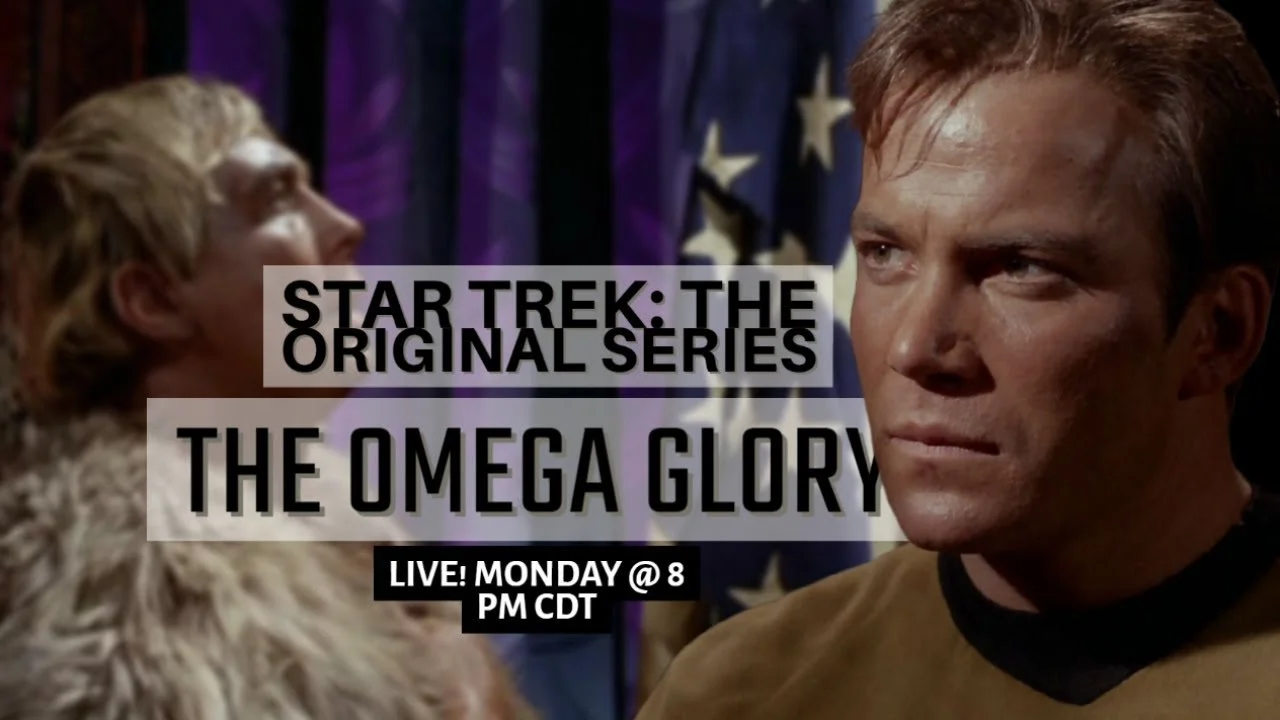
Originally titled “The Omega Story”, this was actually among the very first scripts written for the show before it aired and was considered as a possible second pilot. Having been passed over, it wasn’t actually filmed until late in the second season. Briefly, the episode concerns the Enterprise discovering that the captain of one of its sister ships has violated the Prime Directive on the planet Omega IV, but our chief focus will be on the planet’s inhabitants.
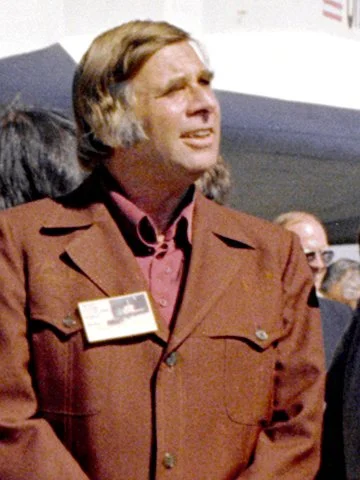
Gene Roddenberry.
There are two factions: the Kohms, who are all Asiatic and are the more civilized of the planet’s people, and their enemies are a savage tribe known as the Yangs. These barbarians are Caucasoid, but have a stoic manner reminiscent of the American Indian, as Kirk notes. The Yangs are waging an all-out war against their Kohm oppressors, having driven them to their last refuge. At the climax it is revealed that the Yangs are really “Yanks” and the Kohms are “communists” and the whole planet is a credulity-straining example of parallel planetary development (an idea Roddenberry promoted to keep production costs down). The Yangs bring out an American flag which they worship and recite a distorted preamble to the Declaration of Independence, which Kirk corrects, setting the Yangs straight on their real meaning.
So just where did Roddenberry get this seemingly inexplicable assemblage of plot points from? For that answer, we must look backwards from the mid-60s another forty years.
The Moon Trilogy is a very strange series for Edgar Rice Burroughs, with downer endings for the first two novels and recurring themes of decay, defeat and rebirth. The first volume, The Moon Maid, is a planetary romance of the sort that ERB pioneered. The framing device concerns the narrator meeting a strange man in the then-future of 1967, in a world where war is over and contact has been established with Mars (specifically, the Barsoom of ERB’s earlier novels). The man, Julian 3rd, who insists that there is no such thing as Time, warns of future calamities, via the memories of his future incarnations.
The story proper begins in the further future of 2025, when the first spaceship is launched on a mission to Mars. In true Burroughsian misfortune, the craft ends up not on Mars but on the Moon, or rather inside of it, in the hollow world of Va-nah. Amidst the standard planetary romance tribulations, Julian 5th encounters the Kalkars, a lunar society descended from a pseudo-intellectual cult known as the Thinkers who espouse a philosophy very similar to communism.
The second book—actually written years earlier in a rejected form with the first novel written to lead into the new version—The Moon Men, shifts gears into the dystopian genre and concerns the disastrous consequences of The Moon Maid, as the Kalkars, with the help of a traitorous Earthman, launch a successful invasion of the Earth.
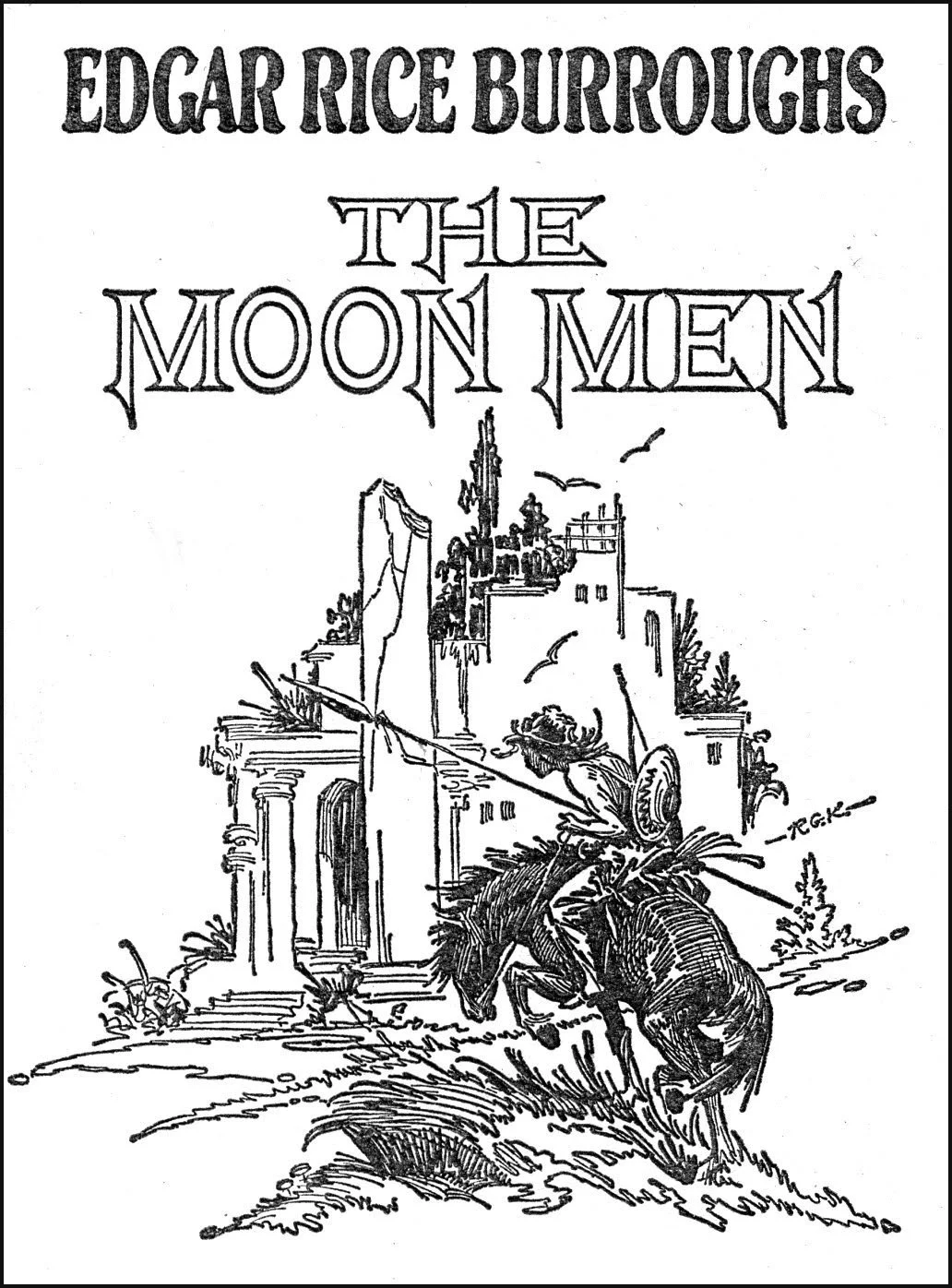
The Red Hawk, riding through the ruins of lost glory.
Julian 9th lives in the 22nd century, decades after the conquest. Burroughs based the tyranny of the Kalkars on the Bolsheviks and the then-current atrocities being inflicted on the people of Russia. The American flag a Julian ancestor carried in the Great War at the Battle of Argonne is both a plot-point and a symbol of the revolt that Julian tries to foment.
It is the third installment, The Red Hawk, in which the series shifts gears once again into the post-apocalyptic genre, that concerns us most. Much like “The Omega Glory”, I never really read this one growing up. While I read The Moon Maid several times, I bounced off the sequels until recent years.
In the early 25th century, after the civilizations of man and Kalkar have descended into barbarism, Julian 20th leads the last tribes of Americans in a final battle against their oppressors. These barbarians, calling themselves Yanks, while Caucasoid, dress and act in a manner reminiscent of the American Indian. Like the Yangs, they too have driven their communist enemies to their last refuge and are preparing to wipe them out and they worship the Flag of Argon (Argonne) passed down through the family line of the Julians:
“And then the women came, my mother carrying the Flag, furled upon a long staf . She halted there, at the foot of the table, the other women massed behind her, and she undid the cords that held it and let the Flag break out in the desert breeze, and we all kneels and bent our heads to the faded bit of fabric that has been handed down from father to son through all the vicissitudes and hardships and bloodshed of more than five hundred years since the day that it was carried to victory by Julian 1st in a long forgotten war.
This, the Flag, is known from all other flags as the Flag of Argon, although its origin and the meaning of the word that describe it are lost in the mists of time. It is of alternate red and white stripes, with a blue square in one corner upon which are sewn many white stars. The white is yellow with age, and the blue and the red are faded, and it is torn in places, and there are brown spots upon it—the blood of Julians who have died protecting it, and the blood of their enemies. It fills us with awe, for it has the power of life and death, and it brings the rains and the winds and the thunder. That is why we bow down before it.”
Now compare that scene to the Yangs bringing out their Flag as part of a religious ceremony. And as if all these other points of similarity weren’t enough, The Red Hawk’s brother is named “the Rain Cloud” and one of the Yangs is named “Cloud William”. Unlike Omega IV, there are far too many coincidences to chalk this one up to cosmic happenstance. As Spock himself says, “The parallel is almost too close, Captain.”
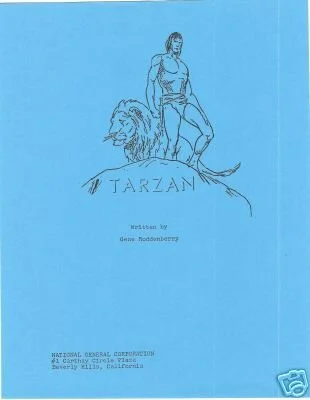
Roddenberry’s unproduced Tarzan screenplay.
As it turns out, Gene Roddenberry, like a lot of folks growing up in the early to mid-20th century, was a fan of Edgar Rice Burroughs. In the late 1960s he went so far as to write his own Tarzan script. I hear conflicting stories whether or not this was originally intended as a TV pilot or feature film. The unproduced screenplay—which can be found at the Internet Archive—features a newly-single Tarzan (Jane is mentioned as having been slain by Arab slave traders), who speaks proper English and is referred to as Lord Greystoke several times, though the Waziri are inexplicably renamed “Wazuri”. This version of the Ape-Man has a new love interest, Helena Vichay, and features an Ancient Astronaut influenced version of Opar, still ruled by Queen La. It reflects a number of Roddenberry’s pet obsessions, one of which might have some bearing on the enigma of “The Omega Glory”.
Just what was it about the image of American barbarians worshipping the Flag which lodged in in the memory of Roddenberry and emerged again in the form of “The Omega Glory”? Was it a conscious decision, or did the half-remembered plot points bubble up from half-forgotten memory during the race to produce a potential new pilot for his new TV series?
Allow me to indulge in some informed speculation. One of the recurring motifs of Roddenberry’s work is the unmasking of some kind of false god, be it a computer, as in the TOS episode “The Return of the Archons”, the titular entity in his unproduced Star Trek movie The God Thing, or Ba’al Ra, the “god” of Opar in his Tarzan screenplay. There are similar examples in the works of Edgar Rice Burroughs, most prominently the goddess Issus in The Gods of Mars. For the Yanks of The Red Hawk, the Flag is an idol, and when they were translated into the Yangs of “The Omega Glory”, the idol must therefore be revealed as false so that mankind may advance, unfettered by superstition and misunderstandings. Burroughs through the lens of Roddenberry.
This strange little side trek provides a fascinating insight into the mind of its writer and on the enduring influence of one of the great storytellers. One of the reasons I write these is to help discover some of the origins of the tropes that run through our popular culture so that we might understand the history of the ideas. Otherwise we risk losing the real meaning behind them, leaving us with nothing more than distorted memories and no real understanding of what they were supposed to be.