
Burroughs' Moon Trilogy -- Taking Back America!
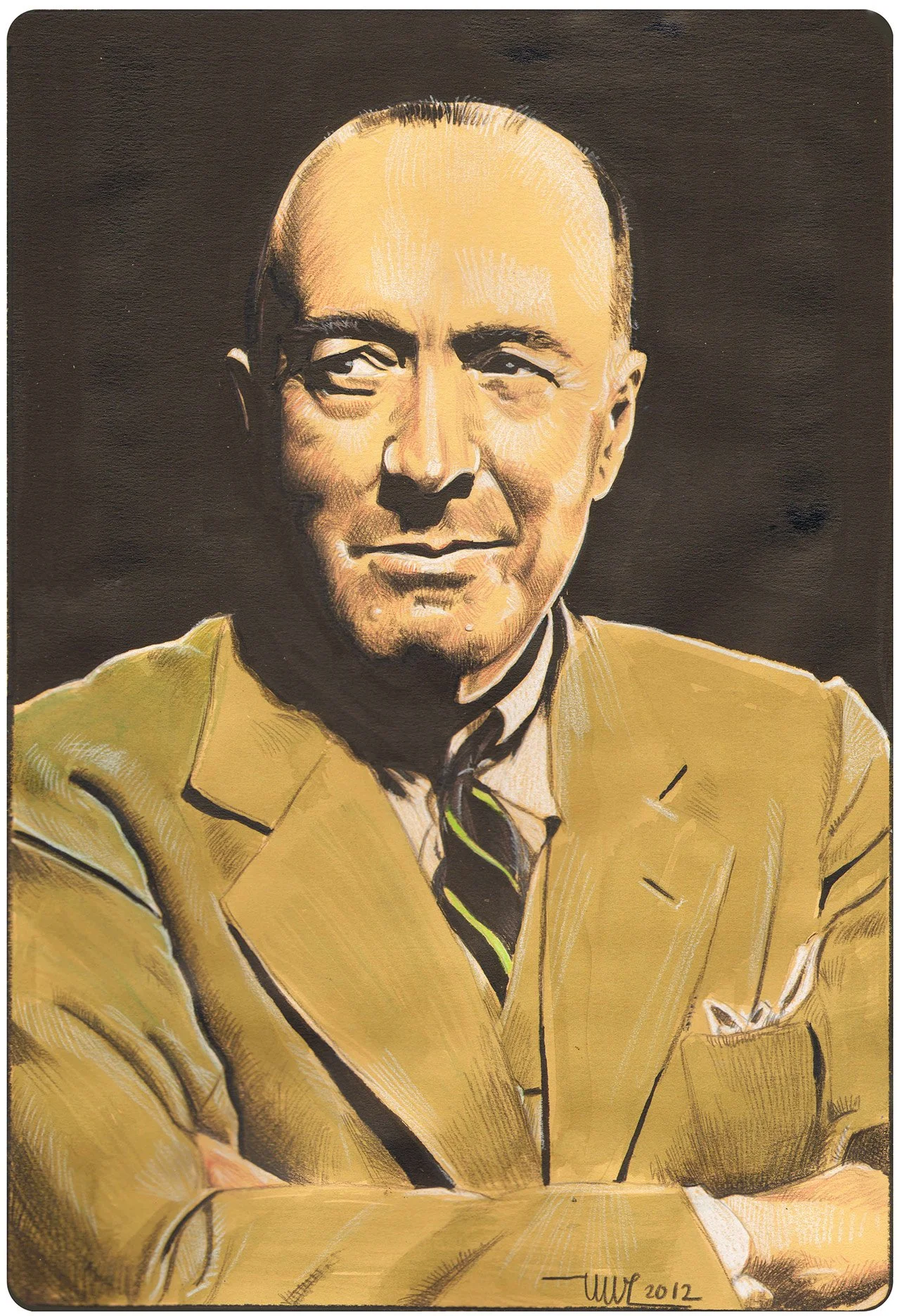
Edgar Rice Burroughs died in bed on this date in 1950, successful beyond his wildest dreams and beloved by his children and millions of fans around the world. One hundred years ago, three Burroughs tales were collected into an omnibus titled The Moon Maid. The three stories comprised what is known as ERB’s ‘Moon Trilogy’ or ‘Moon Sequence’. I have covered The Moon Maid here and The Moon Men here. The final book in the trilogy is “The Red Hawk”.
SPOILER: This book is a century old and is available in various formats.
The year is 2430 AD. Almost four centuries before, Kalkars--brutal humanoids from the interior of the Moon--led by a renegade American named Orthis, had invaded and conquered Earth. The Kalkars then imposed a crushing, collectivist regime across the planet, aided by Earth-born fellow travelers wishing for Utopia. For several reasons, technology and commerce rapidly declined.
Julian the 9th grew up in Chicago under the Kalkar yoke. He led an uprising against the Kalkars and was executed by a descendant of Orthis. His wife and son survived, leading a rebellion that spread world-wide.
Three centuries later, the North American Kalkars have been pushed into an enclave on the southern California coast, driven there by American tribes led by descendants of Julian. The story begins with Julian the 20th, the 'Red Hawk', looking down from the Simi Hills upon the San Fernando Valley.
"In the near distance the green of the orange groves mocked us from below, and great patches that were groves of leafless nut trees, and there were sandy patches toward the south that were vineyards waiting for the hot suns of April and May before they, too, broke into riotous, tantalizing green. And from this garden spot of plenty a curling trail wound up the mountainside to the very level where we sat gazing down upon this last stronghold of our foes.
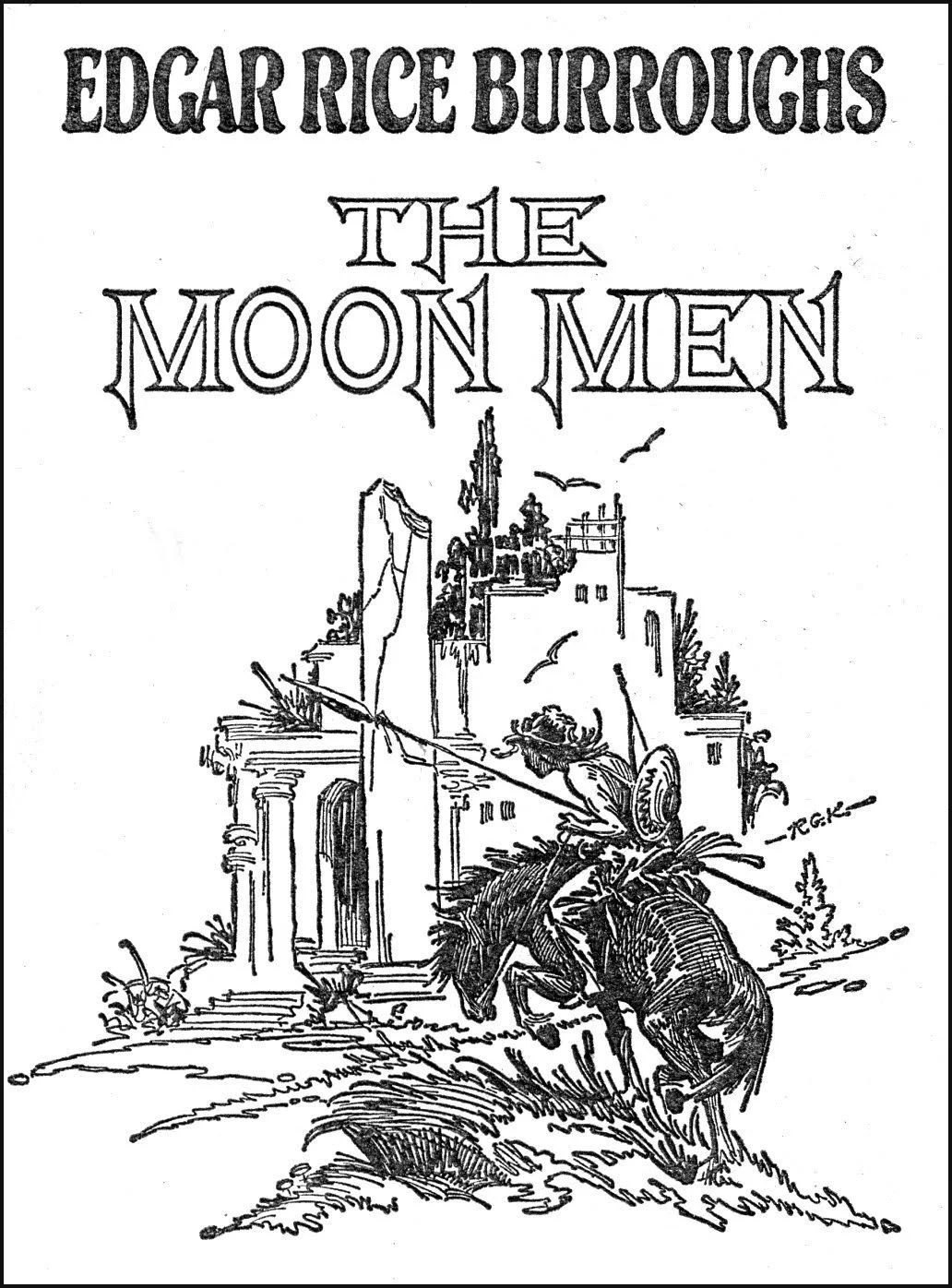
Roy Krenkel’s classic frontispiece for the 1962 edition, depicting the Red Hawk astride his trusty war-horse, Red Lightning.
When the ancients built that trail it must have been wide and beautiful indeed, but in the centuries that elapsed man and the elements have sadly defaced it. The rains have washed it away in places, and the Kalkars have made great gashes in it to deter us, their enemies, from invading their sole remaining lands and driving them into the sea... (...)
Since fell my great ancestor, Julian 9th, in the year 2122, at the end of the first uprising against the Kalkars, we have been driving them slowly back across the world. That was more than three hundred years ago. For a hundred years they have held us here, a day's ride from the ocean. Just how far it is we do not know; but in 2408 my grandfather, Julian 18th, rode alone almost to the sea."
That's epic. A centuries-old reconquista to take back their homeland from invaders beyond the sky.
Technology has regressed to a pre-gunpowder level. These are Americans gone feral, adapted to the landscape with the technology available.
"We are all garbed similarly. Let me describe the Wolf, and in his portrait you will see a composite of us all. He is a sinewy, well built man of fifty, with piercing gray-blue eyes beneath straight brows. His head is well shaped, denoting great intelligence. His features are strong and powerful and of a certain fierce cast that might well strike terror to a foeman's heart—and does, if the Kalkar scalps that fringe his ceremonial blanket stand for aught. His breeches, wide about the hips and skin tight from above the knees down, are of the skin of the buck deer. His soft boots, tied tight about the calf of each leg, are also of buck. Above the waist he wears a sleeveless vest of calfskin tanned with the hair on.
(...)
The Wolf is armed, as are the rest of us, with a light lance about eight feet in length, a knife and a straight two-edged sword. A short, stout bow is slung beneath his right stirrup leather, and a quiver of arrows is at his saddlebow."
Julian's people have become nomads of the Mojave, scalp-takers and widow-makers, never swerving from their ancient mission of eradicating the Kalkars who once enslaved, raped and killed their forebears. As the Red Hawk says:
"As I sat there looking down upon the land of the accursed Kalkars, my mind went back to the deeds of the fifteenth Julian, who had driven the Kalkars across the desert and over the edge of these mountains into the valley below just one hundred years before I was born, and I turned to the Wolf and pointed down toward the green groves and the distant hills and off beyond to where the mysterious ocean lay.
'For a hundred years they have held us here,' I said. 'It is too long.' "
Two months later, the Red Hawk assembles the fifty tribes under his command--called, collectively, the 'Julians'--for a final assault on the Kalkars. The Moon Men are still led by the original Orthis dynasty, though they are now called 'the Or-tis'. Here is an excerpt from the battle, wherein Red Hawk gets some generational payback:
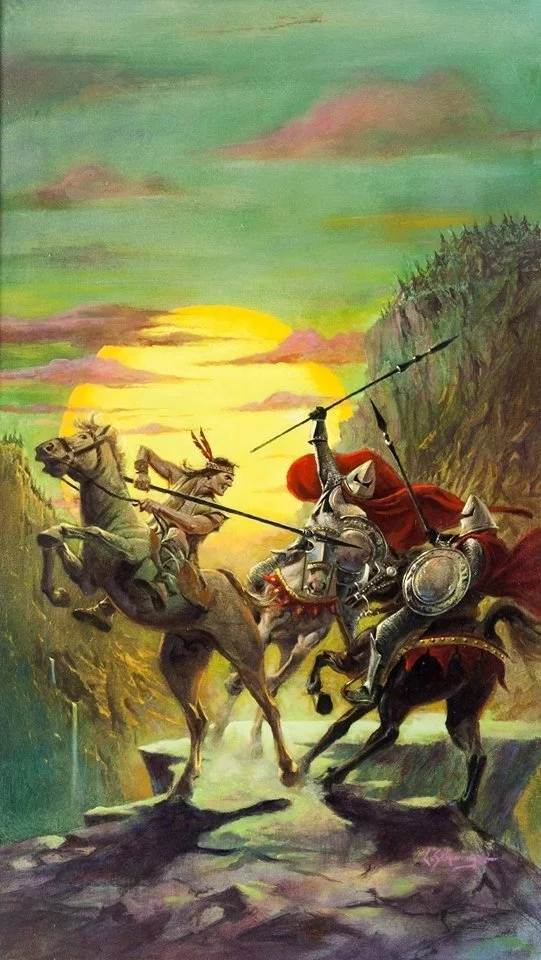
The Red Hawk vs Kalkars. Red Hawk’s hair is the right color. The color of Red Lightning—a bay stallion—is wrong.
"Swinging back to my seat in the instant that I wheeled Red Lightning, I was upon the Kalkar from the rear even as the fighting mass before him brought him to a halt. He was swinging to have at me again, but even as he faced me my sword swung down upon his iron bonnet [helmet], driving pieces of it through his skull and into his brain. A fellow on foot cut viciously at me at the instant I was recovering from the blow I had dealt the mounted Kalkar, so that I was able only partly to parry with my shield, with the result that his point opened up my right arm at the shoulder—a flesh wound, but one that bled profusely, although it did not stay the force of my return, which drove through his collar bone and opened up his chest to his heart."
Anyone who tries to tell you that Burroughs ‘needed more testosterone’ should read that passage. ERB rode with the 7th Cavalry.
The Kalkars launch a desperate night attack and manage to capture the Red Hawk. He is taken deeper into the Kalkar domain as they retreat. He describes them in this fashion:
"They range in height from six to eight feet, the majority of them being midway between these extremes. Many of them are bearded, but some shave the hair from all or portions of their faces. A great many wear beards upon their upper lips only. (...) They wear a white blouse and breeches of cotton woven by their slaves and long, woolen cloaks fabricated by the same busy hands. Their women help in this work as well as in the work of the fields, for the Kalkar women are no better than slaves..."
They bring the Red Hawk to one of their semi-ruined cities--'camps', as he calls them. He has no words to describe an urban environment, calling houses 'tents' and streets 'trails'. They then head to what the Kalkars call 'The Capitol', which would appear to be Los Angeles, though it is never named as such.
"Less than two hours later we were entering the greatest camp that man has ever looked upon. For miles we rode through it, our party now reduced to the score of warriors who guarded me. The others had halted at the outskirts of the camp to make a stand against my people and as we rode through the strange trails of the camp we passed thousands upon thousands of Kalkars rushing past us to defend the Capitol.
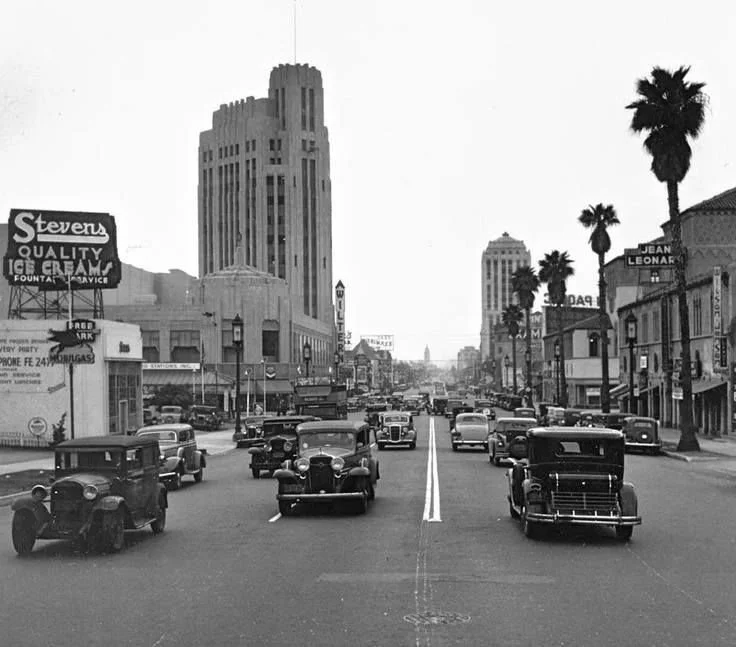
Los Angeles in the early 1920s.
We passed vast areas laid out in squares, as was the custom of the ancients, a trail upon each side of the square, and within the grass-grown mounds that covered the fallen ruins of their tents. Now and again a crumbling wall raised its ruin above the desolation, or some more sturdily constructed structure remained almost intact except for fallen roof and floors.
Now these mighty tents of a mighty people became larger. Whole squares of them remained and there were those that reared their weatherworn heads far into the sky. It was easy to believe that at night the moon might scrape against them. Many were very beautiful, with great carvings upon them and more and more of them, as we advanced, had their roofs and floors intact. These were the habitations of the Kalkars. They arose upon each side of the trails like the sides of sheer mountain canyons, their fronts pierced by a thousand openings.
The trail between the tents was deep with dust and filth. In places the last rains had washed clean the solid stone pavement of the ancients, but elsewhere the debris of ages lay thick, rising above the bottom of the lower opening in the tents in many places and spreading itself inward over the floors of the structures.
Bushes and vines and wild oats grew against the walls and in every niche that was protected from the trampling feet of the inhabitants. Offal of every description polluted the trails until my desert bred nose was distressed at the stench. Coarse Kalkar women, with their dirty brats, leaned from the openings above the level of the trail and when they caught sight of me they screamed vile insults."
Los Angeles in 2430 AD or 2026 AD? Asking for a friend.
When ERB wrote the “The Red Hawk” in 1924, he lived north of L.A. on his Tarzana Ranch. The city described above seems bigger and sports more skyscrapers than what Ed would’ve seen in 1924. Thus, he extrapolated, which is what a proper sci-fi writer does.
The Red Hawk is imprisoned on the top floor of a skyscraper along with another captive of the Kalkars. The captive enlightens the Red Hawk on further details of Kalkar culture:
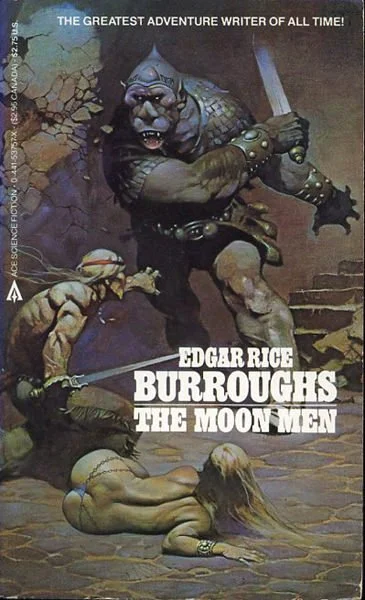
The Red Hawk versus the Final Boss Kalkar, RabanFrazetta got the Red Hawk’s hair color wrong, but this is still one of his greatest covers of the ‘70s.
"[The Kalkars] breed like rabbits. Their women are married before they are fifteen, as a rule. If they have no child at twenty they are held up to scorn and if they are still childless at thirty they are killed, and unless they are mighty good workers they are killed at fifty anyhow—their usefulness to the State is over."
State-assisted 'suicide'? Wow. That Burroughs guy had a wild imagination.
I won't spoil the rest of the story. Suffice it to say that politics makes strange bedfellows and, as the Sicilian proverb goes, 'Blood washes blood'.
Thus ends my review of Edgar Rice Burroughs' "The Red Hawk". However, I certainly have some more analysis and commentary regarding it and the trilogy as a whole.
In closing, I want to note the shift in locales between The Moon Men and "The Red Hawk". That was almost certainly not an accident on Ed's part. He was born in Chicago and lived there at the beginning of his literary career. In 1919, he moved to the San Fernando Valley, where he established the Tarzana Ranch. Essentially, "The Red Hawk" is set in his backyard.
Raise a glass to the shade of Edgar Rice Burroughs, sword-brothers. He was a prescient man and a world-class teller of adventure tales.
The entire ‘Moon Trilogy’ review series:
Edgar Rice Burroughs' 'Moon Trilogy' -- One Hundred Years On
Burroughs' Moon Trilogy -- Under the Kalkar Flag
Burroughs' Moon Trilogy -- Taking Back America!
m