
Lovecraft's Shout-Outs to Robert E. Howard
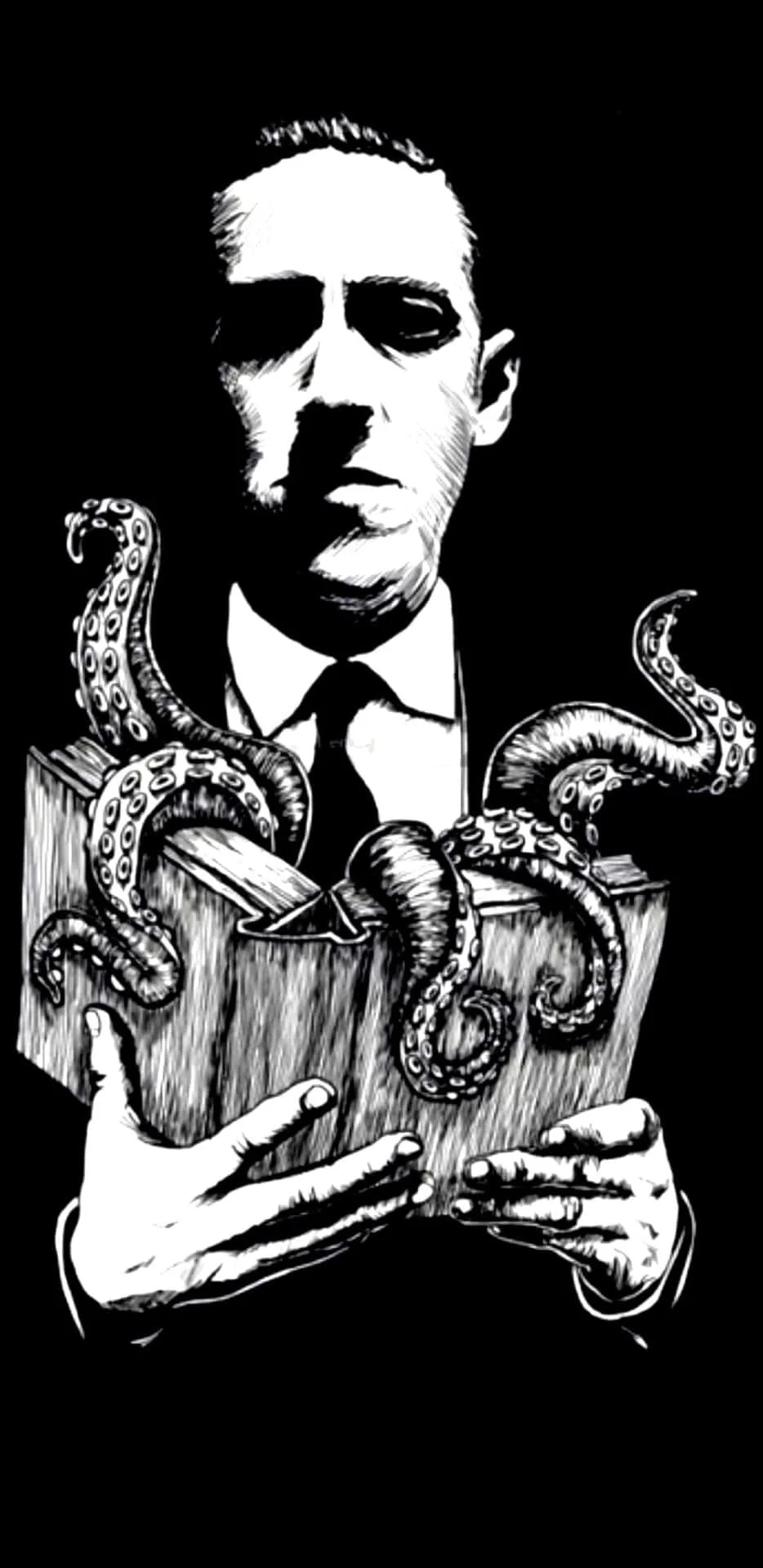
“The character and attainments of Mr. [Robert E.] Howard were wholly unique. He was, above everything else, a lover of the simpler, older world of barbarian and pioneer days, when courage and strength took the place of subtlety and stratagem, and when a hardy, fearless race battled and bled, and asked no quarter from heartless nature. (…)
Not only did he excel in pictures of strife and slaughter, but he was almost alone in his ability to create real emotions and spectral fear and dread suspense.” — H.P. Lovecraft, “In Memoriam”, 1936
March 15, 2026 marked the eighty-ninth anniversary of H.P. Lovecraft’s departure from this mortal coil. In honor of that—and of the fact that 2026 is also a fairly significant anniversary for Robert E. Howard—I decided to go through the Old Gent’s officially published works and quote the passages where he mentions the creations of REH, thus formally bringing them within the Cthulhu Mythos.
HPL began corresponding with Robert E. Howard in 1930. It all started with a discussion about a Gaelic sentence in Lovecraft’s “The Rats in the Walls”. Lovecraft had ‘borrowed’ it from a tale by Fiona McLeod. I shall write more on McLeod at some future date.
When Lovecraft read that first letter from Howard—HPL’s first name was also ‘Howard’, by the way—he realized he was dealing with a formidable fellow intellect. Thus began one of the great correspondences in the history of weird literature, which was immortalized in the two-volume set, A Means to Freedom.
Lovecraft told REH that he would name-check some of Howard’s creations in his future tales and he fulfilled that promise.
The earliest mentions can be found in "The Whisperer in Darkness", which was finished in September of 1930:
"I found myself faced by names and terms that I had heard elsewhere in the most hideous of connexions—Yuggoth, Great Cthulhu, Tsathoggua, Yog-Sothoth, R’lyeh, Nyarlathotep, Azathoth, Hastur, Yian, Leng, the Lake of Hali, Bethmoora, the Yellow Sign, L’mur-Kathulos, Bran, and the Magnum Innominandum—and was drawn back through nameless aeons and inconceivable dimensions to worlds of elder, outer entity at which the crazed author of the Necronomicon had only guessed in the vaguest way."
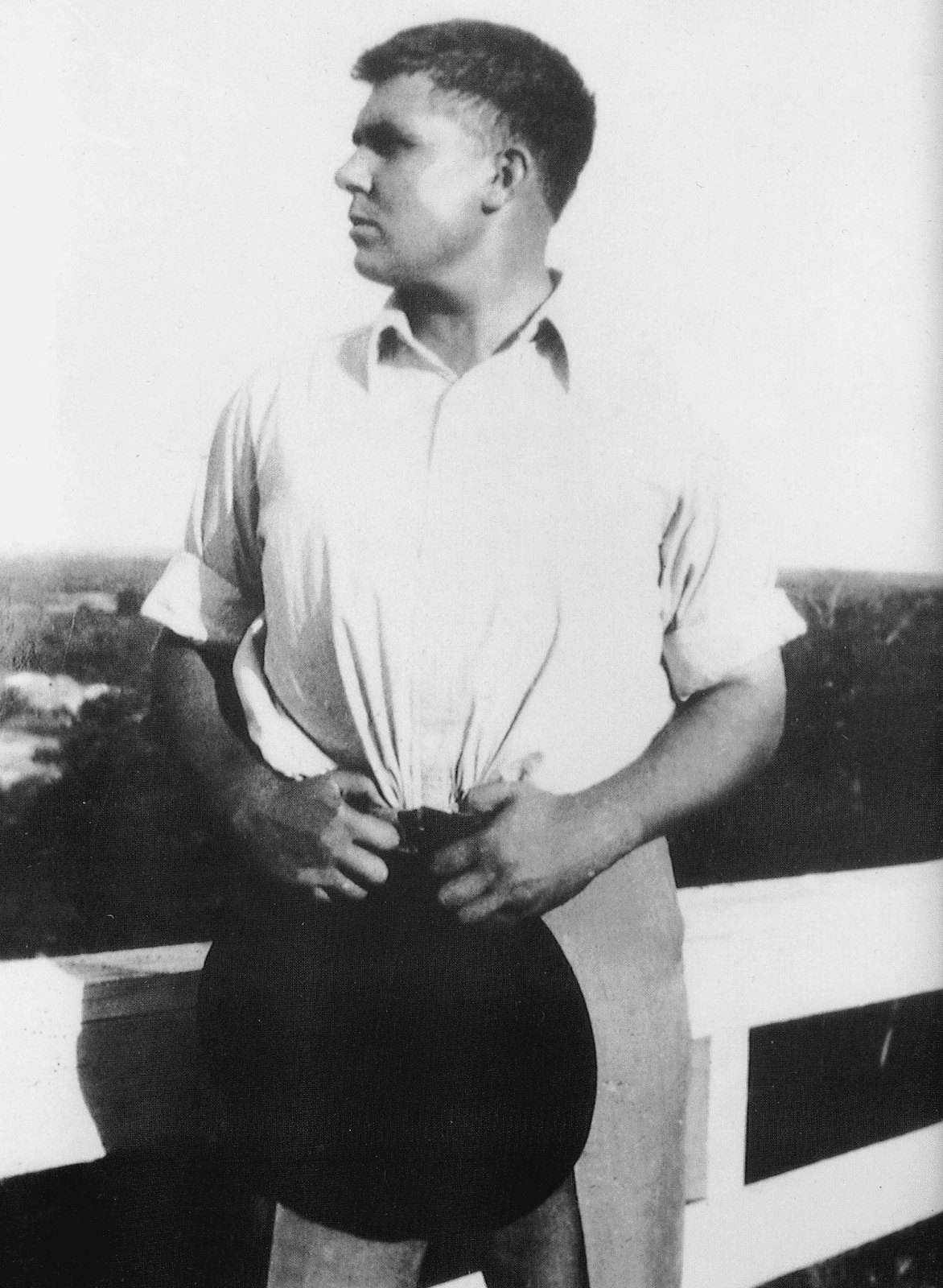
First up is “L’mur-Kathulos”. This is a very thinly veiled reference to the antagonist in Howard’s “Skull-Face”. HPL said in his letters that Howard’s “Wolfshead” made him take notice, but that “The Shadow Kingdom” and “Skull-Face” really put the Texan on his radar. Some have tried to say that the “L’mur” somehow refers to ‘Lemuria’. Considering Kathulos’ plainly-stated Atlantean pedigree in “Skull-Face”, I doubt that.
The mention of “Bran” was probably a little bit enigmatic to many readers of Weird Tales at the time. It refers to Bran Mak Morn, but makes little sense if it references the man himself. I have to think it actually means the ‘Bran cult’ which REH spoke of in “The Children of the Night”—which was published in 1931. I need to go back and check the letters from that period and see if Howard mentions it. Regardless, the entire question surrounding why the Bran cult was (apparently) so fearsome is something I need to address in another post.
Also of interest is the mention of ‘Tsathoggua’. While that toad-like Old One was first put to paper in 1929 by Clark Ashton Smith, Tsathoggua wouldn’t be mentioned/published under CAS’ byline until after Robert E. Howard had already name-checked the deity in “The Children of the Night”. However, S.T. Joshi persists in saying that Lovecraft was the first to do so in “The Whisperer in Darkness” despite clear evidence to the contrary. Judge Mr. Joshi’s other statements accordingly. He obviously suffers from ‘REH Derangement Syndrome’.
Next up was the epic short novel, At the Mountains of Madness, written in March of 1931. In it, two explorers discover a vast, pre-human city in the depths of the Antarctic interior.
“Here sprawled a palaeogean megalopolis compared with which the fabled Atlantis and Lemuria, Commoriom and Uzuldaroum, and Olathoë in the land of Lomar are recent things of today—not even of yesterday; a megalopolis ranking with such whispered pre-human blasphemies as Valusia, R’lyeh, Ib in the land of Mnar, and the Nameless City of Arabia Deserta. (…)
Maps evidently shewing the Carboniferous world of an hundred million or more years ago displayed significant rifts and chasms destined later to separate Africa from the once continuous realms of Europe (then the Valusia of hellish primal legend), Asia, the Americas, and the antarctic continent."
These two passages are truly interesting. They demonstrate how deeply HPL understood Howard’s yarns—at least some of the time.
That is evident due to the distinctions the Old Gent makes between the two ‘Valusias’ in the two passages. In the first, Valusia is a ‘pre-human megalopolis’, along with R’lyeh and Ib. He is referring to the city of Valusia, which city Robert E. Howard strongly hinted was founded by the eldritch serpent-men in “The Shadow Kingdom”. It should be noted that Valusia is the only pre-human city Lovecraft names beside those he himself created. A high honor, one not extended to any of the contemporary creations by other members of the Lovecraft Circle.
In the second quote, pre-human ‘Valusia’ is a region or realm, corresponding—to some extent—to Europe. This is also compatible with what REH wrote in “The Shadow Kingdom”.
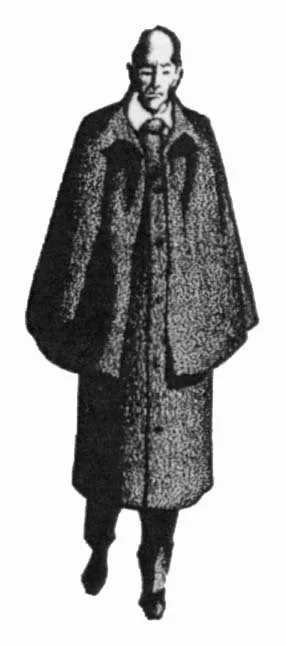
REH’s mad poet, Justin Geoffrey, as depicted by Stephen Fabian.
Unfortunately, the inimitable S.T. Joshi—who is shamefully ignorant and hostile regarding the works of Robert E. Howard—never spots this distinction. Every time he annotates the works of Lovecraft, he only notes Valusia as being some sort of region or kingdom. The capital of Valusia is Valusia, the city so nice they named it twice.
"The Thing on the Doorstep” was completed in August of 1933. It remains one of my favorite Lovecraft tales. Edward Derby is the scion of a respectable family in Arkham.
"Young [Edward] Derby’s odd genius developed remarkably, and in his eighteenth year his collected nightmare-lyrics made a real sensation when issued under the title Azathoth and Other Horrors. He was a close correspondent of the notorious Baudelairean poet Justin Geoffrey, who wrote The People of the Monolith and died screaming in a madhouse in 1926 after a visit to a sinister, ill-regarded village in Hungary. (…)
He read things like the frightful Book of Eibon, the Unaussprechlichen Kulten of von Junzt, and the forbidden Necronomicon of the mad Arab Abdul Alhazred, though he did not tell his parents he had seen them."
Here, Lovecraft notes Justin Geoffrey, the poet referenced in REH’s “The Black Stone” and “The Thing on the Roof”. In addition, HPL brings up Friedrich von Junzt and his forbidden book, Unaussprechlichen Kulten. Edward Derby was a naughty boy.
"The Shadow out of Time" is considered HPL's last major work. It was finished in February of 1935. In it, a modern-day scientist has his psyche transported to the past, where he communes with various intellects from across numerous epochs of Earth’s history, both past and future.
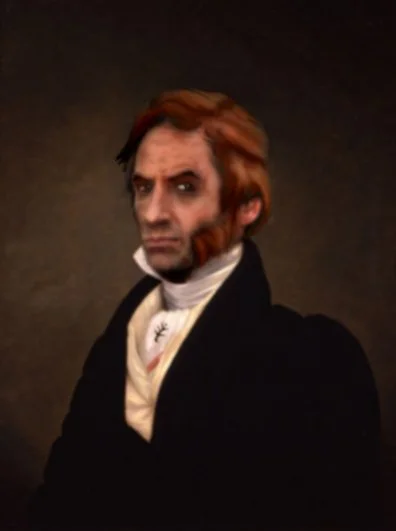
A portrait of Friedrich von Junzt, painted by Mr. Zarono.
"There is tangible proof—in the form of marginal notes—that I went minutely through such things as the Comte d’Erlette’s Cultes des Goules, Ludvig Prinn’s De Vermis Mysteriis, the Unaussprechlichen Kulten of von Junzt, the surviving fragments of the puzzling Book of Eibon, and the dreaded Necronomicon of the mad Arab Abdul Alhazred. (…)
There was a mind from the planet we know as Venus, which would live incalculable epochs to come, and one from an outer moon of Jupiter six million years in the past. Of earthly minds there were some from the winged, star-headed, half-vegetable race of palaeogean Antarctica; one from the reptile people of fabled Valusia; three from the furry pre-human Hyperborean worshippers of Tsathoggua; one from the wholly abominable Tcho-Tchos; two from the arachnid denizens of earth’s last age; five from the hardy coleopterous species immediately following mankind, to which the Great Race was some day to transfer its keenest minds en masse in the face of horrible peril; and several from different branches of humanity.
I talked with the mind of Yiang-Li, a philosopher from the cruel empire of Tsan-Chan, which is to come in A.D. 5000; with that of a general of the great-headed brown people who held South Africa in B.C. 50,000; with that of a twelfth-century Florentine monk named Bartolomeo Corsi; with that of a king of Lomar who had ruled that terrible polar land 100,000 years before the squat, yellow Inutos came from the west to engulf it; with that of Nug-Soth, a magician of the dark conquerors of A.D. 16,000; with that of a Roman named Titus Sempronius Blaesus, who had been a quaestor in Sulla’s time; with that of Khephnes, an Egyptian of the 14th Dynasty who told me the hideous secret of Nyarlathotep; with that of a priest of Atlantis’ middle kingdom; with that of a Suffolk gentleman of Cromwell’s day, James Woodville; with that of a court astronomer of pre-Inca Peru; with that of the Australian physicist Nevil Kingston-Brown, who will die in A.D. 2518; with that of an archimage of vanished Yhe in the Pacific; with that of Theodotides, a Graeco-Bactrian official of B.C. 200; with that of an aged Frenchman of Louis XIII’s time named Pierre-Louis Montmagny; with that of Crom-Ya, a Cimmerian chieftain of B.C. 15,000; and with so many others that my brain cannot hold the shocking secrets and dizzying marvels I learned from them."
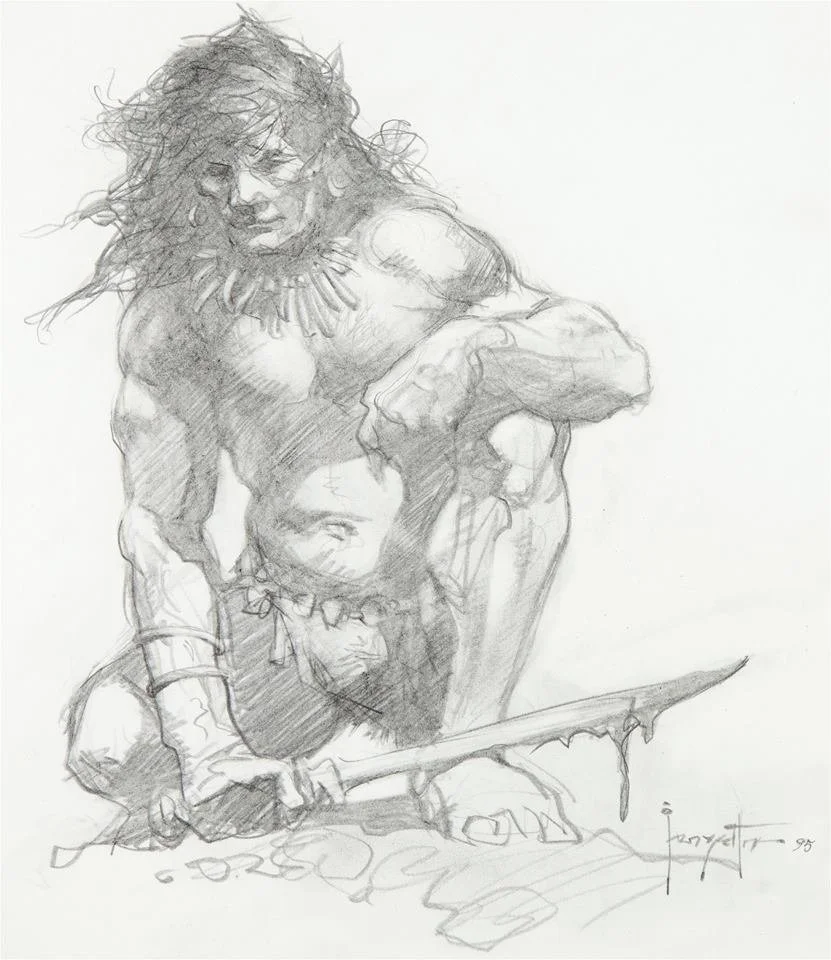
Crom-Ya, 15,000 BC.
Once again, we see von Junzt, a man who sacrificed everything to warn humanity about the eldritch threats to its sheer existence, cited by HPL. Yet again, the primordial serpent-men of Valusia are noted. However, this Lovecraft tale is unique in name-checking REH’s Cimmerians. While there were historical Cimmerians, this mention obviously refers to Howard’s Cimmerians; post-Hyborian Age but still prehistoric.
Lovecraft completed "The Haunter of the Dark" in November of 1935. The protagonist is Robert Blake, a Midwesterner who stumbles upon an accursed artifact in Providence, Rhode Island. In this passage, his diary is being posthumously examined.
"Of the Shining Trapezohedron [Blake] speaks often, calling it a window on all time and space, and tracing its history from the days it was fashioned on dark Yuggoth, before ever the Old Ones brought it to earth. It was treasured and placed in its curious box by the crinoid things of Antarctica, salvaged from their ruins by the serpent-men of Valusia, and peered at aeons later in Lemuria by the first human beings. It crossed strange lands and stranger seas, and sank with Atlantis before a Minoan fisher meshed it in his net and sold it to swarthy merchants from nighted Khem. The Pharaoh Nephren-Ka built around it a temple with a windowless crypt, and did that which caused his name to be stricken from all monuments and records."
Once again, in the very last tale he wrote, Lovecraft brings up the serpent-men of Valusia. In fact, this time he actually calls them “serpent-men”, an improvement from “The Shadow out of Time”. I have my theories about that which I’ll explain in a future post.
After reading all of the quotes above, what really jumps out is how much Lovecraft truly loved the concept of the Valusian serpent-men along with von Junzt and the 'Black Book'/Unaussprechlichen Kulten. Beyond those two, he still ropes in several other Howardian creations. In fact, I would estimate--not having done a statistical analysis of the texts--that REH's creations are mentioned about as much in HPL’s fiction as Clark Ashton Smith's and moreso than many others within the Lovecraft Circle. While some modern 'Lovecraftians'--such as S.T. Joshi--sneer at Howard's contributions to the Mythos, HPL obviously never did.
With that in mind, raise a glass of eldritch vintage to the memory of Lovecraft, sword-brothers. Robert E. Howard certainly would.