
A. Merritt and Virgil Finlay
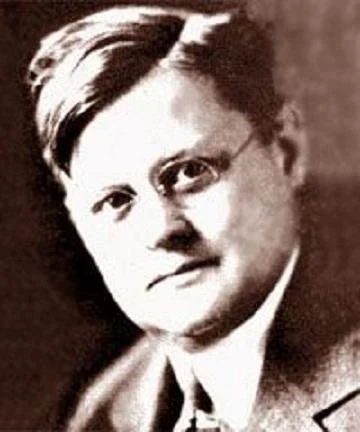
A. Merritt, pulp fiction legend.
“A. Merritt: a Master of Fantasy.” — Virgil Finlay
On August 21, 1943, A. (Abraham) Merritt passed away at his winter home in Indian Rocks Beach, Florida. He died a successful man. Rising from the position of cub reporter in Philadelphia, Merritt worked his way up to assistant editor at The American Weekly, the largest-circulation and most successful Sunday newspaper supplement on the planet. In 1937, he--reluctantly--became editor-in-chief. That promotion marked a slight upward mobility for Merritt, who was already rich from his former position and from the huge success of his tales of adventure and horror. However, it led to a major turning point in the career of the artist, Virgil Finlay.
I'll let the late, lamented Robert Weinberg--one of the great pulp scholars and collectors of Finlay's art--tell the story:
“Virgil Warden Finlay was born July 23, 1914 in Rochester, New York. From an early age he exhibited the beginning of a lifelong interest in the arts. By the time he reached high school, he was convinced he wanted to become a gallery artist. Obsessive about art in general, he studied all forms of art, and one teacher, Gertrude Botteford, introduced him to scratchboard illustration.
As years passed, Finlay refined his technique, drawing directly onto scratchboard using a 290 lithographic pen, a pen point so fine that most artists couldn’t use it. Sometimes, it took the artist months of searching to find a pen that would allow the ink to flow properly.
Like so many other teenagers of the time, Finlay discovered the pulps—cheaply priced fiction magazines usually costing a dime. He began reading the first science fiction magazine, Amazing Stories, in 1928, and discovered Weird Tales a year later. Subtitled The Unique Magazine, the pulp regularly published stories by H.P. Lovecraft, Robert E. Howard, and Clark Ashton Smith. Mesmerized by the contents, the young man was soon a devoted fan.
In 1935, at age 21, Finlay submitted five illustrations to Weird Tales. He was convinced he could produce better art than most of the staff artists working for the magazine. He was right. By early 1936, he was providing memorable originals for the pulp. Finlay’s first cover appeared in February 1937 with his illustration for Globe of Memories, a historical tale of reincarnation by Seabury Quinn. Quinn was perhaps the most popular author writing for Weird Tales at the time, and being assigned a Quinn cover story was a major triumph for Finlay. The painting was a huge hit with the readers, and editor Farnsworth Wright immediately commissioned him to do more. Success with Weird Tales was only the beginning of Finlay’s rise.”

The July 1937 issue of Weird Tales, wherein appeared a poem written in praise of the young Finlay by none other than H.P. Lovecraft. This is one of Virgil’s earliest covers for WT. The same painting was used for DMR Books’ The Thief of Forthe and Other Stories.
Finlay's art was in issue after issue of Weird Tales. H.P. Lovecraft was so impressed, he wrote a poem in praise of Virgil which was published in The Unique Magazine a few months after the Old Gent’s death. However, there was another avid WT reader who also had noticed Finlay's work: A. Merritt.
"In November 1937, Finlay received a letter from Abraham Merritt, the editor of The American Weekly newspaper, saying that as a reader of Weird Tales he liked Finlay’s art very much and that “there might be an advantageous opening on The American Weekly at the present time for you.” Merritt was a famous fantasy writer who had retired from writing to edit The Weekly, the Sunday newspaper supplement that was distributed with all of the Hearst newspapers and which boasted the largest circulation of any newspaper section in the world. More important, from Finlay’s point of view, working for the newspaper as a staff artist paid $80 a week, so a very flattered Finlay moved to Manhattan and began producing incredible illustrations for the newspaper supplement."

Virgil in his final years. Portrait by Gerry de la Ree.
Virgil had hit the big time.
Finlay was already a long-time fan of Merritt and Merritt returned the admiration. That said, ol' Abe had a very successful business to run, with devoted employees who depended on him. As it turns out, Finlay's most unique stylistic trait--his intricate stippling--was a problem. That technique was very labor-intensive. Virgil started turning in artwork late--plus, he apparently was taking two-hour lunch breaks. Merritt cut him some slack but finally had to fire him after an initial employment of six months.
In a surviving letter sent in March of 1940, Merritt gave Finlay another chance:
"Dear Virgil, Your work is all right and getting better. The main trouble was slowness, but I think you have overcome this. Of course, putting you back on the payroll means you will have to keep office hours. I am making the change effective as of the payroll next week -- starting Monday and at $70. Good luck to you, Virgil. Yours, A. Merritt"
Finlay returned, staying on at The Weekly until Merritt's death.
As time would tell, not even the Grim Reaper could sever the synergy between the two titans. Finlay would go on to illustrate most of Merritt’s fiction by way of Famous Fantastic Mysteries and A. Merritt’s Fantasy Magazine, wherein Virgil produced some of his best work ever.
Below, you'll find merely a sample of the many classic artworks Virgil created for the tales of the man he called "a Master of Fantasy".
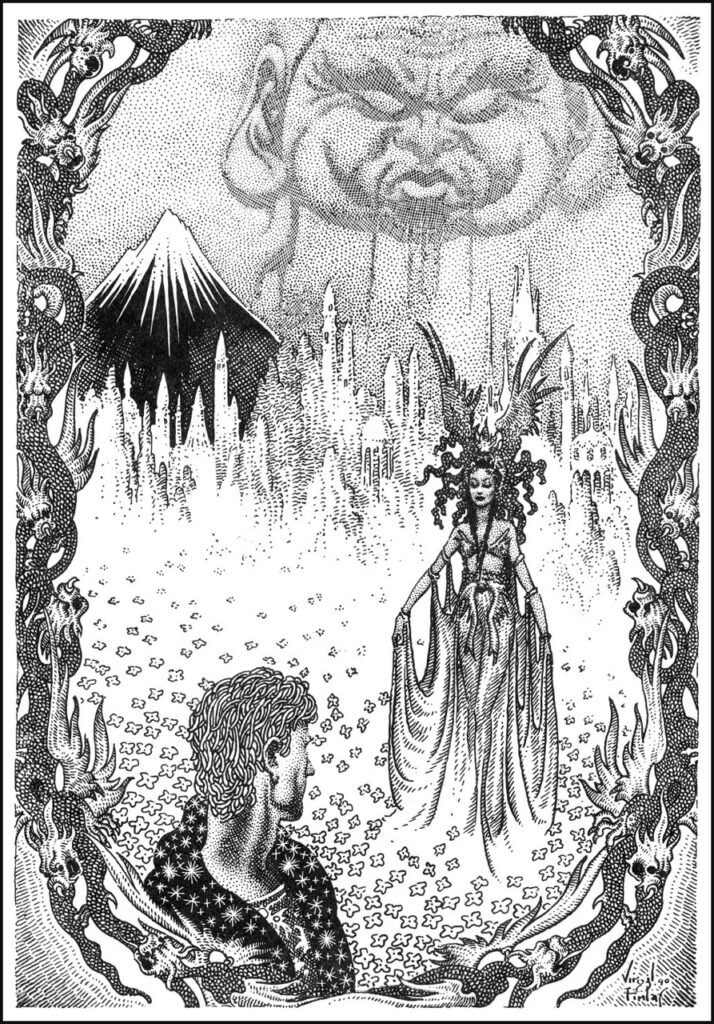
The classic illustration for Merritt’s first published tale, “Through the Dragon Glass”.
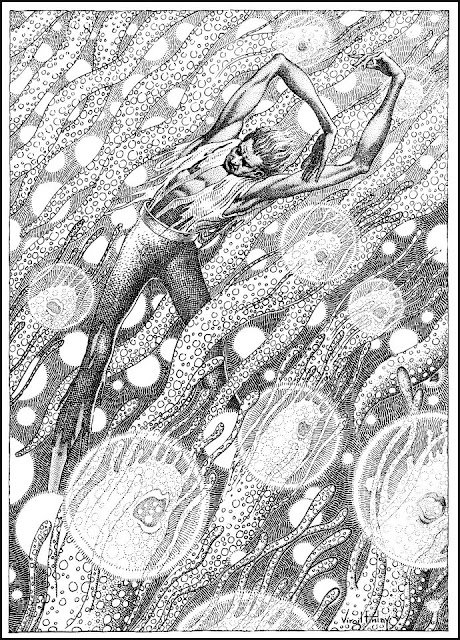
Finlay’s art for Merritt’s influential tale of cosmic horror, “The People of the Pit”.
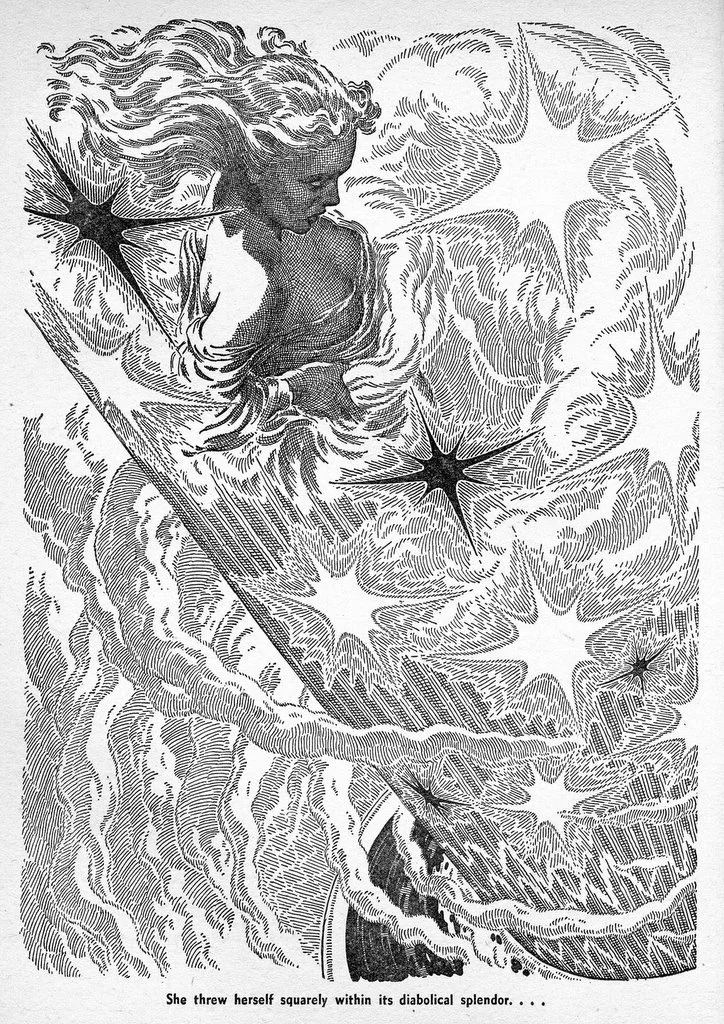
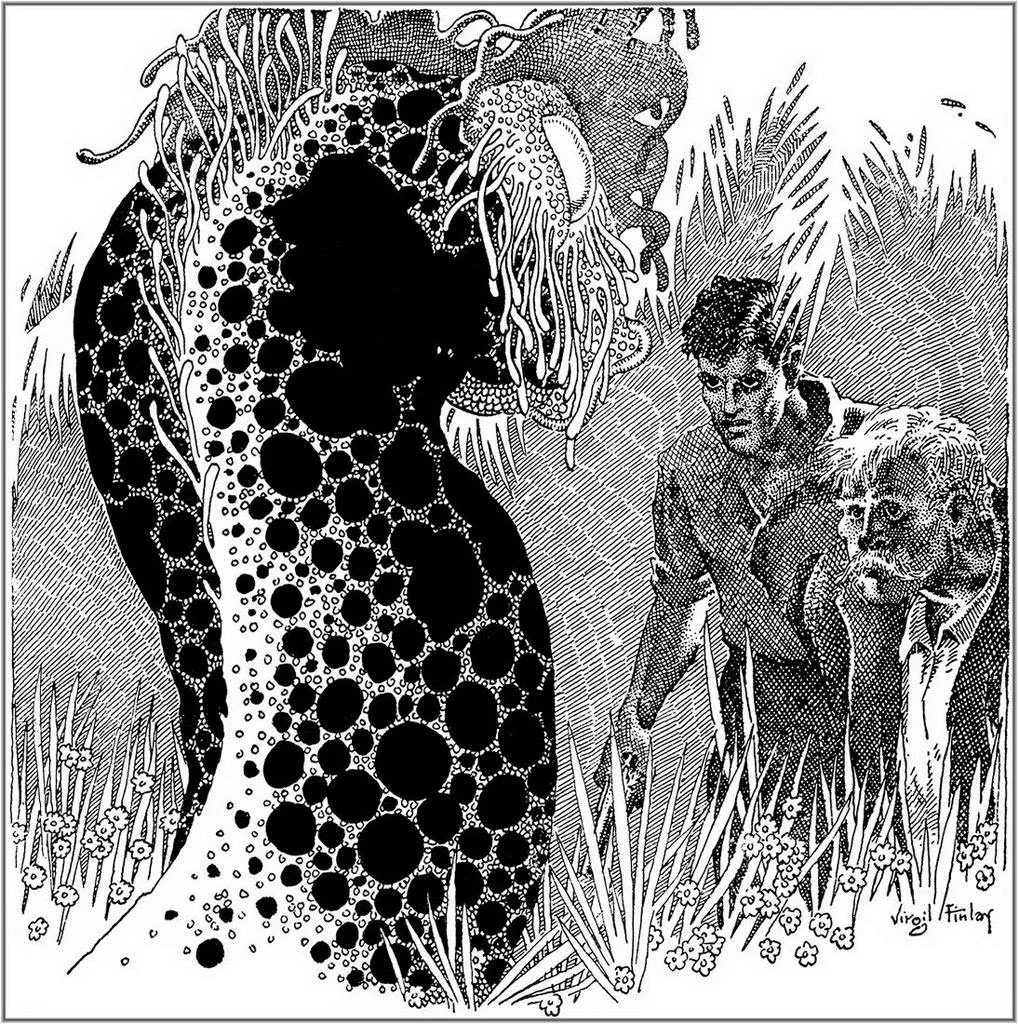
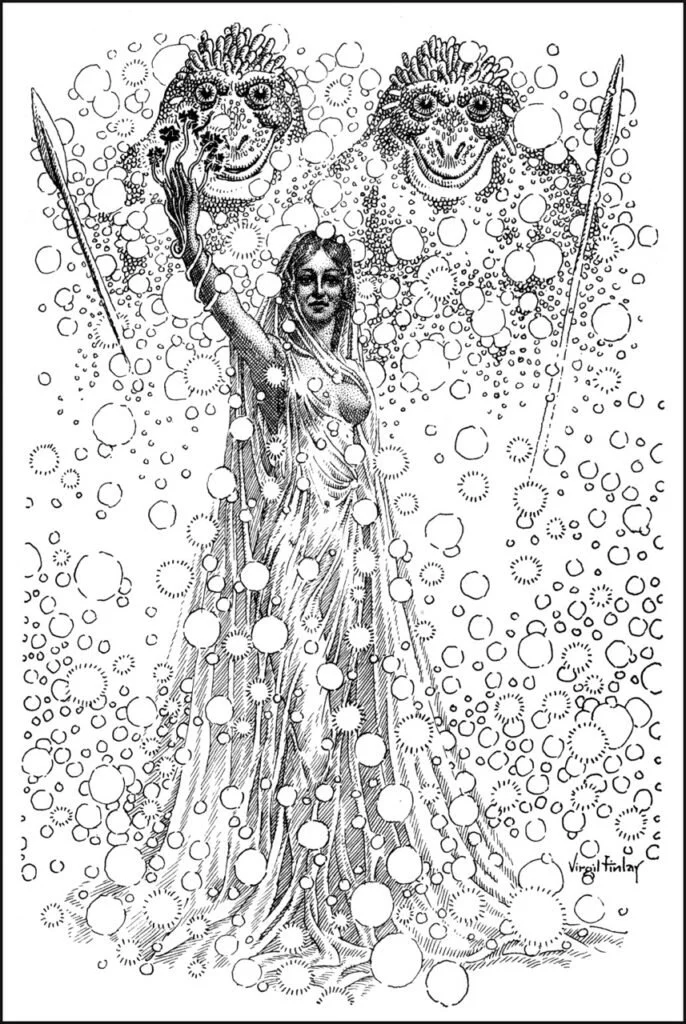
The three illustrations above were all created for Merritt’s first novel, The Moon Pool, which novel launched him into the top-tier of pulp SFF authors.
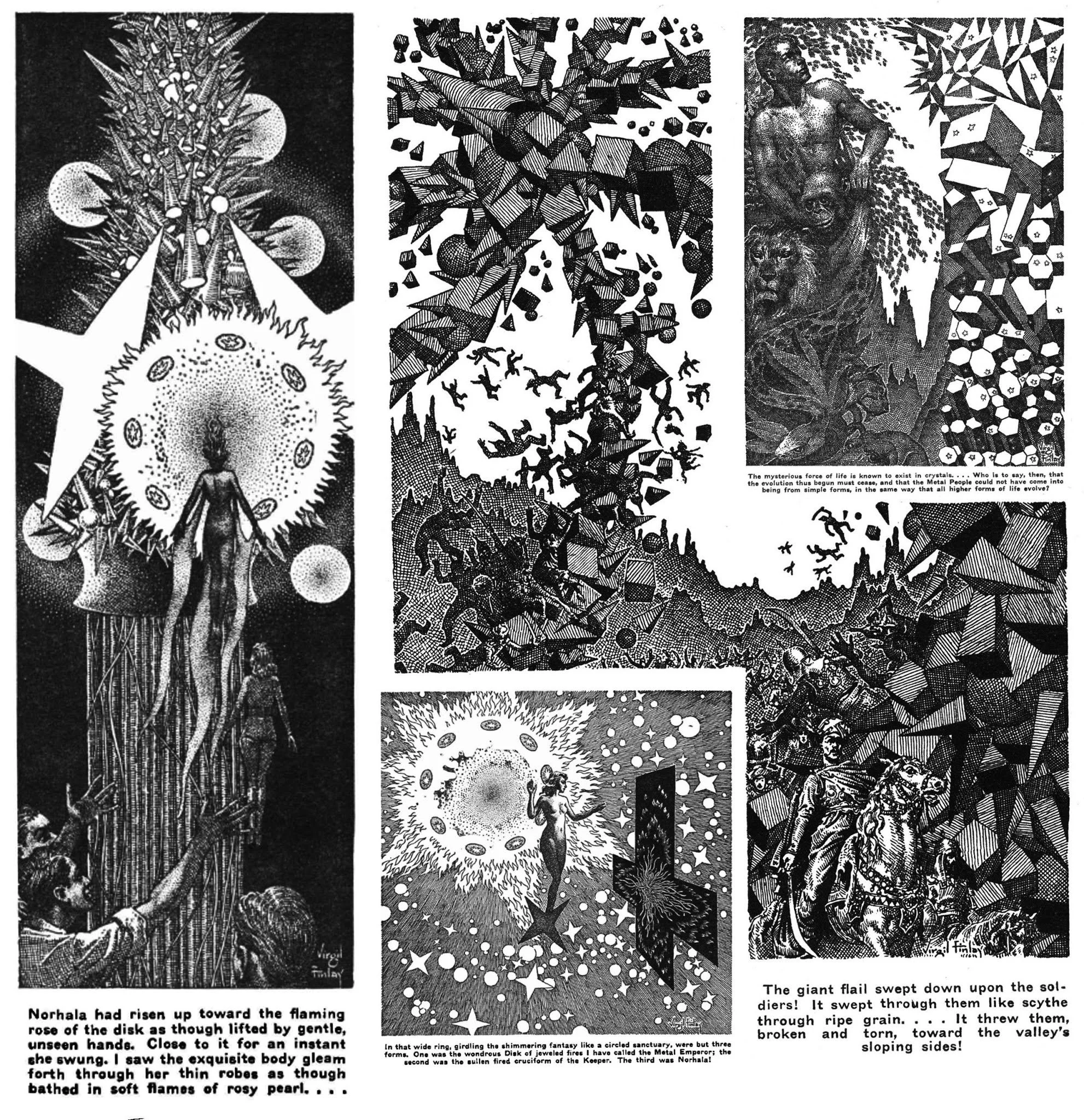
Illustrations for Merritt’s 1920 novel, The Metal Monster.
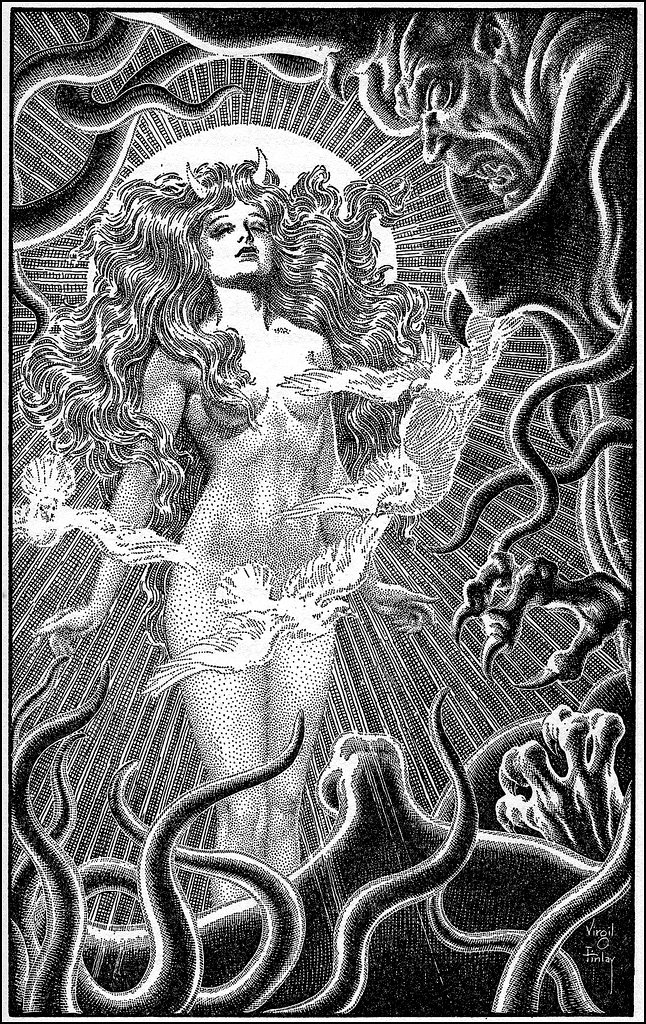
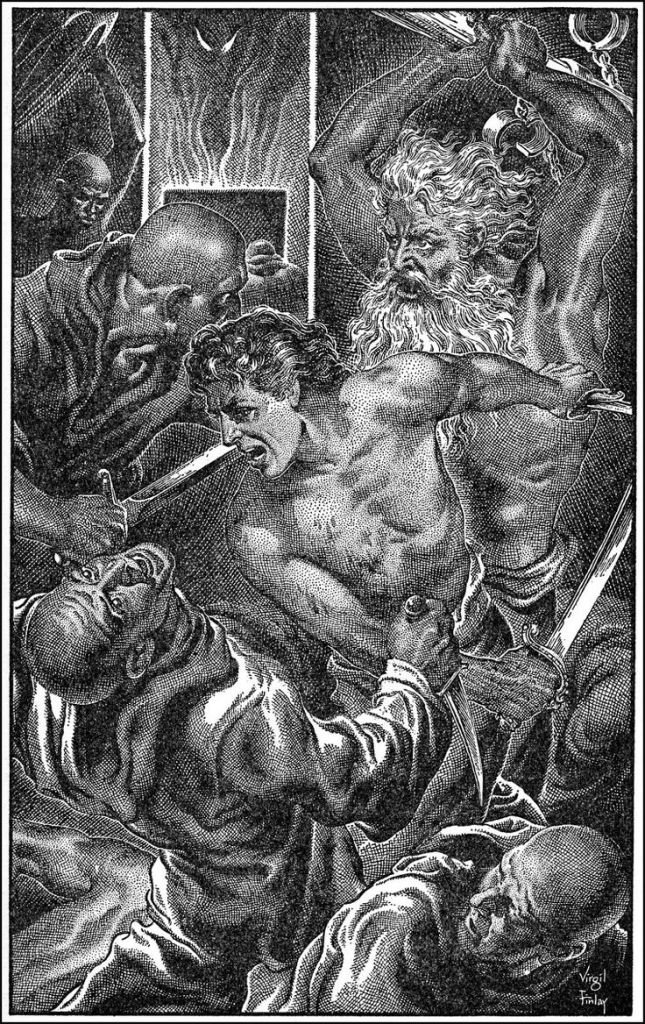
Two illustrations from Merritt’s legendary heroic fantasy novel, The Ship of Ishtar. DMR Books publishes the definitive edition of this classic tale.
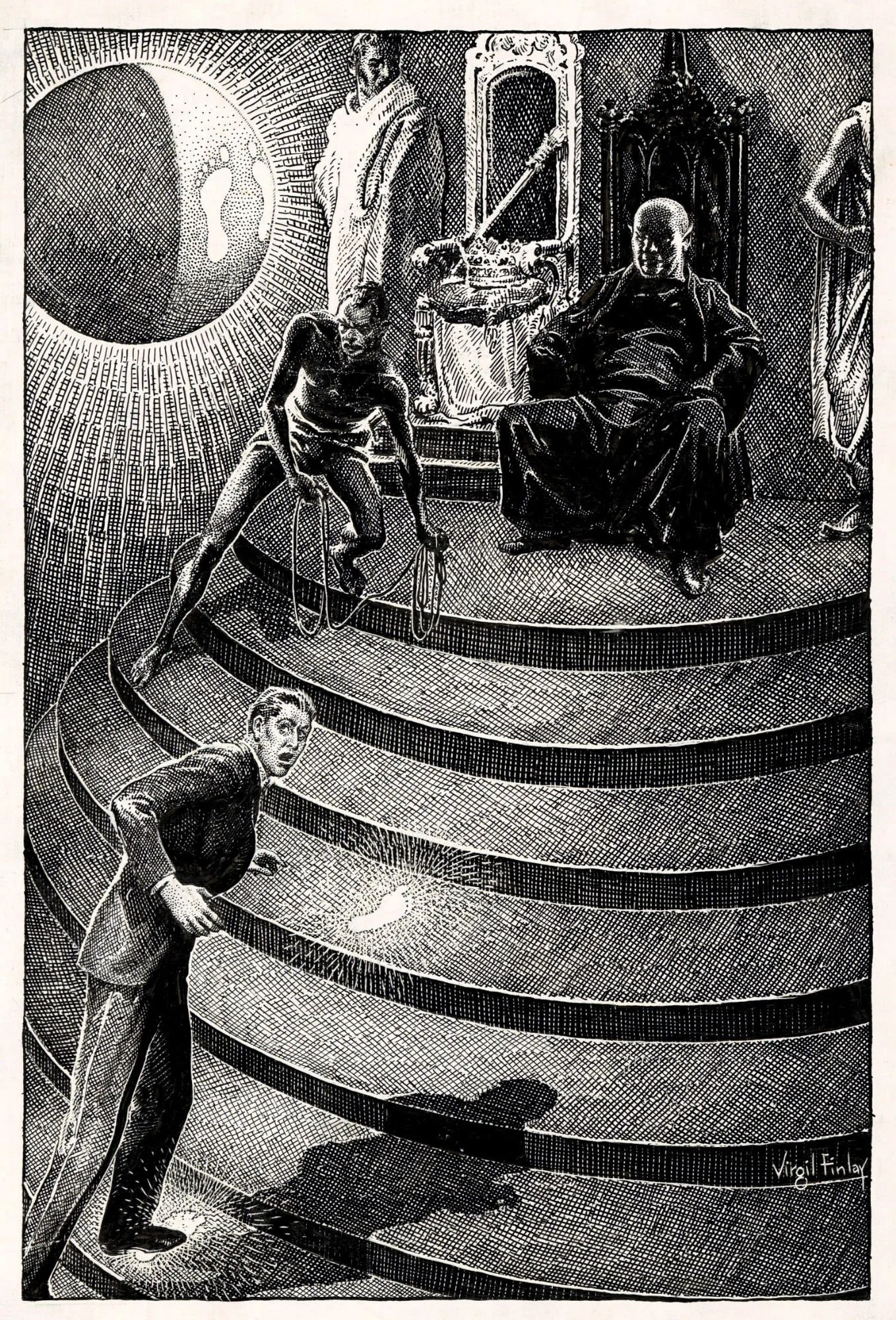
Virgil Finlay’s illustration for Merritt’s 1927 novel of intrigue and suspense, Seven Footprints to Satan.
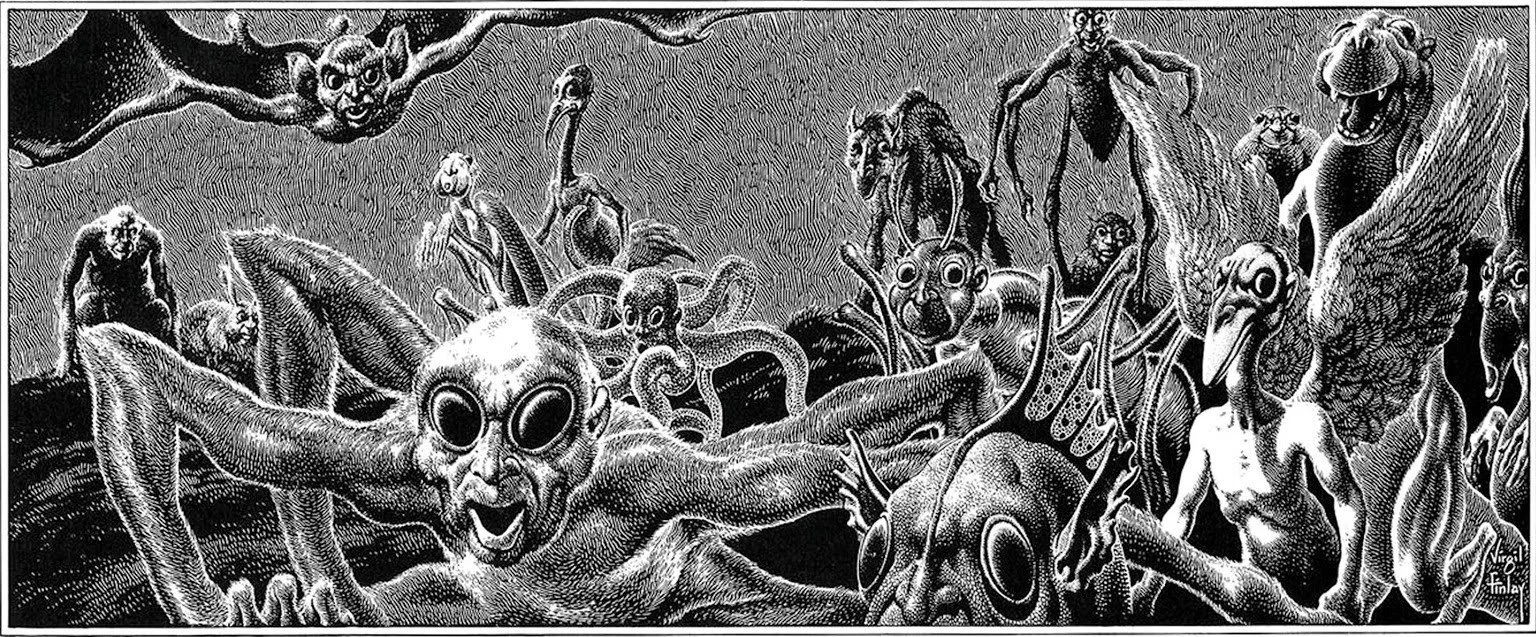
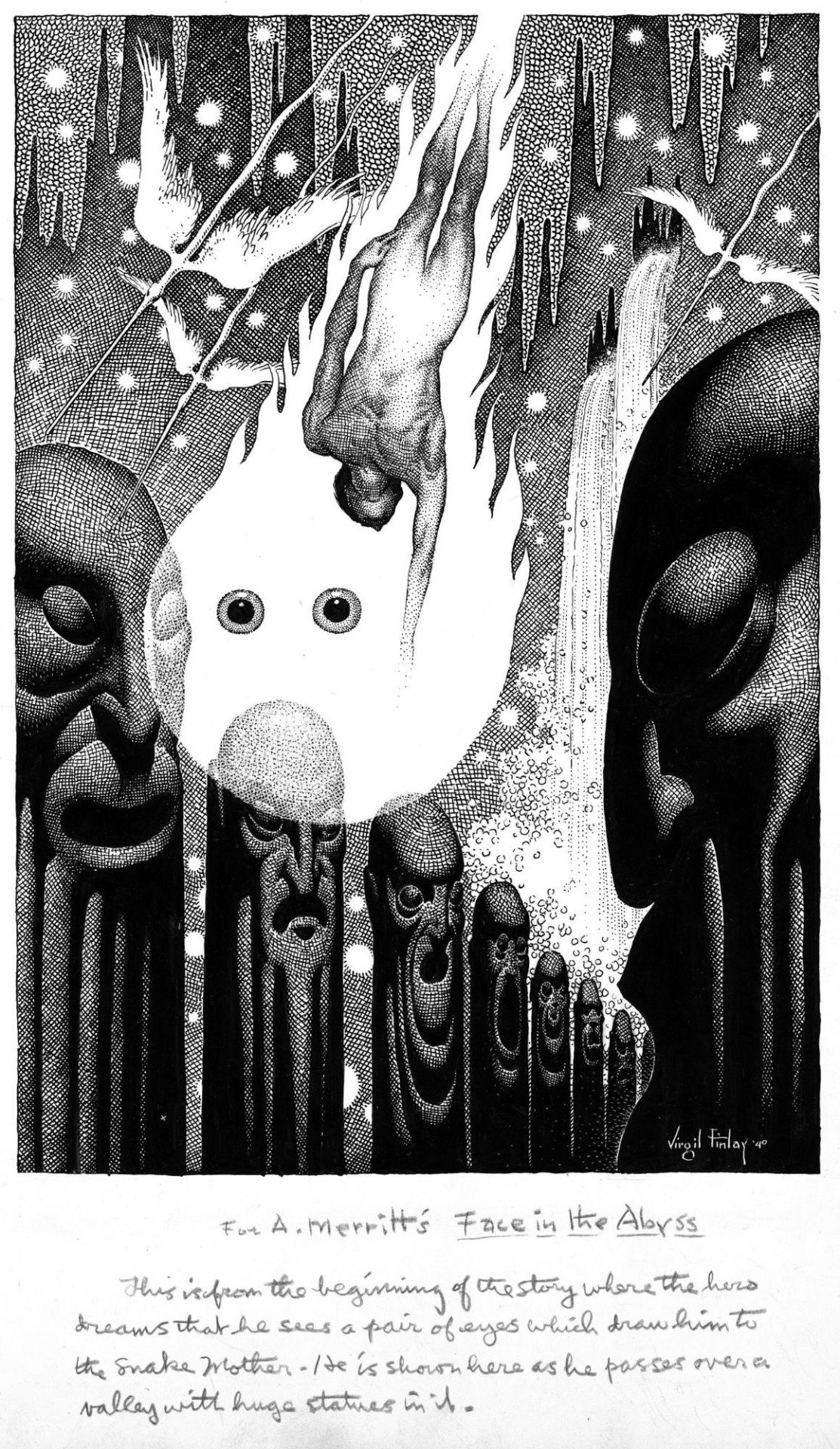
Above are two illustrations for Merritt’s influential novel, The Face in the Abyss, a tale of lost gold, genetic engineering and deadly dinosaur-riders.
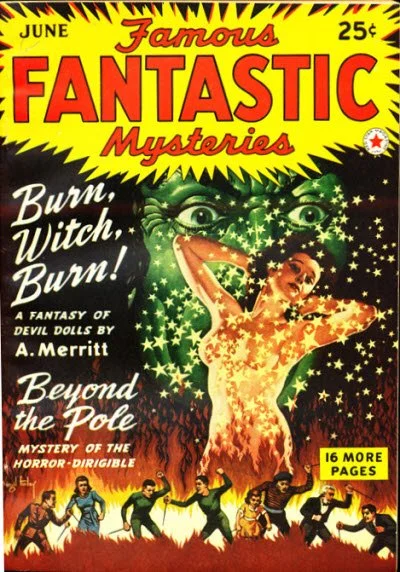
Finlay’s classic cover for Burn, Witch, Burn!, a novel praised by both Robert Bloch and Karl Edward Wagner.
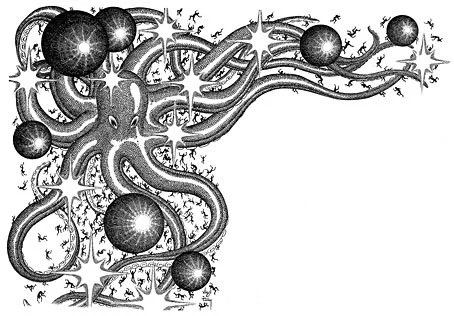
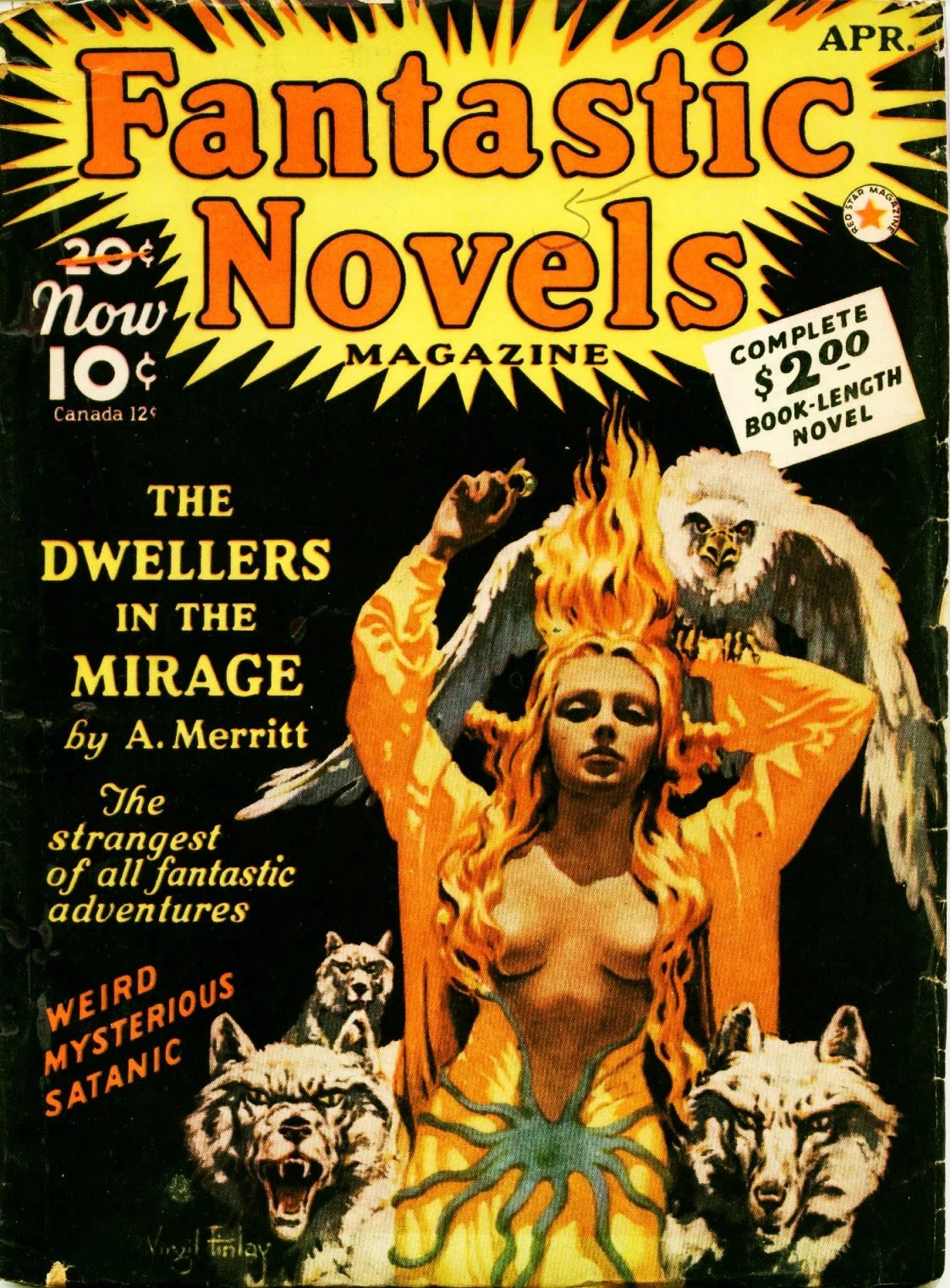
Merritt’s classic Dwellers in the Mirage. Finlay depicts the unspeakable Khalk’ru and the glorious Lur the Wolf-Witch. DMR Books has the Definitive Edition on sale right now.
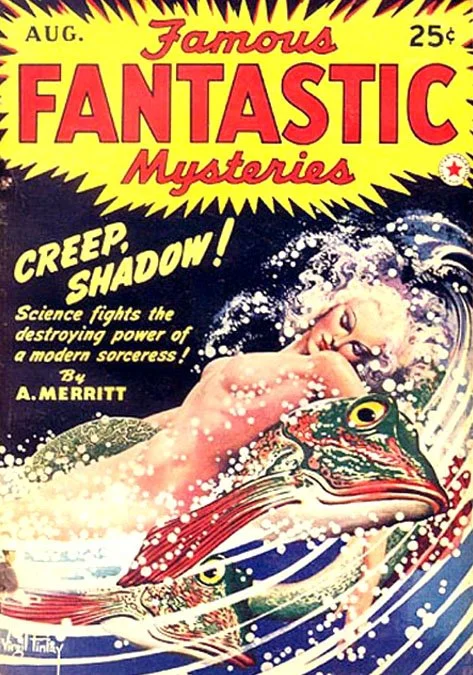
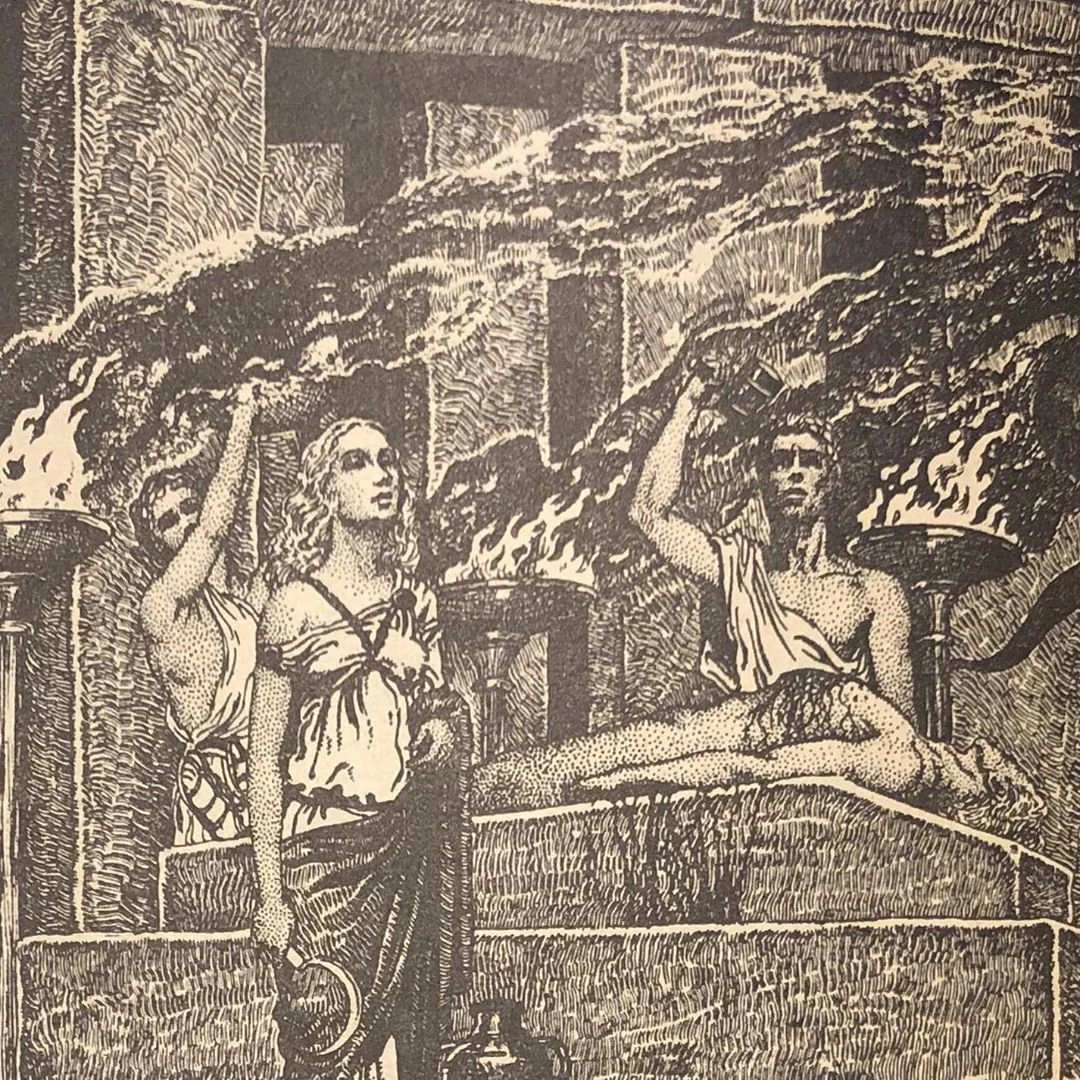
The cover and one illustration for Merritt’s final novel, Creep, Shadow!, a tale of reincarnation, black magic and dark gods. It’s among my personal favorites from Merritt’s works.
Well, that wraps up this retrospective. The DMR Books blog has published numerous blog entries relating to A. Merritt and Virgil Finlay over the years. They can be found here and here.