
H. Rider Haggard: A Century Gone, But Still Remembered, Still Justified
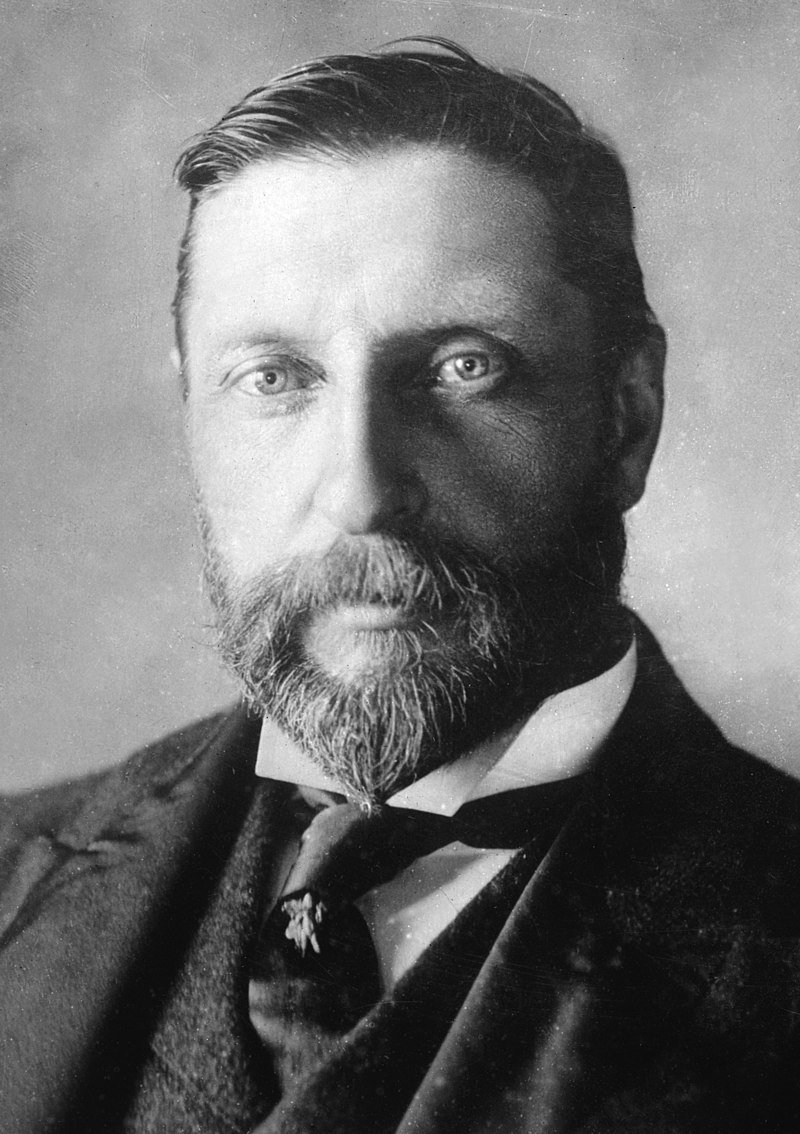
HRH in his prime.
"Imagination is power which comes from we know not where." -- H. Rider Haggard
H. Rider Haggard’s birthday was June 22. The centennial of his passing was in 2025. I missed paying my profound respects on both hallowed occasions. However, one event was just a couple days ago and the other is a mere year in the past. I’ll see if I can make some amends.
Before we go further, let's take a look at what Haggard had to say about the longevity and 'justification' of his best fiction:
"Now, although it may seem much to claim, my belief is that some of my tales will live. Possibly this belief is quite erroneous, in which case in years to come I may be laughed at for its expression. It is obvious also that a great deal of what I have written is doomed to swift oblivion, since, even if it were all equally good, in the crowded days that are to come, days even more crowded than our own, posterity will not need much of the work of any individual. If he is remembered at all it will be by but a few books. The present question is, what chance have I of being so remembered? I can only hope that my belief in the vitality of, at any rate, some of my books may be justified."
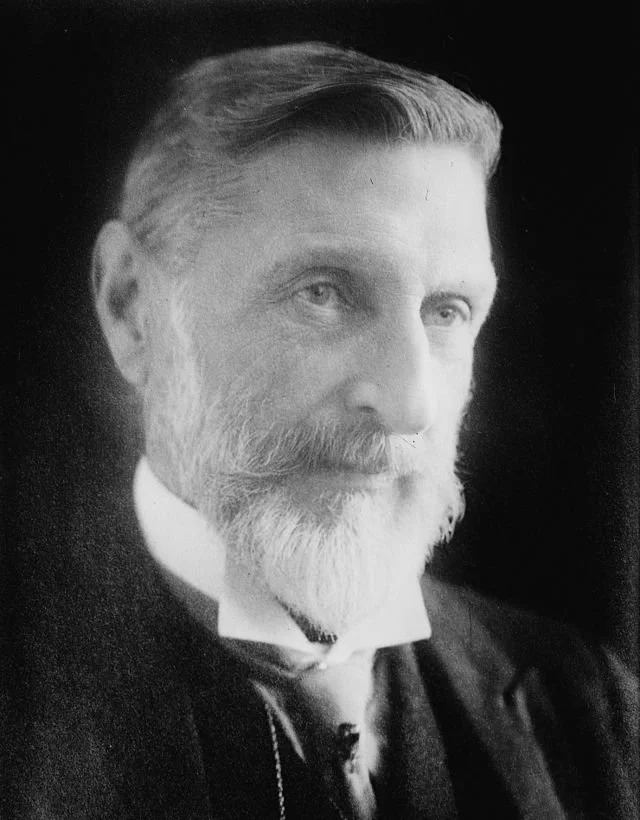
Haggard in his final years.
Rider wrote that in 1911, only fourteen years before his death. Always known as a fairly humble man--despite writing two of the most successful novels of all time--HRH's humility shines through. He speculated that 'some' of his fiction would be 'justified'--that is, judged worthy of reading even in our decadent times. King Solomon's Mines and She have never gone out of print despite them being written in the 1800s. Both have been adapted into movies and graphic novels numerous times.
Haggard directly influenced authors like Arthur Conan Doyle and Rudyard Kipling. Sax Rohmer was a huge fan...and Rohmer was a direct influence on Ian Fleming, the creator of James Bond. Other modern authors of exotic adventure like James Clavell and Michael Crichton have paid homage to the shade of Sir Henry--as well they should.
While I would argue that King Solomon's Mines should be classed as a 'thriller' along the lines of Clive Cussler or Crichton's Congo, She is definitely a fantasy adventure novel and one of the most influential of all time. It not only influenced Lovecraft and the entire First Dynasty of Sword-and-Sorcery, it also blew the minds of J.R.R. Tolkien and C.S. Lewis. Being a fountainhead of inspiration for both S&S and High Fantasy is a mind-boggling feat.
Rider didn't just win the admiration of scribes and storytellers. In his early twenties, he served as a diplomatic adjutant in Natal and the Transvaal. During that period, he met tribesmen who still followed the way of the spear, which experience stood him in good stead later. He also befriended the legendary frontier scouts, Frederick Selous and Frederick Russell Burnham--both were rugged men who did not suffer fools lightly. Later in his life, HRH became a personal friend of Theodore Roosevelt, who was a huge fan.
All in all, a life well-lived and justified. So is he, as he wondered, still 'remembered' in 2026? Indeed. Let me give you a few examples...
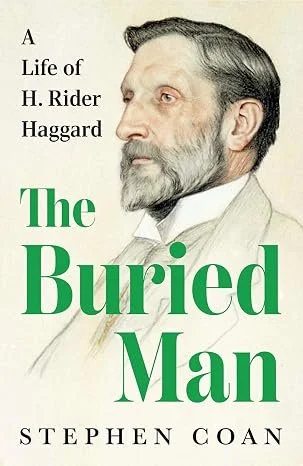
First would be The Buried Man: A Life of H. Rider Haggard by Stephen Coan. It was published almost exactly a year ago. I hear it's excellent...but it's also pricey at the moment. There have been many biographies of Haggard written over the last one hundred-plus years—including one by Rider himself—but this one just might be the best.
Next on the list is "Where Are King Solomon's Mines?", a documentary from the chaps at the Drone and Phone channel. They are fans of HRH and promise more such content in the future.
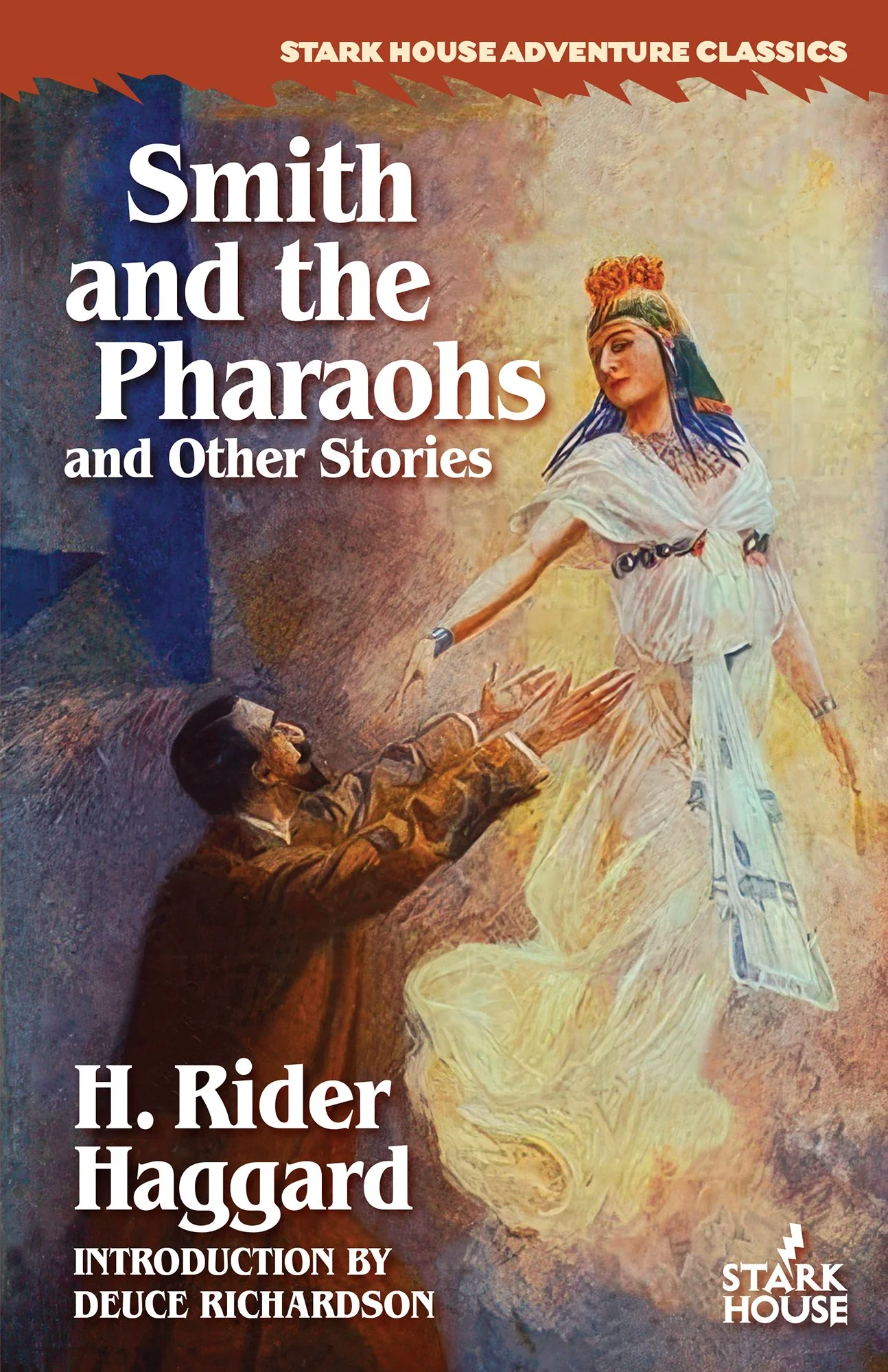
Finally, there is the Haggard collection from Stark House Press, Smith and the Pharaohs and Other Stories. While Stark House is known more for hardboiled/noir crime fiction, they also publish the likes of Rohmer, Mundy and Haggard. This was a labor of love for the publisher, Greg Shepard, who is a big fan of HRH. He published it in 2025 in honor of the centennial of Rider's passing.
All that, despite yours truly getting the intro in a bit late. Yeah, I wrote the intro because I'm a huge fan of Haggard as well. It's one of the best HRH collections I've read. Don't take my word for it. Read what Brian Murphy had to say here.
Here's a sample of what I wrote in my intro:
“The quote which crowns this essay [and this blog post] is drawn from Sir Henry's final speech in November of 1924, less than a year before his death. It provides a through-line for the tales which you are about to enjoy. As befits a collection honoring HRH's entire career, these tales span decades and run the gamut from Allan Quatermain in Africa to the furthest realms of mysticism. Haggard's fiction possesses that much length, breadth and depth.”
Haggard did, indeed, possess hidden depths. He saw life at the sharp end in Africa. Not long after, his only son died of measles. He lived long enough to see the sweetheart of his youth die a slow death. He also traveled the world, was hailed by presidents and prime ministers and then died with his loving daughter by his side. He lived.
In the end, none of that matters in regard to his literary legacy. Several truly great authors have led humdrum lives. What truly counts is the staggering scope of Haggard’s imagination and his skill at telling a tale.
As the acclaimed author, Graham Greene once said:
"Enchantment is just what [Haggard] exercised; he fixed pictures in our minds that thirty years have been unable to wear away.”
I’m sure a few DMR Books Blog readers recall the uproar about fifteen years ago when Arnie Fenner sneered at Howard’s Conan tales, saying that REH was no great author, just a good storyteller.
I ask you: Exactly what is the difference?
As Edgar Rice Burroughs—another admirer of HRH—once noted, “Entertainment is fiction’s purpose”.
What Ed said.
If an author does not connect with his readers on a deep level, his works will be forgotten—unless propped up by the Esoteric Goblins of Academe. As I’ve written elsewhere, that execrable lump of foul deformity, William Dean Howells, tried to take on Haggard. Who remembers Howells now?
H. Rider Haggard brought enchantment and high adventure to the souls of common folk yearning for escape. He also touched the hearts of tough men like Selous, Burnham and Roosevelt. That is a rare gift. Go out and read Eric Brighteyes or The People of the Mist and see what I’m talking about.