
Weird Architecture Part II: Other Worlds and Times
Continuing our tours of the strange buildings of Weird Fiction… (Read Part I here)
Robert E. Howard
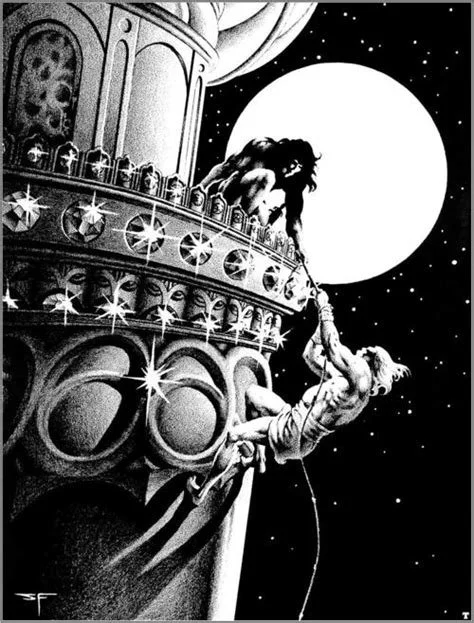
Howard, the father of sword and sorcery, created three great structures in the Hyborian Age. The first is the Tower of the Elephant and the second is the city Xuchotl. The third is the Scarlet Citadel.
The Tower of the Elephant, appearing in the story of the same name, is the home to the sorcerer Yara. It is targeted for burglary by Conan of Cimmeria. The Tower is guarded by strange beasts. What Howard’s famed barbarian finds there is treasure and horror. Specifically, it is the horror of human cruelty, for trapped inside the Tower is the alien being, Yag-kosha. Wise and immortal, the elephantlike Yag-kosha has been tortured by Yara. Moved by sympathy, Conan grants the alien a merciful death and helps in his revenge on the wizard. This done, the tower collapses like the House of Usher.
Xuchotl, from “Red Nails,” is a structure the size of a city enclosed in a giant emerald dome. Built by an unknown race, it is inhabited by two warrior tribes. It is invaded by Conan and the warrior woman Valeria, who hire on as mercenaries. They must contend not only with the other tribe but a vampire and an undead sorcerer. In the end, only Conan and Valeria survive and leave the great structure empty.
Xuchotl is claustrophobic and decaying. It reminds me of Mervyn Peake’s Gormenghast. It symbolizes the cycle of violence and decay of civilizations that Howard often writes about.
These two stories happen during Conan’s time as a wanderer. “The Scarlet Citadel” takes place when he is a king. It is another gothic structure on a crag, but what is truly horrifying is what is inside and below it. Conan, captured by the sorcerer Tsotha-lanti, is thrown in its dungeons. He escapes but must wander through it, encountering a giant snake and even stranger creatures. Conan also meets the sorcerer Pelias who is ensnared by a plant creature that seems to feed on souls. Conan rescues him and they leave to regain the Cimmerian’s kingdom.
Fritz Leiber
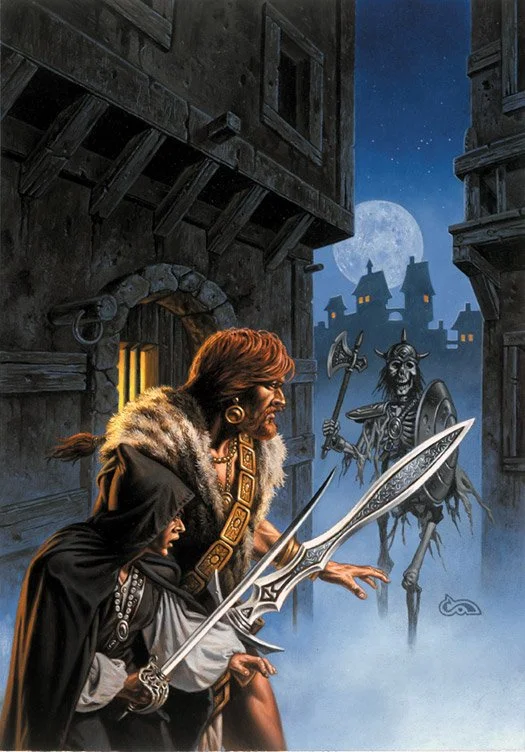
Leiber’s greatest setting is the fog and smoke-shrouded city of Lankhmar. It is corrupt and decadent, so much that one of its most notable buildings is the Thieves’ House. Labrynthine in structure, it is home to the Thieves’ Guild. Fafhrd and the Gray Mouser, who as freelancer thieves oppose the guild, raid it twice in “Thieves’ House” and “Ill Met in Lankhmar.” They find it filled with cut throats, secret passages, and hidden traps. Worse, the Guild often has a sorcerer on hire. Then there are the ancient skulls of previous thieves in the basement which are still alive.
One of the strangest buildings on Nehwon is not in that city, but in a forest outside it. In “Jewels of the Forest,” where Fafhrd and the Gray Mouser seek to raid the House of Angargni, a treasure house. They get more than they bargain for, having to contend with not only rival thieves but the house itself, for, like many eldritch structures, it is alive. The Twain barely escape with their lives.
It is worth noting Leiber created another creeping Nehwon structure in “The Howling Tower.” During an adventure the Twain encounter it on an open plain. It is inhabited by a madman and is haunted. Dark forces lure them in.
(Also, in his novel Our Lady of Darkness, Leiber makes the buildings of sunny San Francisco haunting and eldritch.)
Mervyn Peake
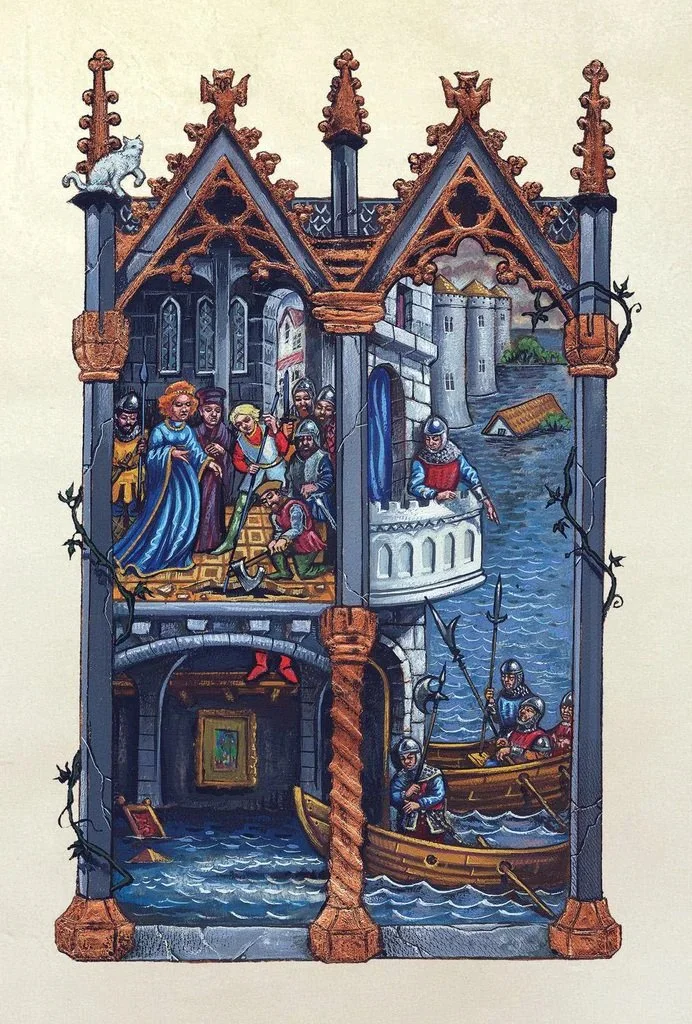
Perhaps the greatest building in Weird literature is Peake’s Gormenghast. A giant castle that is the size of a city, Gormenghast’s strangeness comes not from a supernatural source but the vivid and lyrical description of the setting and eccentricity of its inhabitants. The decaying structure is bound by ancient laws and rituals. Its heir, Titus Groan, seeks to escape. It is not just physically claustrophobic. It is socially claustrophobic.
Peake’s Gormenghast books are often called a “fantasy trilogy” but there is no quest or elves or magic in the series. Truth is Peake intended to write six books following the life of Titus Groan, the main character of the series. Unfortunately, he died before he could complete the fourth. Only the first two books are set in the Gormenghast with the third set outside it. That said the first two are the strongest because of the setting. Peake’s visual imagination and the beauty of his language bring it to life like a fever dream. What Peake created was Weird Comedy of Manners reminiscent of a collaboration between Dickens and Kafka if they were dropping acid. There things about Gormenghast that make no sense. Who built it? How do the people get there? There is no explanation for Gormenghast. It just is.
When Titus leaves the castle, the books frankly lose a lot of their power. If Peake had lived I’d like to think Titus would have returned to the castle and, using his knowledge of the outside world, reformed it. Unfortunately, we will never know.
Gene Wolfe
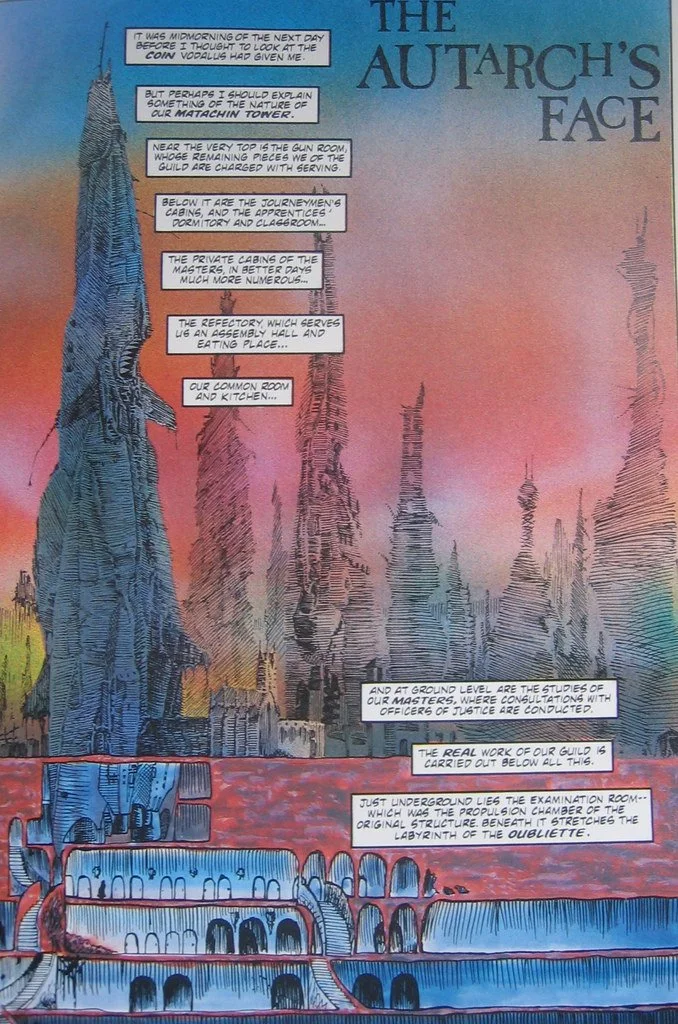
The Book of the New Sun is in my opinion one of the supreme achievements of imaginative literature. Set in the far future, it follows the journeys of the professional torturer Severian. It also gives several strange buildings in the seemingly endless city of Nessus.
One is the Matachin Tower. The home of Severian, it houses the Seekers of Truth and Penance, the guild of torturers. It seems medieval. It has ancient rituals similar to Gormenghast and its inhabitants are almost as eccentric. Wolfe is, however, a tricky writer and if you realize what the Tower really is, it changes everything.
Then there is the House Absolute, the home to the Autarch, the ruler of Urth. It is massive and exists underground. It is guarded by what seem to be living statues. It might actually bend time and space. There are also the Botanical Gardens of Nessus which manipulate time. Urth is full of weird buildings.
What do these buildings have in common? Well, they are ones that stand out in my mind. Various themes appear. The House of Usher may be alive and the House of Angargin definitely is. While not truly living, the castle of Gormenghast is metaphorically a character, as is the city of Lankhmar. Some of the structures exist beyond time and space such the Witch House, The House on the Boderland, and Malpertuis. Even when humongous they can be claustrophobic like Xuchotl and Gormenghast. Many of their inhabitants are sorcerers. Their inhabitants are eccentric and, in the House Absolute and The Tower of the Elephant, alien to our world.
There is also almost universally a sense of age and decay. For some reason, this makes them stand out more than a new building would. Their history is ancient and ambiguous. There is weight to ancient things particularly buildings.
Fantasy literature can give you new sensations and images. Most of the stories mentioned here have a hallucinatory weirdness and a brooding atmosphere. This comes from not only the description of these buildings but their nature.
At one point in The Book of the New Sun, Severian says that to explore a new city is to explore a new self. The buildings in these stories give you the ability to explore whole new worlds.
Matthew Ilseman is a writer of fiction whose work has appeared in Swords and Sorcery Magazine and other places.