
Weird Architecture Part I: Our World and Time
The aesthetics of architecture is interesting. The design, the shape, the decoration of buildings can produce strong feelings in a person. This is true even in fictional buildings. Perhaps more so in Sword and Sorcery and Weird Fiction which is overrun with strange, often decaying structures.
So we will look at certain specific buildings in the genres of Weird Fiction and Sword and Sorcery by various authors. This will be a two part post with this part looking at eldritch architectures that (storywise) exist in our world and relatively close to the current era.
Edgar Allan Poe
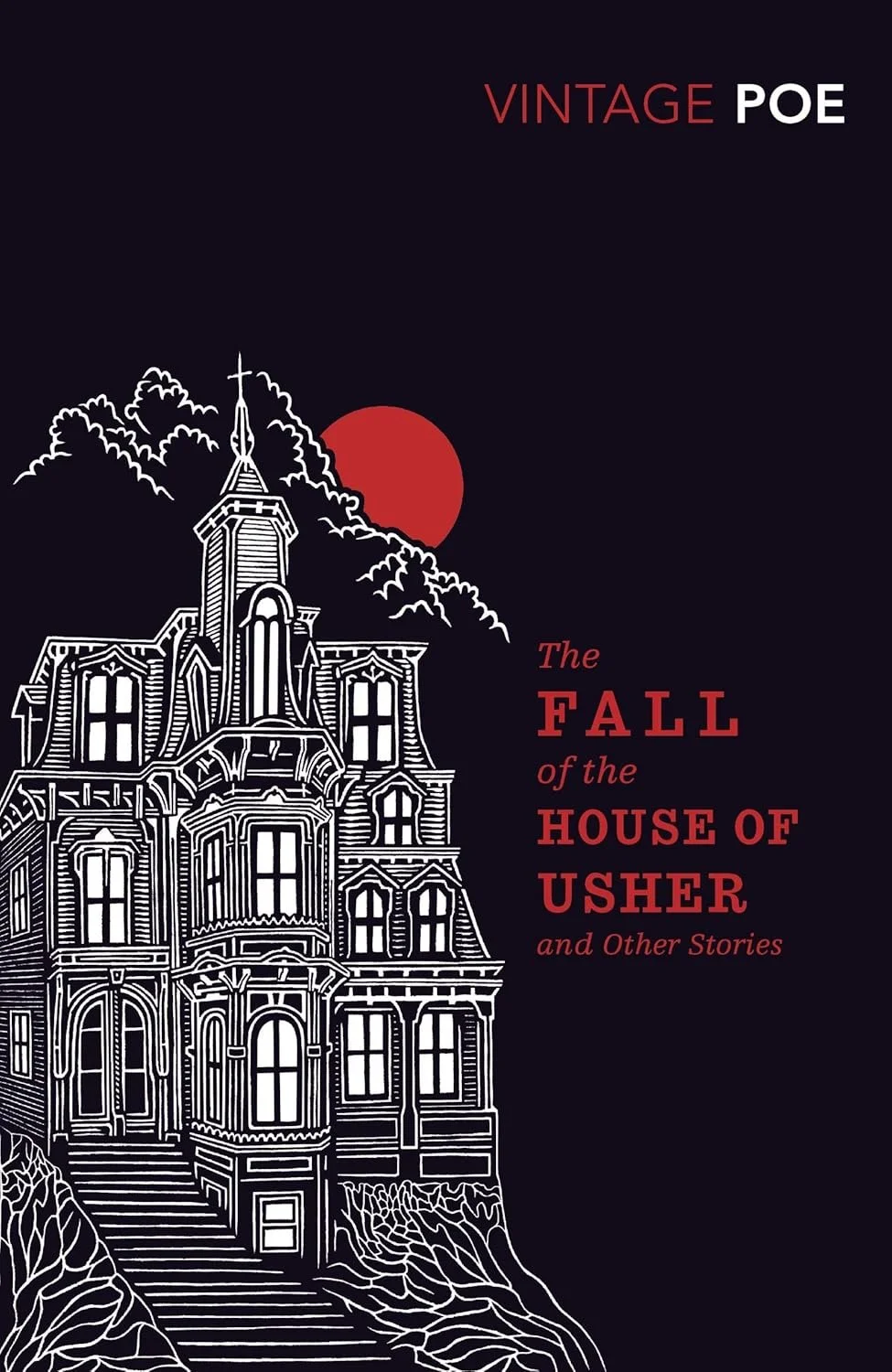
The House of Usher is probably the most important building in Weird Fiction. Sitting on a crag, it is the decaying home of Roderick Usher and his sister. Roderick has come to believe it is more than just a structure but a living being. This idea of a building as a living thing is a common one in Weird Fiction. Poe was ever the innovator and the range of his influence is almost unimaginable. As such the House of Usher has become the archetype of every cursed, brooding house in literature.
H. P. Lovecraft
One of the major architects of Weird Fiction was H. P. Lovecraft. The Gent from Providence in his letters talked with rapturous delight about the architecture of his native New England. This unsurprisingly influenced his fiction and helps lend an eerie atmosphere. The gable roof buildings of witch-haunted Arkham and the decaying wharfs of Innsmouth create not only an interesting setting but feelings of unease.
However, unlike many examples in this essay, architecture in Lovecraft is used more generally. It is the common architecture of the towns of Lovecraft Country and not specific buildings that stands out. The one exception to this may be The Witch House in Arkham. The former home of the sorceress Keziah Mason, it is now inhabited by Walter Gilman, much to his eventual regret. It does not conform to Euclidean geometry. It is also a gateway to other worlds, which is interesting because a building that gives access to other dimensions will become a recurring motif in Weird Fiction.
Gilman’s occupancy leads to strange dreams and eventually to his death in one of the gorier scenes in Lovecraft’s oeuvre.
William Hope Hodgson
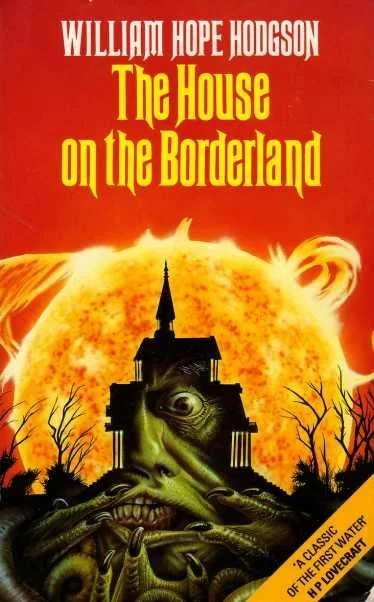
One of the Witch House’s influences is almost certainly Hodgson’s House on the Borderland. Lovecraft was a great admirer of Hodgson’s fiction even if he could criticize him as a prose stylist. What Hodgson does do well is create eerie atmosphere and a story that quickly becomes hallucinatory.
The story, given in the form of a diary found by two hunters, follows the unnamed protagonist and his sister as many strange events happen around their home. It is the titular house and is located in a remote part of the Emerald Isle.
It also, like the Witch House, exists in more than one dimension. There is an almost psychedelic scene where time speeds up and, while remaining in not only his house but his chair, the unnamed protagonist travels to the end of time. To make matters even stranger, the House is besieged by a race of monstrous pig-men. A battle for survival commences.
The House on the Borderland is a masterpiece by one of the most imaginative writers in literature. Hodgson created a building so strange in nature that it is unlike anything else.
Jean Ray
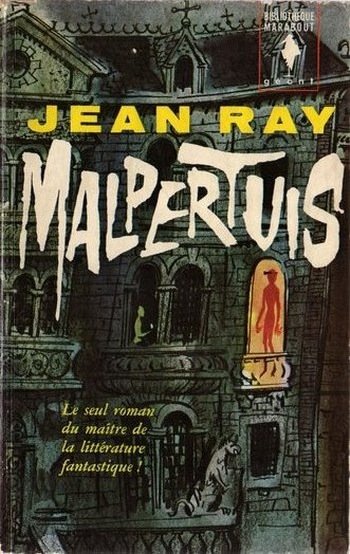
Ray, the Belgian Poe, erected one great edifice in Weird Fiction: the house Malpertuis in the novel of the same name.
Like the Witch House and the House on the Borderland it seems to be interdimensional. The house itself is not as strange as its inhabitants, whose true nature is revealed at the end of the story. There is Quentin Cassave, the warlock who owned it, and John-Jacque Grandsire, whose sinister destiny Cassave has plotted.
Ray used less description than Lovecraft or Hodgson. That said he still manages to give Malpertuis a claustrophobic and nightmarish atmosphere. It may actually be to the novel’s advantage that it is not described in depth. It leaves it to our imagination to picture the house and as such every reader will have its own interpretation.
There are truly strange scenes in the story. The plot is like a jigsaw puzzle until it reaches its tragic end.
Manly Wade Wellman
Wellman is an underrated writer of Weird Fiction and Sword and Sorcery (and other genres). Except by those who have read him, that is. They know he deserves to be better known.
Wellman’s strangest architectural creation is the Gardinel. These are carnivorous living houses that exist in remote Appalachia. They are often home to the sinister Shonokins, a race that lived in America before the coming of man.
I believe that Wellman created the Gardinel himself, but he may have pulled it from folklore. Wellman’s stories often mixed his own Weird inventions with actual folklore.
Either way, the Gardinel is different than the other buildings on this list. It is not one eldritch building but a species of eldritch buildings. How they came to exist is not known, but it is known that you do not want to enter one. You may never get out.
It seems that in our world most of the strangest buildings exist in out of the way places. The House of Usher exists on an isolated crag, the House on the Borderland in rural Ireland, and the Gardinels in the back woods of Appalachia. The exceptions are Malpertuis in very real Ghent, Belgium and the Witch House in fictional Arkham. The next ones we will look at exist in stranger realms. These include other worlds, an age forgotten by man, and the far future of the planet.
Read Part II of this series here.
Matthew Ilseman is a writer of fiction whose work has appeared in Swords and Sorcery Magazine and other places.