
Jack Williamson -- A Pioneer in Sci-Fi, Fantasy and Horror
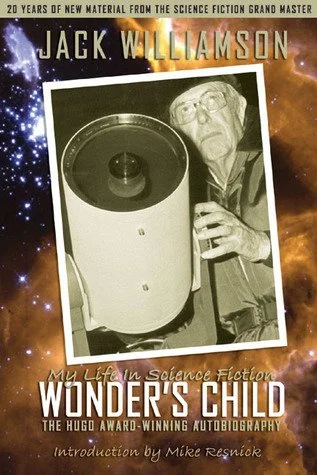
Jack’s Hugo-winning autobiography.
Today is Veterans’ Day. I don’t have anything specifically on that topic for this year. However, within the Venn Diagram of what we usually cover here at the DMR Books Blog, there is a legion of military veteran authors. From Edgar Rice Burroughs to Gene Wolfe, from David Drake to many of the writers in the newest cohort of heroic fantasy authors, the SFF and Horror fields have drawn veterans into their ranks for well over a century. One of those authors was Jack Williamson, who pulled off the trifecta of penning significant works in all three genres.
John Stewart Williamson was born in 1908 and died almost exactly twenty years ago. His parents had journeyed to Arizona Territory--it wasn't even a state--to homestead. Jack was born in Bisbee but, soon enough, his parents hitched up their covered wagon and sojourned in Old Mexico, then Texas and finally settled in New Mexico in 1915. His family went into ranching and some of Jack's relatives carry on that same business to this day. Good on them.
Jack knew that working the land wasn't the life for him. He dreamed of exotic lands, distant times and the farthest stars. Much like Robert E. Howard--a near contemporary--he was selling to the pulps by the time he was twenty. His final novel was published when he was ninety-eight years old.
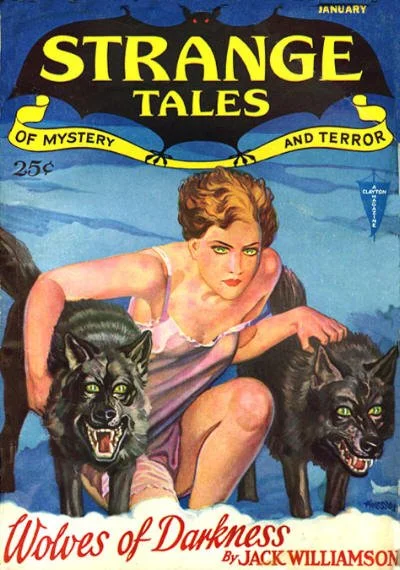
Williamson sold stories to Weird Tales--and other pulps--all through the 1930s. Then World War II erupted. Jack served his country with honor in the U.S. Army Air Corp, the precursor to the U.S. Air Force. He then returned to his writing career.
I wrote an in-depth article on Jack's life and career five years ago. It can be found here. For the rest of this blog post, I want to cover some facts I did not cover in that one.
One thing that should be remembered is that Mr. Williamson, despite his hard-scrabble upbringing and pulp roots, ended his days as a highly educated man who enjoyed a certain degree of respect among academics. He achieved this by joining the faculty of Eastern New Mexico University in 1960 as a lecturer on science fiction. That was after he had received his Bachelor of Arts and Master of Arts degrees in English in the 1950s, all while pursuing a commercial fiction career. He later completed a Ph.D. from the University of Colorado, writing a dissertation on H.G. Wells which focused on that author's earlier, more pessimistic works.
Jack won the Pilgrim Award for lifetime contribution to SF and fantasy scholarship in 1973.
In 1976, the Science Fiction Writers of America named Williamson its second-ever Grand Master of Science Fiction after Robert Heinlein. That was roughly the point when Jack got dubbed the "Dean of Science Fiction".
In 1994 Williamson received a World Fantasy Award for Lifetime Achievement.
The Science Fiction and Fantasy Hall of Fame inducted Williamson in 1996 as part of its inaugural class.
The Horror Writers Association, in 1998, conferred its Bram Stoker Award for Lifetime Achievement upon Jack and the World Horror Convention elected him Grand Master in 2004.
The Robert A. Heinlein Award was presented to Williamson "for hard SF inspiring space exploration" by the Heinlein Society in 2006.
Those are the lifetime/career awards. Here are Williamson's awards for specific stories:
Hugo Awards — for SF/F works, voted by members of annual World Science Fiction Convention
(2 nominations; 2 wins)
2001: “The Ultimate Earth ” (Analog Dec 2000) — novella — winner
1985: Wonder's Child: My Life in Science Fiction (Bluejay) — nonfiction book — winner
Nebula Awards — for SF/F works, voted by SF & Fantasy Writers of America professional membership
(1 nomination; 1 win)
2002: “The Ultimate Earth ” (Analog Dec 2000) — novella — winner
John W. Campbell Memorial Award — for SF novel published in US or UK; juried
(2 nominations; 1 win)
2002: Terraforming Earth (Tor) — winner (tie)
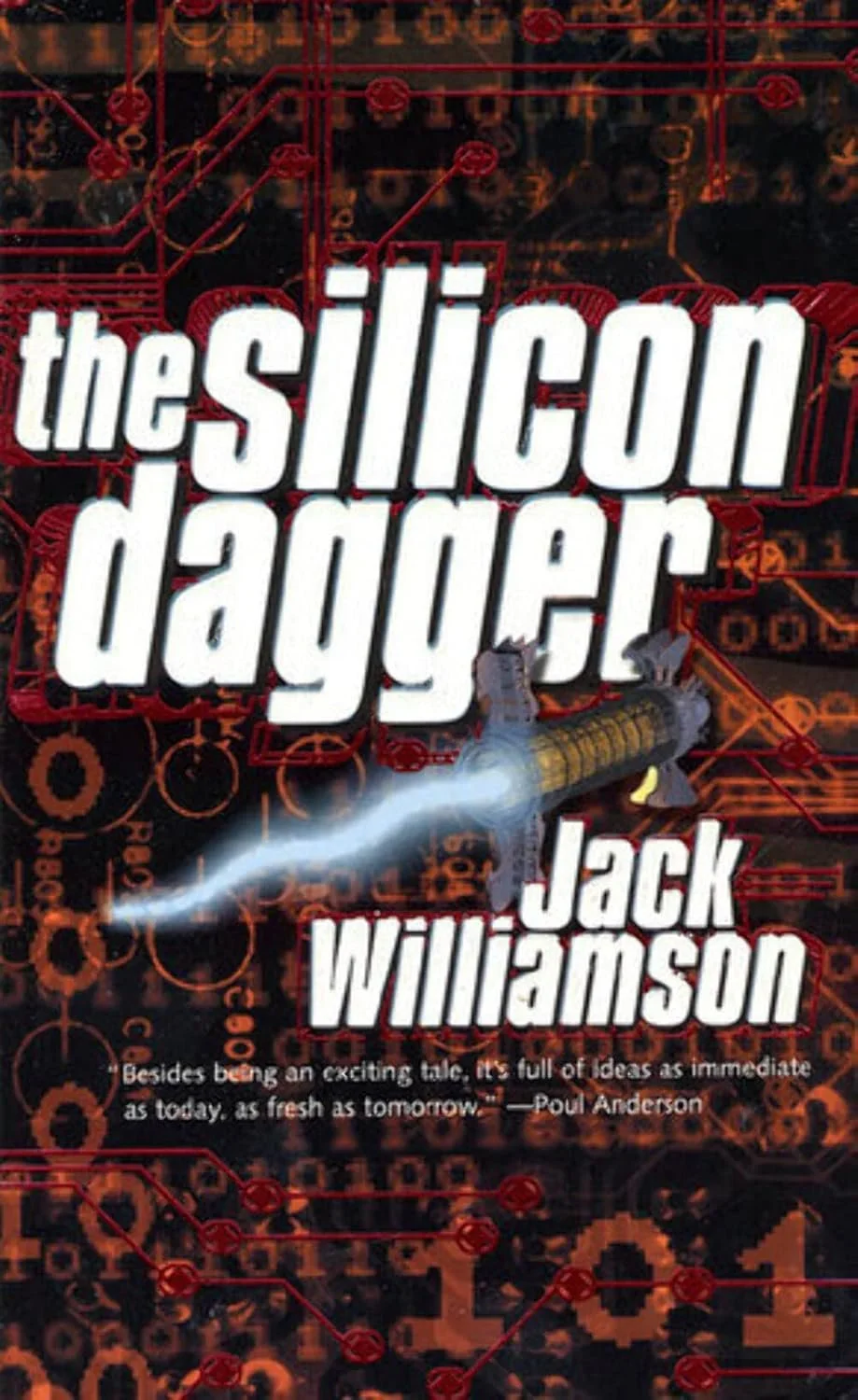
2000: The Silicon Dagger (Tor) — honorable mention
Why did I just list all of those facts? After all, I don't consider awards--especially ones given during the past twenty years--to necessarily mean all that much. The same goes for academic achievements. No, I listed them to show that Mr. Williamson could have gotten clear up his own fundament after all those degrees and accolades.
Instead, Jack said this toward the end of his career in regard to SFF writers who were trying a little too hard to be 'serious' and 'literary':
'Maybe because of my own background of writing commercial SF for so many years, I have a great deal of respect for good craftsmanship of the sort that commercial writers must develop. The labels you hear so much of—"commercial," "serious writer," "mainstream," "hack," "New Wave," "experimental"—are usually very misleading.
In my own field, Ed Hamilton and Hank Kuttner and more recently Bob Silverberg are all writers who formed a fine command of the SF genre early in their careers and who later on used this to do work that is more consciously "literary" and hence more admired by critics. But certainly the writing they did earlier was deservedly popular among SF fandom, who evidently found these works "serious" enough to merit reading.
I am opposed, however, to literary tricks that tend towards obscurity or artificial difficulty, though I can see arguments for that kind of approach. My own experience as a teacher of writing confirms my sense that new authors with artistic ambitions may find themselves scorning too many of the old forms and patterns simply because they blindly associate them with hack work. The point is that these patterns and structures form the basic vocabulary through which all SF writers must speak.'
That statement right there, Readers of the DMR Books Blog, was spoken by someone who--despite all of the temptations--held onto his roots and the common sense of his pioneer heritage.
So, raise a glass to the shade of Jack Williamson, twenty years gone. He came from pioneer stock and went on to become a pioneer in the genres we love. Then, raise another toast in honor of him and all the others who have served this country honorably for the past two and a half centuries.