
Declarations, Derleth and Howardian Fourths
Today marks the two-hundred and fiftieth anniversary of the signing of the Declaration of Independence, of course. However, it also marks several other anniversaries...
As some out there might know, Thomas Jefferson--the composer and co-architect of the Declaration of Independence---died fifty years to the day after he signed that foundational document. Quite fitting; poetic, even.
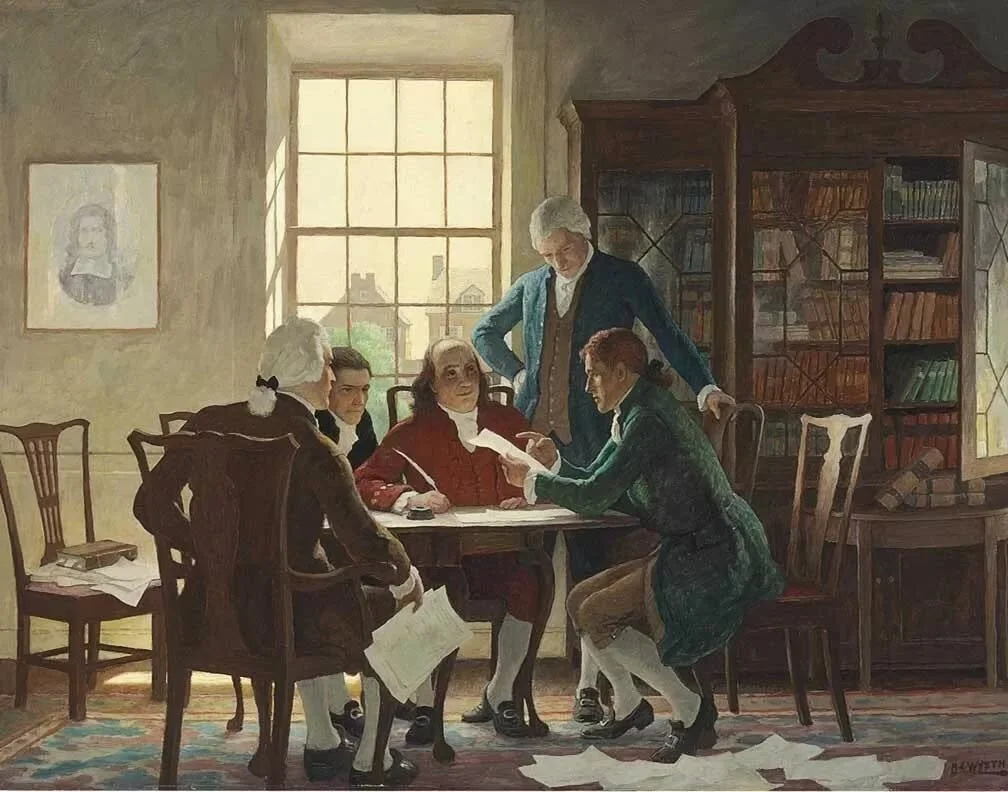
“The Declaration of Independence” by N.C. Wyeth. The redhead on the right is Jefferson.
The reasons to honor the memory of Jefferson on the two-hundredth anniversary of his mortality are legion. Beside all the important political stuff he did before becoming president, his eight-year presidency was fundamental to America’s path forward.
Jefferson had opposed paying extortion to the piratical scum of the Barbary Coast for over a decade. After his inauguration, he unleashed the newly-launched fleet—and Marines—of the U.S.A. to fight and win the First Barbary War. It was the first victory of the American military on a foreign shore. America was nobody’s punching bag.
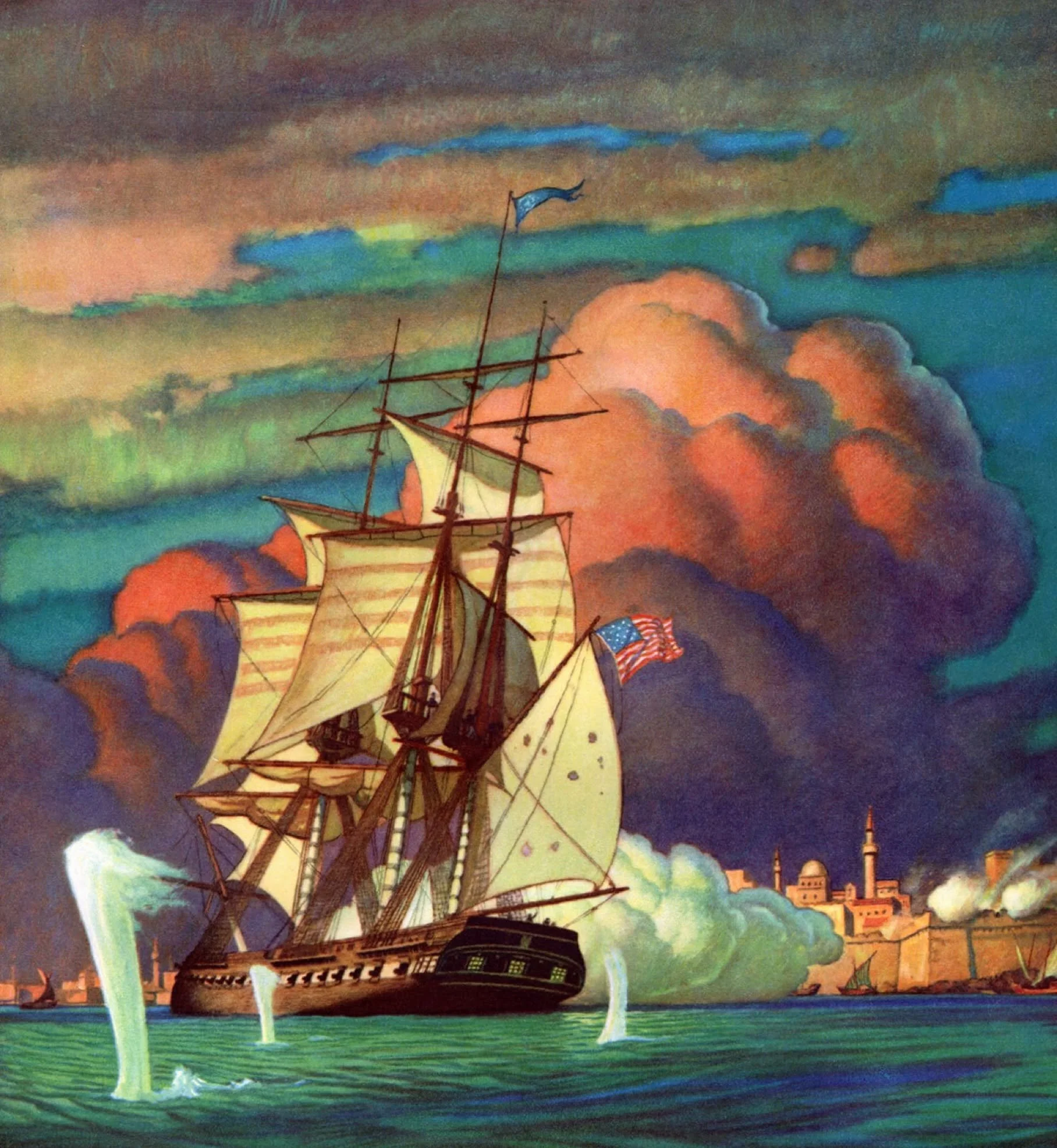
The U.S.S. Constitution launching cannonades against Tripoli. N.C. Wyeth, 1942.
Jefferson authorized the most consequential expenditure by the U.S. government in our nation’s history when he made the Louisiana Purchase—which was quite controversial at the time. The Purchase doubled the land legally controlled by the American government, opening the way for the U.S.A to eventually become a continental power. It also effectively prevented the French from ever attaining another empire in the Western Hemisphere. Word from France of the successful purchase reached Washington D.C. in time for an official announcement on July 4, 1803.
These United States of America now had legal title to vast, uncharted lands. Jefferson had been champing at the bit for years to send an American expedition westward--possibly all the way to the Pacific. The time was now. He chose two men from Virginia's formidable warrior-gentry as commanders of his 'Corps of Discovery': Meriwether Lewis and William Clark.
The goal assigned to Lewis and Clark was to trek from one side of the Purchase to the other and then push on to the Pacific, if possible. Before the Purchase, America controlled most of the eastern side of the Mississippi River Watershed. However, France owned the entire western shore of the Mississippi and also ruled the indispensable port of New Orleans. Americans all along the Mississippi endured hassles from French officials in New Orleans when trying to ship out their goods. The original intent of the Louisiana Purchase was basically to buy Louisiana, thereby liberating American merchants from Napoleon's tolls--or outright bans.
The French could completely close New Orleans to American riverine shippers. In that case, all American goods between the Mississippi and the Alleghenies would have to be shipped overland, raising costs exponentially. America's hinterlands would be practically smothered in the cradle. Jefferson's Purchase did away with that possibility and opened up American expansion all the way to the Pacific Northwest.
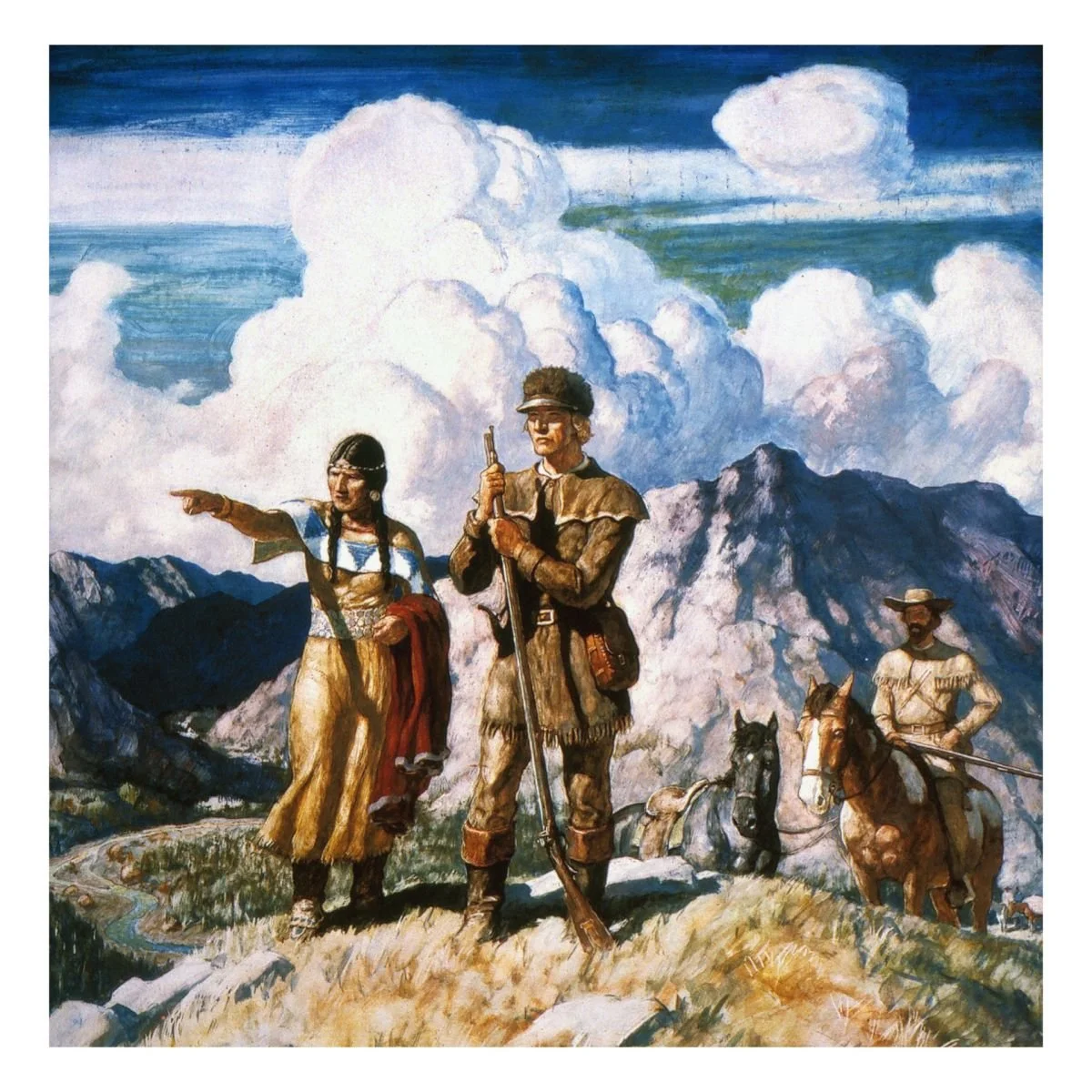
Sacajawea, Lewis and Clark. Art by N.C. Wyeth.
The actual, constitutional USA wasn't even twenty years old at that point. Its founding legends were still being formed. The Lewis and Clark Expedition was America's equivalent to the Odyssey or the Argonautica. It opened up the frontier that so fascinated Robert E. Howard a century later.
When it comes to nerdy and/or cool non-political stuff, ol' Tom stood tall. He was one of the great polymaths of history. He knew a lot about a lot of things. Plus, he actually put much of that knowledge to use. Jefferson's personal library was the fundamental core of the Library of Congress. Rusty Burke used the Library of Congress with gratitude when researching his landmark "REH Bookshelf" project. Two centuries after his death, every American nerd/scholar should praise Jefferson's name.
Within that vast personal library were tomes on fencing, including The Swordsman’s Companion by G. Windsor. While ol' Tom was not a trained swordsman--he preferred firearms--he was an enthusiastic student of European martial arts and military history. Robert E. Howard would approve.
Jefferson was one of the founding fathers of American paleontology and archaeology. He was fascinated by mammoths/mastodons and the Mound Builders. Once again, Howard would approve.
As I've mentioned elsewhere, ol' Tom was a huge fan of the Ossianic tales of James MacPherson. Those stories pioneered modern fantasy in the Anglosphere and are, arguably, a primitive form of modern sword-and-sorcery. In addition, Jefferson wanted to put the two Jutish adventurers/mercenaries/pirates, Hengist and Horsa, on the Great Seal of the United States. That rocks. REH would totally approve. In fact, I need to do an essay on "REH, Hengist and Horsa" at some point.
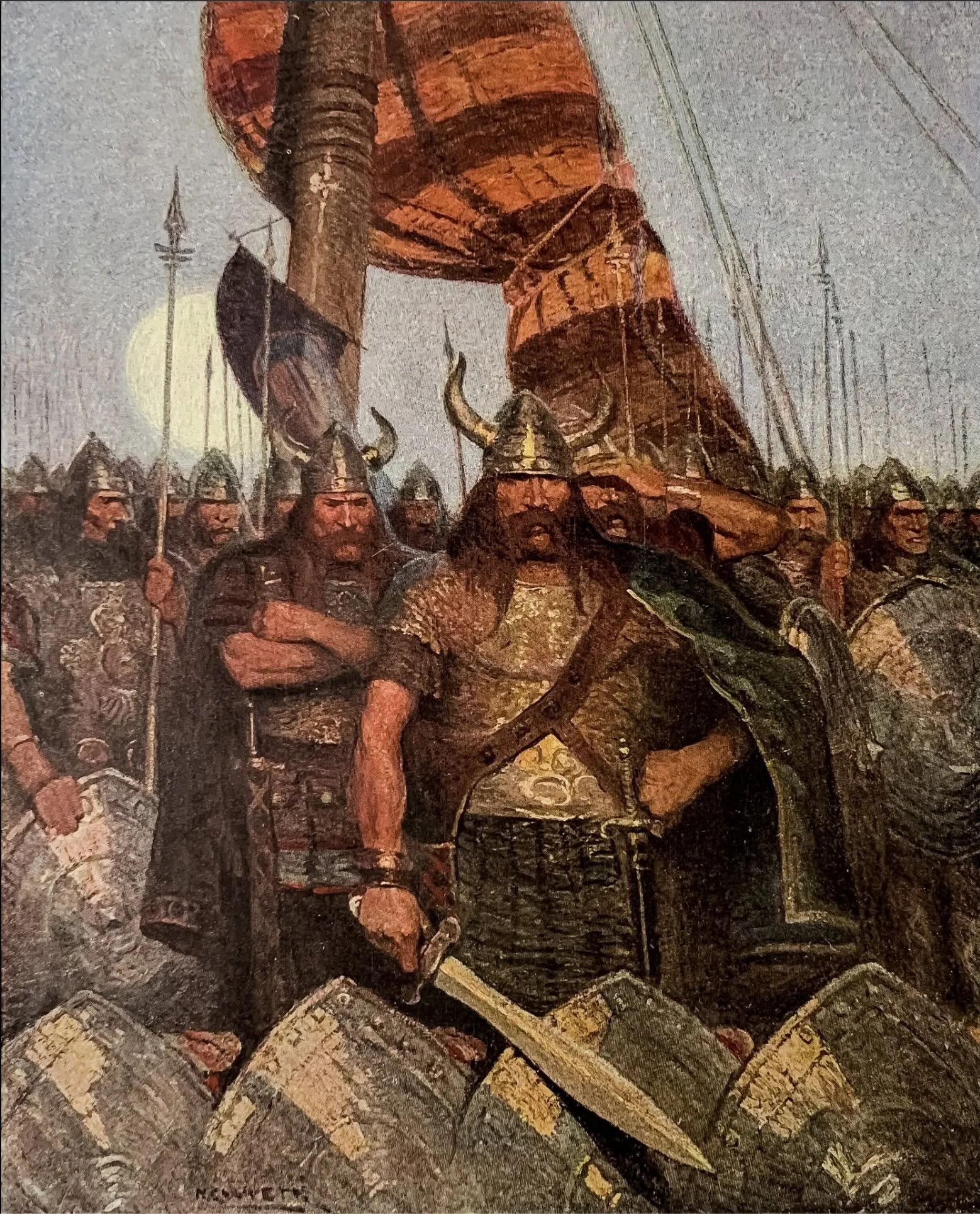
Painting by Wyeth, 1911.
When it comes to influencing early American cuisine, Jefferson is, once again, a Founding Father. He was a full-blown foodie, being crucial to the introduction of pasta, mac n' cheese, ice cream and french fries to the newly-birthed United States of America. 'They called it macaroni', indeed.
So, yeah, honoring Jefferson's passing is right in the DMR Books blog wheelhouse.
Also on this date, in 1935, Robert E. Howard wrote letters to both Novalyne Price and August Derleth. He was in a foul mood, his 'black Milesian blood' pounding in his brain. Twenty years ago today, the mighty Leo Grin posted about it all on the Cimmerian blog. Check it out here.
Speaking of August Derleth... Leo posted again on the next Fourth of July, mentioning those letters but also posting a vintage review of Skull-Face and Others. Guess who edited and published that landmark Howard collection eighty years ago? Derleth. Guess who died twenty-five years later on the Fourth of July?
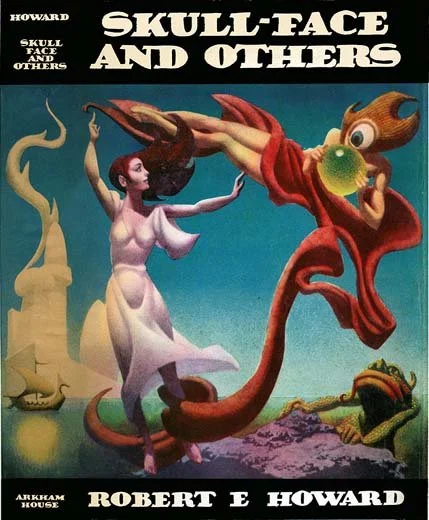
For those who aren’t aware of it, Derleth is a controversial figure in the realm of Lovecraft studies. I've written about his impact on American small press publishing, as well as his influence as an editor of sci-fi/fantasy and horror, here and here. For a nuanced analysis of Derleth and the Cthulhu Mythos, I highly recommend John D. Haefele's A Look Behind the Derleth Mythos.
Now that Leo--echoing across the decades--has reminded me about this being the eightieth anniversary year for Skull-Face and Others, I will definitely have to do a write-up on its importance sometime in 2026.
I hope all DMR Books Blog readers had a great Fourth of July!