
Contradictions of Character: Howard, Grell, Wolfe, and Dostoevsky
It is often said that good characters are complex like real people. The truth is that real people are complex to the point of contradiction. A kind person can be cruel. A coward can sometimes be brave. Part of the reason so much fiction falls flat today is because of the characterizations. Many people today seem not able to understand extreme complexity and nuance.
Four writers come to mind who did understand: Robert E. Howard, Mike Grell, Gene Wolfe, and Fyodor Dostoevsky.
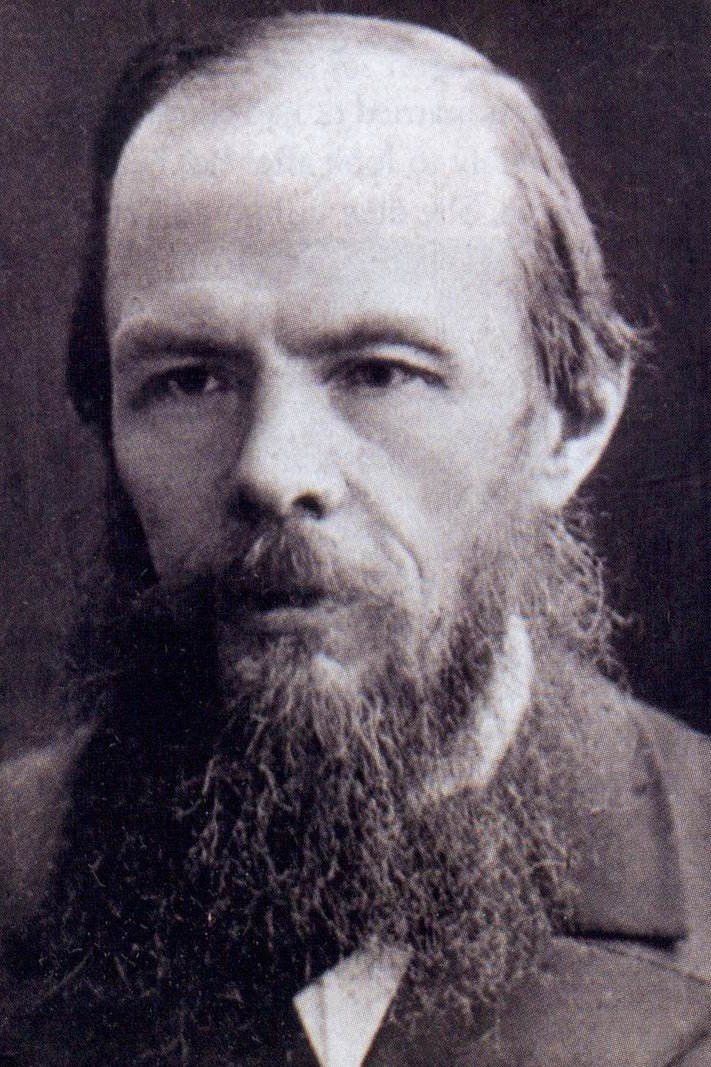
Fyodor Dostoevsky
That may seem to be an odd bunch. Isn’t Dostoevsky a “serious writer” and the rest “mere genre” writers with Grell even working almost exclusively in comic books? Well, the line between “serious” fiction and “genre” is thin enough to be non-existent. Dostoevsky may be in the “literary canon” but he was extremely influenced by Gothic fiction. His novella The Double is a fantasy. Crime and Punishment is a precursor to the psychological crime novel. There are elements to both these genres in The Brothers Karamazov.
An argument can be made for any of the Old Russian’s characters being more psychologically detailed than any of Howard’s. I agree with this, but that’s because he was writing psychological novels and Howard adventure stories.
So what does Conan have in common with Raskolnikov?
Well, aside from both cleaving people’s heads in, they are both men of contradictions. I have written on the site about the complexity of Conan’s morality: The Surprising Moral Complexity of Conan the Cimmerian
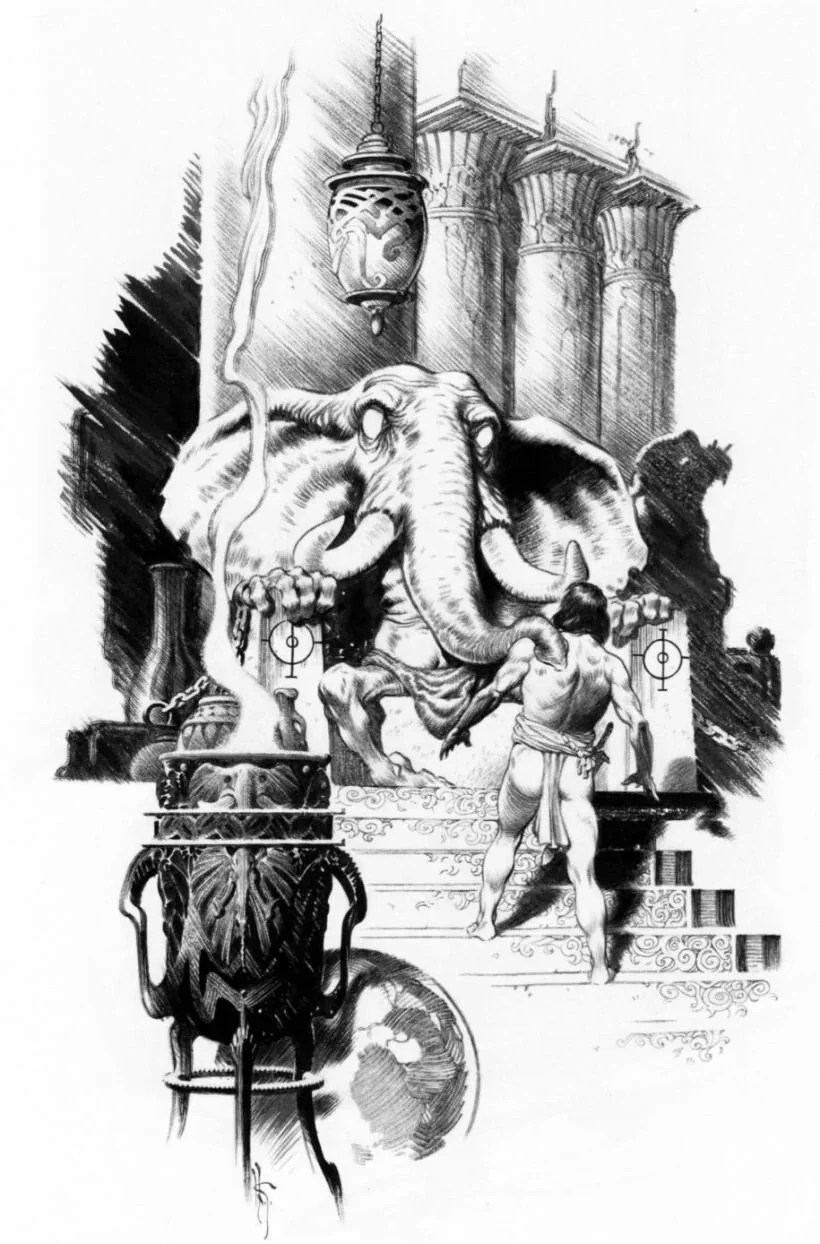
“The Tower of the Elephant” illustration by Mark Schultz
Conan is like Raskolnikov in that he is compassionate killer. In “Tower of the Elephant,” he both kills a man and shows mercy to an alien being. Raskolnikov kills a corrupt moneylender (and an innocent bystander), yet he obviously feels for his sister who is being married to an older man for money. Both the characters are outsiders in a corrupt society. The major difference is that Raskolnikov is hyper-rationalistic and Conan lives often by instinct. It should be noted that Conan is far more intelligent than some critics claim and Raskolnikov is tripped up by his own impulses. Conan in “The Black Stranger” is able to manipulate various rogues with cunning and a knowledge of human nature. For all his rationalizations, Raskolnikov never uses the money he steals from the moneylender. His intellect and conscience war with themselves. The instinctual Conan does not have this problem, yet while he may steal and kill Conan by nature is loyal to his word, surprisingly chivalrous to women, and in his own way honest. They end up in very different places with Conan a king and Raskolnikov in a gulag.
Both Howard and Dostoevsky were alike in being skeptical of pure rationalism. (They were also both very contradictory themselves.)
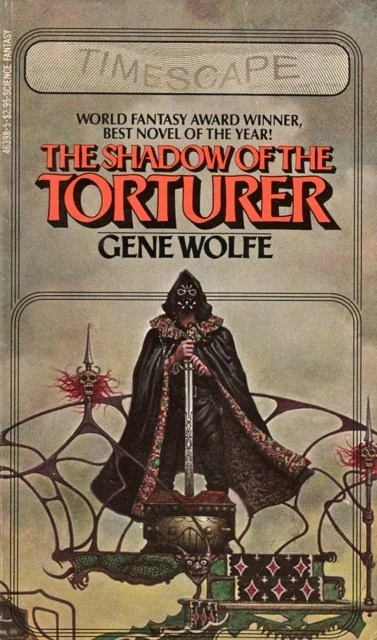
Shadow of the Torturer cover art by Don Maitz
Conan and Raskolnikov share the contradictory trait of being a compassionate killer with Severian from Gene Wolfe’s Book of the New Sun. Raised a torturer and executioner and given to a lot of immoral behavior, Severian does show a surprising amount of compassion. He is exiled from his guild for giving a prisoner he fell in love with an easy death. When he receives the Claw of the Concilator, an artifact with seemingly supernatural power, he often tries to use it to heal people. Like Dostoevsky’s Alyosha and Prince Mishkin from The Idiot, Severian has Christlike traits. The difference is that unlike the two Dostoevsky characters, who are saintly, Severian is really messed up. (Being raised by a guild of torturers will do that.) Both Wolfe and Dostoevsky were intensely devout (Wolfe Catholic; Dostoevsky Russian Orthodox). They explore the nature of Christ in their characters. Mishkin is pure (though not perfect) like Jesus but lacks His divinity so in the end he can’t save anyone. As flawed as Severian is he has supernatural aspects to him and ends up saving Urth.
Howard’s most interesting character was probably the incredibly contradictory Solomon Kane. A wandering Puritan, Kane has the most complex nature of all Howard’s characters. He is a “strange blending of Puritan and Cavalier, with a touch of the ancient philosopher, and more than a touch of the pagan.” Like Dostoevsky’s Alyosha he is religious to an extreme. Yet both have great doubts brought upon by the cruelty of the world. At the end of “Wings in the Night,” Kane curses the gods (but apparently not God) for the destruction of a native village. Alyosha is troubled by his brother’s arguments against God on the topic of the suffering of children.
Mike Grell is the comic book creator who is truly for “mature readers.” Not just in the sense of sex and violence but in complex characterization. The case in point: Travis Morgan from his Sword and Sorcery comic Warlord.
Morgan is a pilot who finds himself in Skartaris, a lost world inside the earth. Skartaris has elements of the Hyborian Age and the inner worlds of Jules Verne and Edgar Rice Burroughs. Morgan, the product of modern world, finds his place in these barbaric lands. In this he’s like Solomon Kane. He is also a bit like Tarzan in that the thin line between civilized and savage is explored in his character.
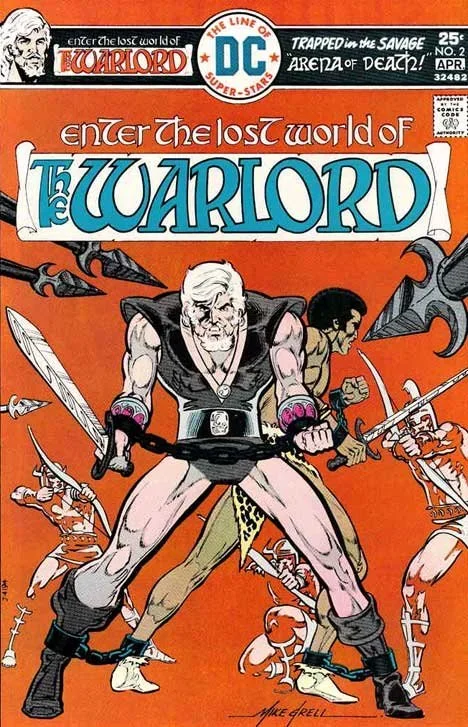
Unlike Conan and Severian, Morgan is a defender of the oppressed, or at least as much as flawed human nature allows him to be. For while he genuinely wants to protect the innocent, he also is driven for a lust for adventure and even a dark bloodlust. He has both noble and not so noble elements to him.
There was recently story about him by another writer which portrays Morgan as simply driven by bloodlust. (I will not dignify the writer by giving his name or what DC anthology it was published in.) Aside for just being mean spirited, it flattens his character. This is how “deconstruction” can lead to bad storytelling. What was one aspect of a complex character has become his sole trait.
Grell, like the other three writers, understands the complexity of people and that nothing is one sided. This is a trait that Morgan shares with another Grell character, the mercenary Jon Sable. Both characters are warriors with a sensitive side. Both can be motivated by a sense of justice as well as personal self-interest. Conan is a similar, if definitely more roguish, character. Raskolnikov kills a moneylender both to relieve his poverty and in a (mistaken) belief it will make the world better.
It seems that one of the many maladies of the modern world is both an unwillingness and a seemingly inability to see people and things as complex. A politician will, for example, be seen as either an exemplary savior or the devil incarnate. This malady also leads to art that is both flat and lacking in vitality. The reasons for this are not easy or simple, and the cure for them will not be easy or simple either, but we could maybe produce better stories. A good starting point may be reading and paying close attention to what all four writers do.
Matthew Ilseman is a writer of fiction who work has appeared in Swords and Sorcery Magazine and other places.