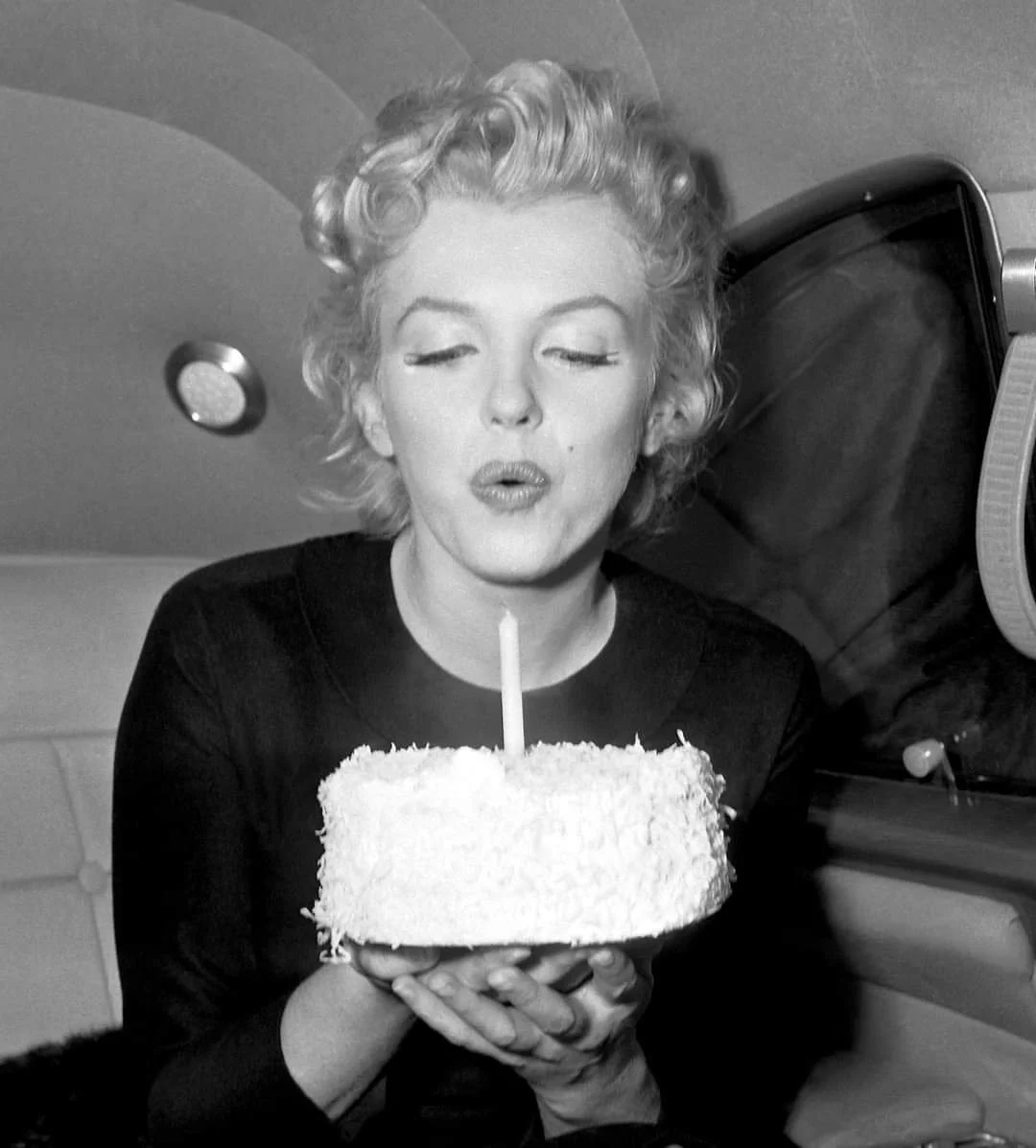
Marilyn Monroe at 100: Her Surprising Links to Cool Stuff
I found out this morning that today is the centennial of Marilyn Monroe’s birth. While I’ve been an admirer of hers for most of my life, I just learned by way of a couple of Facebook friends—and some of my own subsequent research—that Marilyn had unexpected connections to some major figures in the realm of fantasy/exotic adventure.
The first tip came from Scott Tracy Griffin. Scott is an author and an expert on Edgar Rice Burroughs' filmography. He had this to say about Marilyn and ERB:
‘One of 20th-century Hollywood’s most iconic figures, Monroe was director Lee “Roll ‘Em” Sholem’s choice for Jane in the RKO feature “Tarzan and the Slave Girls” (1950), which starred Lex Barker in the second of his five ape-man appearances. Despite bringing the starlet in for eight auditions, producer Sol Lesser remained unimpressed and Monroe’s friend Vanessa Brown was selected for the role. Nonetheless, Monroe went on to achieve great fame, both as a talented performer and blonde bombshell, remembered for her comedic film persona and untimely death.’
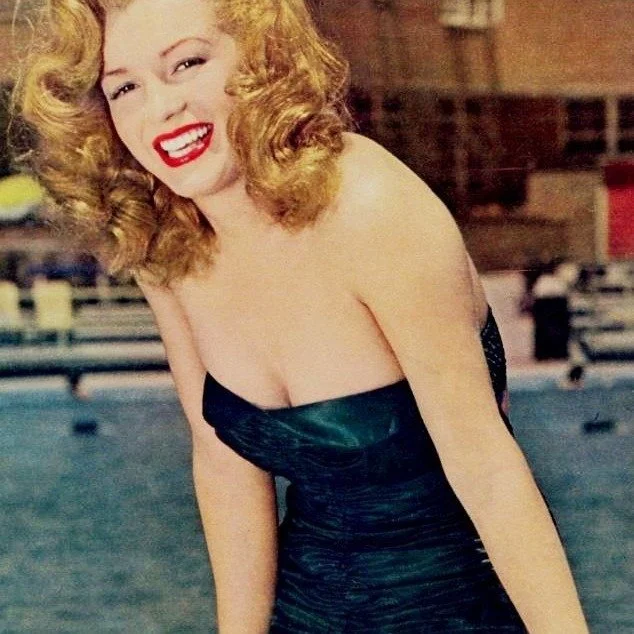
‘Photo: Monroe at the Palm Springs Racquet Club in 1949, shot by photographer Arthur Weegee around the time she would have auditioned to play "Jane". A former Palm Springs resident, Tarzan author Edgar Rice Burroughs visited his former haunts at the Racquet Club in 1948. His final public outing was to the set of "Tarzan and the Slave Girl" in 1949. There is no word on whether he was familiar with Monroe, or her near-casting as Jane.’
Wow. Marilyn Monroe as Jane Porter Clayton. That would’ve been something. I’d bet money that Ed—if he’d been in charge of casting—would have picked Marilyn. She and Sharon Tate are the two greatest 'Janes-that-might-have-been', in my opinion. Both died tragically young within a few years of each other.
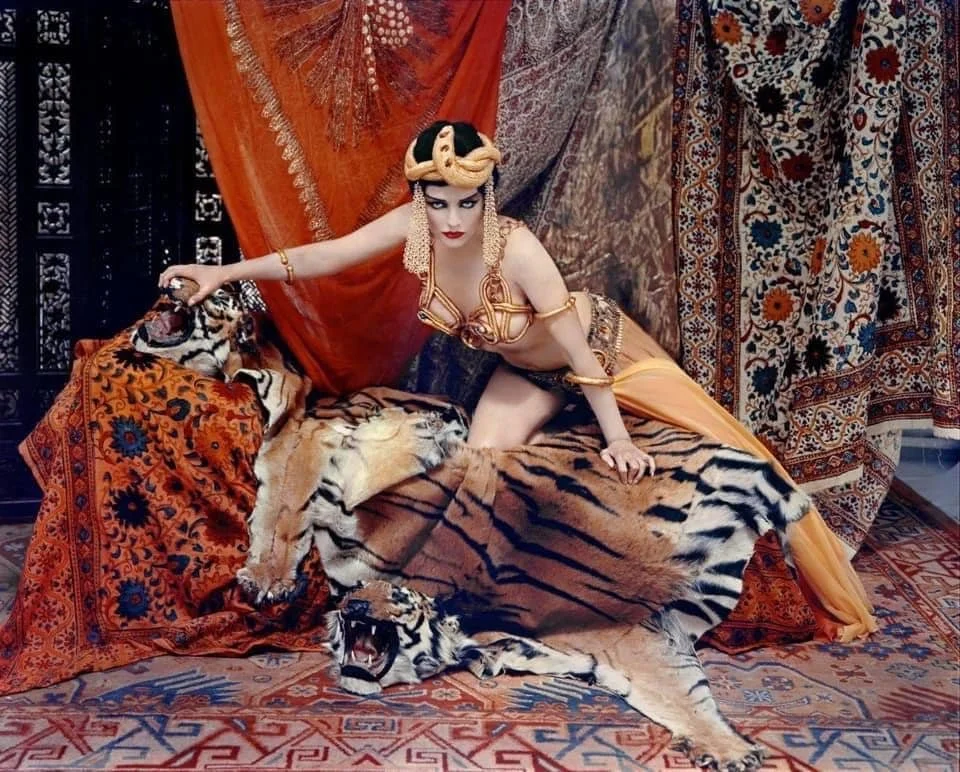
Another wild Marilyn tip came from the lovely Susan Alpaugh. She had posted a gallery of Monroe's photos. Two of them were particularly striking. They showed Marilyn attired in some sort of Egyptian garb. I didn't even recognize her. As it turns out, the photos were from a 1958 shoot with photographer, Richard Avedon.
Those photos were part of a session where Marilyn portrayed some of the most famous actresses from the 'silent' era of cinema. The two pics that blew me away were of Monroe recreating shots of Theda Bara in 1917's Cleopatra.
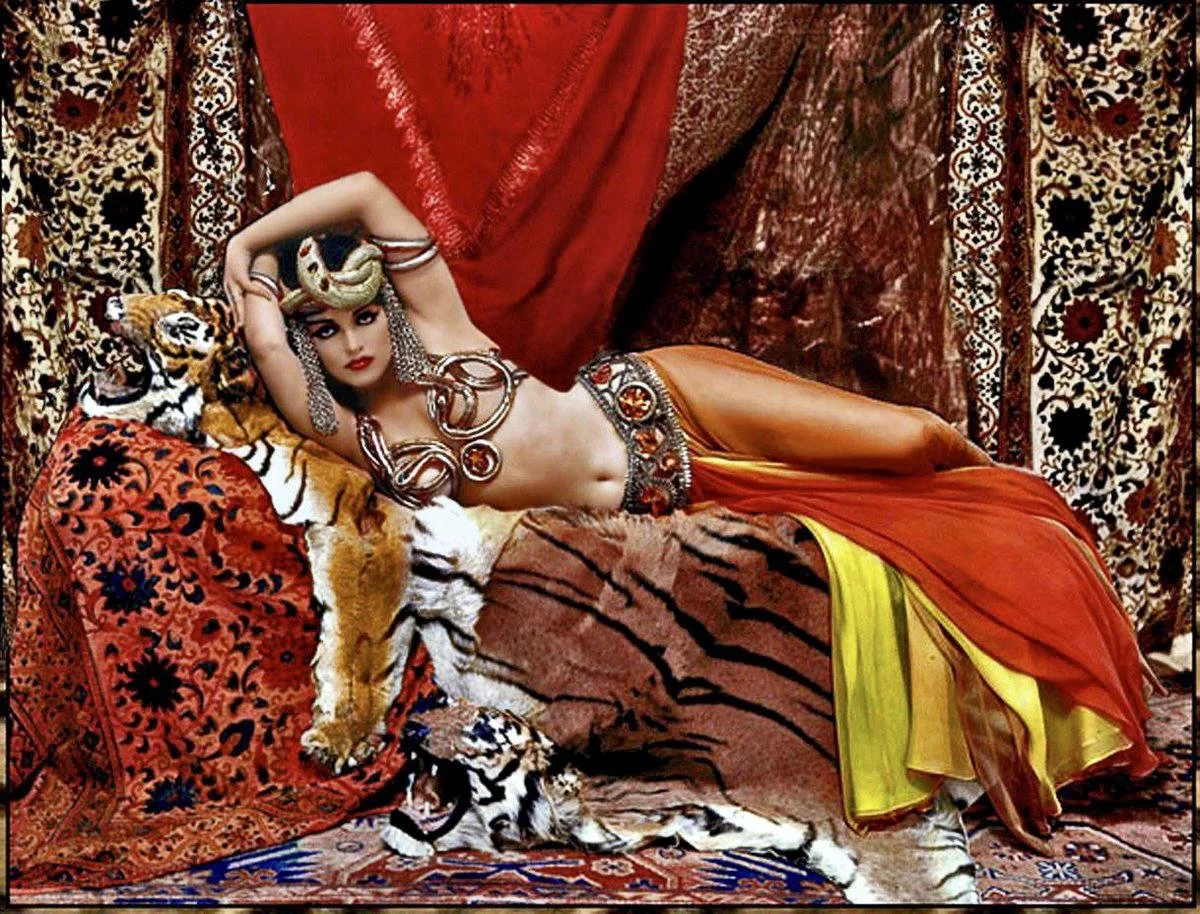
Dr. M.F. Khan @Dr_TheHistories over on X provided this info:
‘In 1958, at the height of her fame, Marilyn Monroe did something no one expected—she disappeared into someone else. For a bold LIFE assignment, photographer Richard Avedon asked her to embody icons of silent cinema. The most haunting? Theda Bara.
Monroe is dressed in a costume inspired by Bara's famous role in the 1917 film Cleopatra. Avedon noted that Monroe gave more to the still camera than any other woman he had photographed.
Gone was the bright, breathy bombshell. In her place: heavy kohl eyes, coiled serpentine poses, and a dangerous stillness that echoed Bara’s lost films. Avedon later said that between frames, Marilyn would “become nobody”—her face slack, distant—then snap back into character the instant the shutter clicked. It wasn’t just acting. It was transformation.
The shoot revealed a side of Monroe the public rarely saw: disciplined, controlled, and deeply aware of image as power. She wasn’t just playing the vamp—she was proving she could be anything.’
What he said!
Something about that particular Cleopatra movie tugged at my memory. Guess what I found?
Here's what Grokipedia has to say about the screenplay:
The 1917 film Cleopatra primarily adapts H. Rider Haggard's 1889 novel Cleopatra: Being an Account of the Fall and Vengeance of Harmachis, which presents the queen as a powerful and decadent deceiver in an exotic Egyptian setting, infusing the narrative with romantic intrigue and dramatic vengeance themes. The novel's structure, told through the perspective of the priest Harmachis, emphasizes Cleopatra's manipulative allure and her role in the downfall of rivals, providing the film's foundational romantic and adventurous tone.
The screenwriters also borrowed from Shakespeare and a French play, but the film is mainly based on HRH's classic novel, a novel that Robert E. Howard might have read. For that matter, it's possible--but unlikely--that Bob saw the movie at some point.
One sword-and-sorcery titan that undoubtedly saw that movie is Fritz Leiber. Fritz Leiber Jr., that is. How do we know? Because his own father, Fritz Leiber Sr, portrayed none other than Julius Caesar in the film. Cleopatra was quite successful, perhaps the most successful film that the elder Fritz ever starred in.
We know with certainty that Fritz Jr. was a Haggard fan--at least of the Quatermain tales--but one has to wonder if the first Haggard novel he ever read was Cleopatra. Did the Alexandria of Haggard's novel help inspire the city of Lankhmar? I'll certainly bet the movie primed young Fritz to love Talbot Mundy's Tros of Samothrace.
Speaking of Mundy... Around 1923, Arthur S. Hoffman, the editor of the classic pulp magazine, Adventure, suggested to Talbot Mundy that he should write a novel about Cleopatra. That project ended up becoming Tros of Samothrace. Now, this was several years after Cleopatra was released, but the movie was quite successful. Was it part of Hoffman's motivation? We know Mundy was an HRH fan. He'd probably read the novel and seen the film. However, I've never read a reference to any of this in the biographical material. Who knows?
Well, that was a long, strange ramble. Not something I expected when I started. I just kept going from one bread crumb to the next.
Happy birthday, Marilyn. You’re still fascinating after one hundred years.