
Count Belisarius by Robert Graves
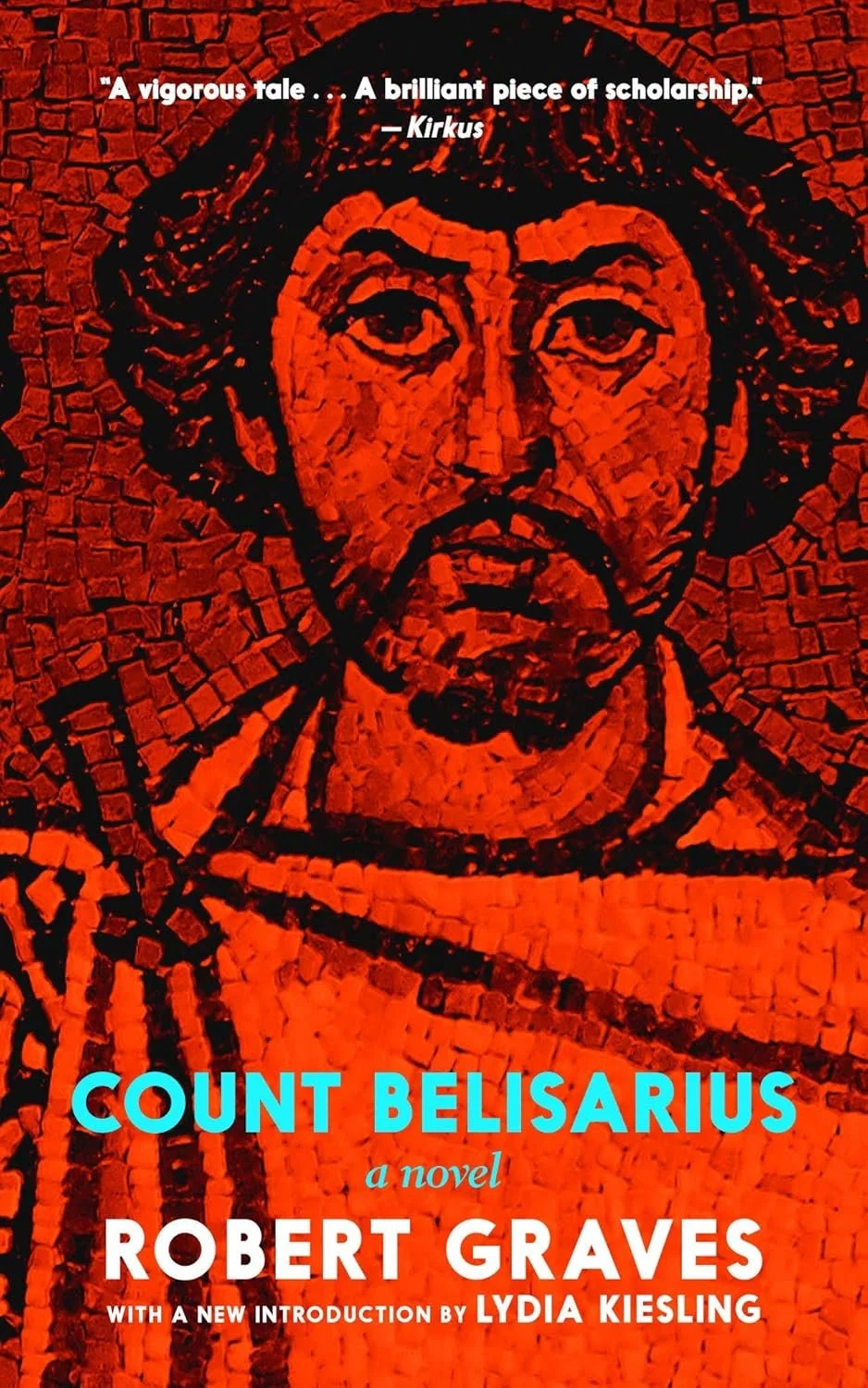
In the turbulent 6th century, the Eastern Roman Empire, ruled by Emperor Justinian, faced barbarian attacks, internal struggles between rival factions, and violent theological controversies that threatened to disintegrate the empire. Only one man could save the day: Count Belisarius, an example of nobility and valor, whose name the barbarians who confronted the imperial troops soon learned to respect and fear.
As Robert Graves points out, Belisarius was perhaps the last great general of the Roman Empire, both East and West. In 20th-century historical fiction, few titles are as unjustly forgotten as Graves' Count Belisarius. The plot encompasses the history of Europe and Mesopotamia, as well as the life of Belisarius and the Eastern Roman Empire, also known as the Byzantine Empire.
Robert Graves, the British poet, novelist, and essayist, achieved fame with I, Claudius and Claudius the God and His Wife Messalina. While this novel may not be as well-known, Count Belisarius certainly deserves equal recognition for the quality of its prose, the thoroughness of its research, and the audacity with which it redefined the historical novel.
Count Belisarius reveals another facet of Graves's work: his passion for imperial Byzantium and its complex political intrigues. Robert Graves manages to recreate all the grandeur and misery of the early Byzantine period.
Belisarius, perhaps the most celebrated general of the Eastern Roman Empire, whose victories owed more to his military genius than to any other factor that usually decides the outcome of a battle, is presented to us by Robert Graves as a man of unwavering rectitude and firm moral principles. On the other hand, he also teaches us the value of peace and negotiation to avoid wars and conflicts, which can cause unnecessary deaths.
The protagonist of the novel, Belisarius, represents, like no other protagonist of the past fifteen hundred years, early Christian values and Roman moral ideals. In the figure of Belisarius, Graves highlights the value of being guided by humility and the pursuit of the common good, while in the personalities of the rulers, he shows us how far removed they are from the feelings of the people and how they only seek their own social and economic benefit. That is to say, Graves contrasts the envy and pusillanimity of the rulers and other people who swarm around Belisarius with his personal humility and sense of justice.
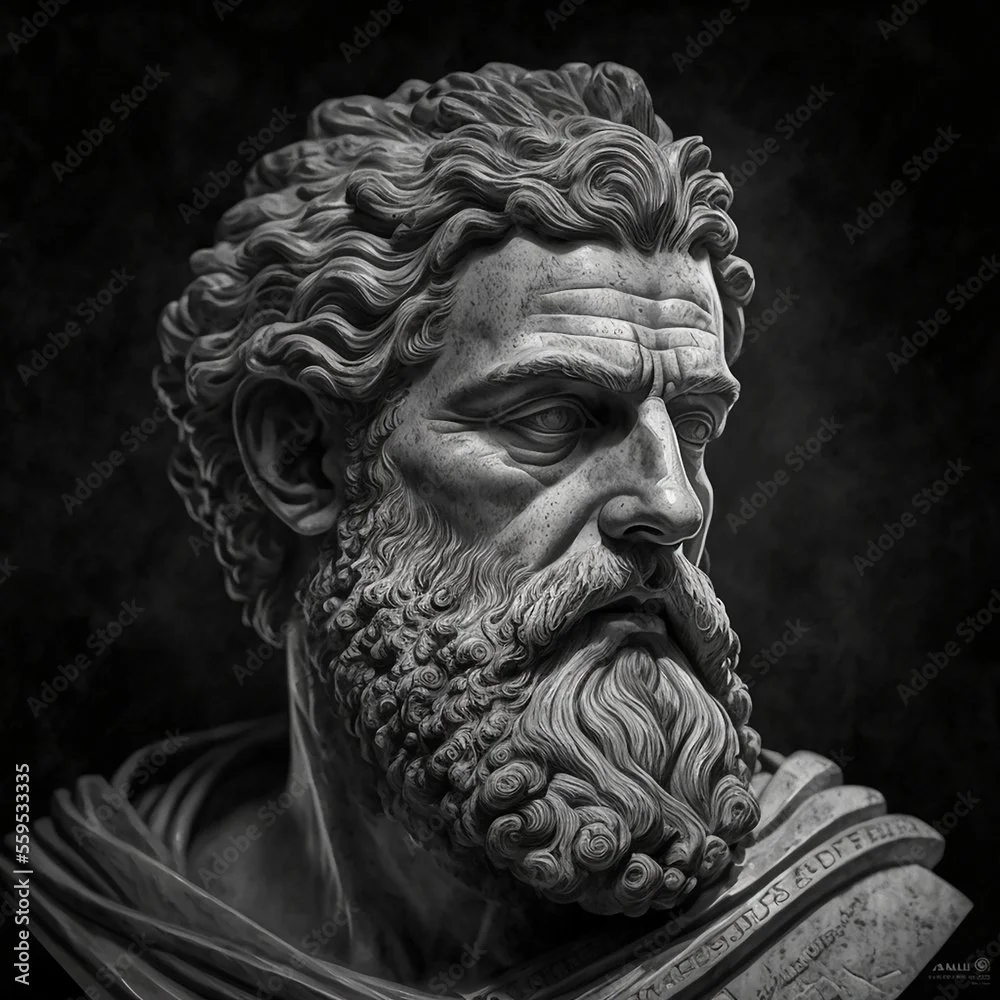
A bust of Count Belisarius later in life.
Belisarius was the last general of the empire to be acclaimed with an official triumph. That is no small feat; it's something tremendous: the last great Roman general. To a certain extent, one could say that the end of Justinian's reign is the turning point that marks the decline of antiquity and the beginning of the Middle Ages. Or at least, morally, it should be.
Belisarius is a figure who should be considered among the great strategists of the ancient world. If he is little known today, it could be said that perhaps it's because he had little "marketing" or because he lived during a decadent period of what was once a glorious empire; perhaps that's why he's barely known to the general public. He was the “Byzantine Hannibal” and more people should be aware of that than is the case right now.
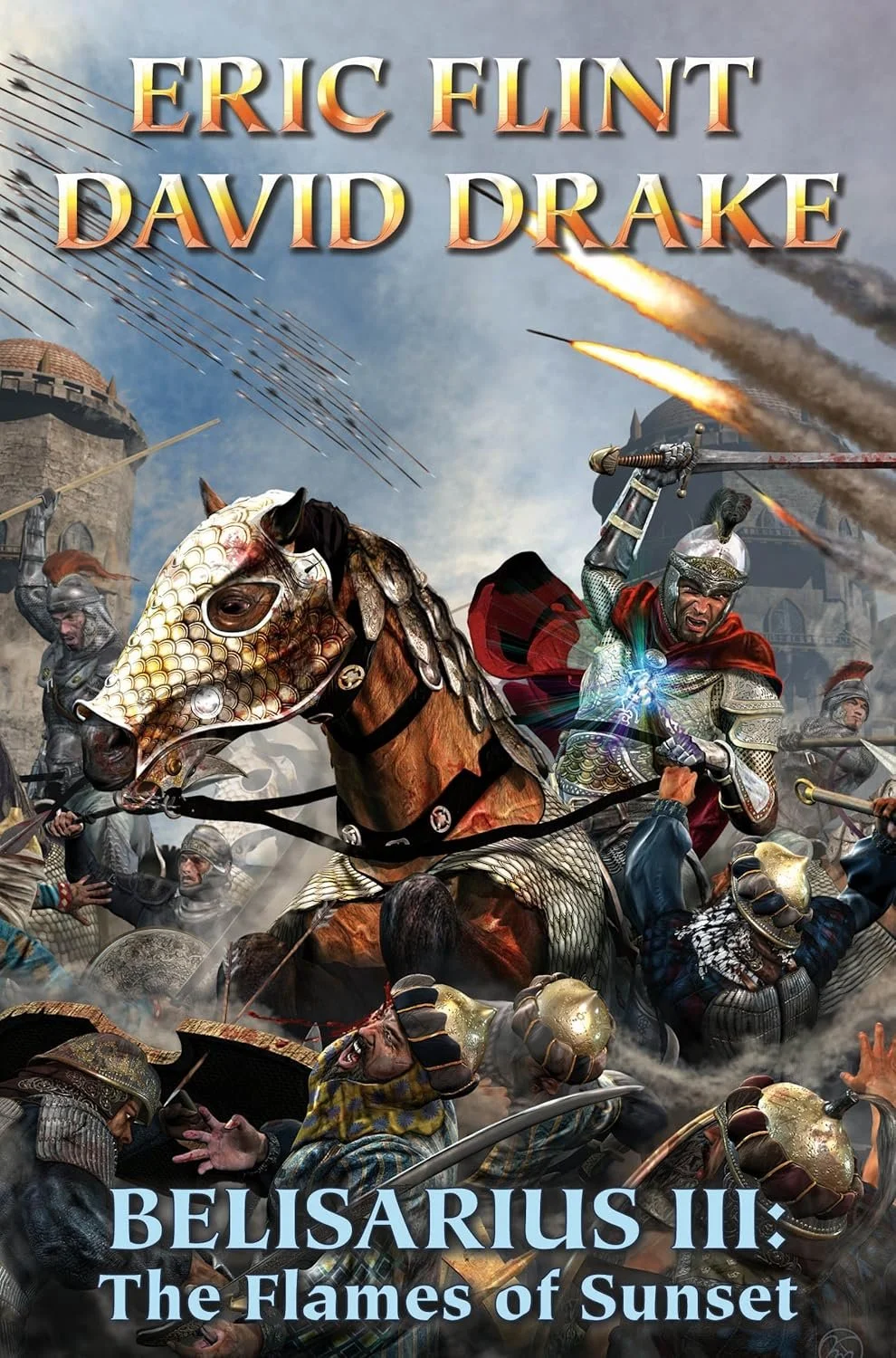
However, in the past four decades, Belisarius has received some small ration of what is due him. David Drake, a student of Rome and Byzantium. spearheaded and co-wrote two sci-fi series based upon Belisarius. The first was his 'The General' series, which is set in the far future but is based on the life of Belisarius. The second series he co-wrote was the 'Belisarius' series. In that case, the actual Byzantine Belisarius has to stop a menace from the far-flung future. Both series were quite successful in the 1990s and 2000s.
Although I said that Count Belisarius is a novel, I'm not really sure if I should define it as such. As in I, Claudius, Robert Graves employs a first-person narrator—Eugene, a slave of Antonina, Belisarius's wife—to masterfully recount Belisarius's story, relying solely on descriptions. I would say it's more of a fictionalized essay than a historical novel. Graves fictionalizes the events he focuses on to tell what happened, and he also conveys to the reader his sympathy for the character, making them feel and suffer what Belisarius felt and suffered, while justifying, in great detail, the reasons that led Belisarius to make one decision or another, so that the reader doesn't judge him wrongly.
It's a truly commendable book that fosters a deep connection between the reader and the protagonist, making them suffer and curse the brilliant general's enemies, and despair at his admirable sense of honor. Flavius Belisarius was a victorious general in Africa and Italy, having reconquered vast territories for the Eastern Roman Empire. Emperor Justinian needed him on the battlefield, but at the same time feared his popularity.
This contrast between hero and suspect is what makes his story a classic tragedy. Graves draws on the chronicles of Procopius of Caesarea, a contemporary historian, to craft a vibrant narrative that blends historical accuracy with literary depth, resulting in a portrait that transcends mere military reconstruction to delve into the psychology of a figure as brilliant as he is tragic.
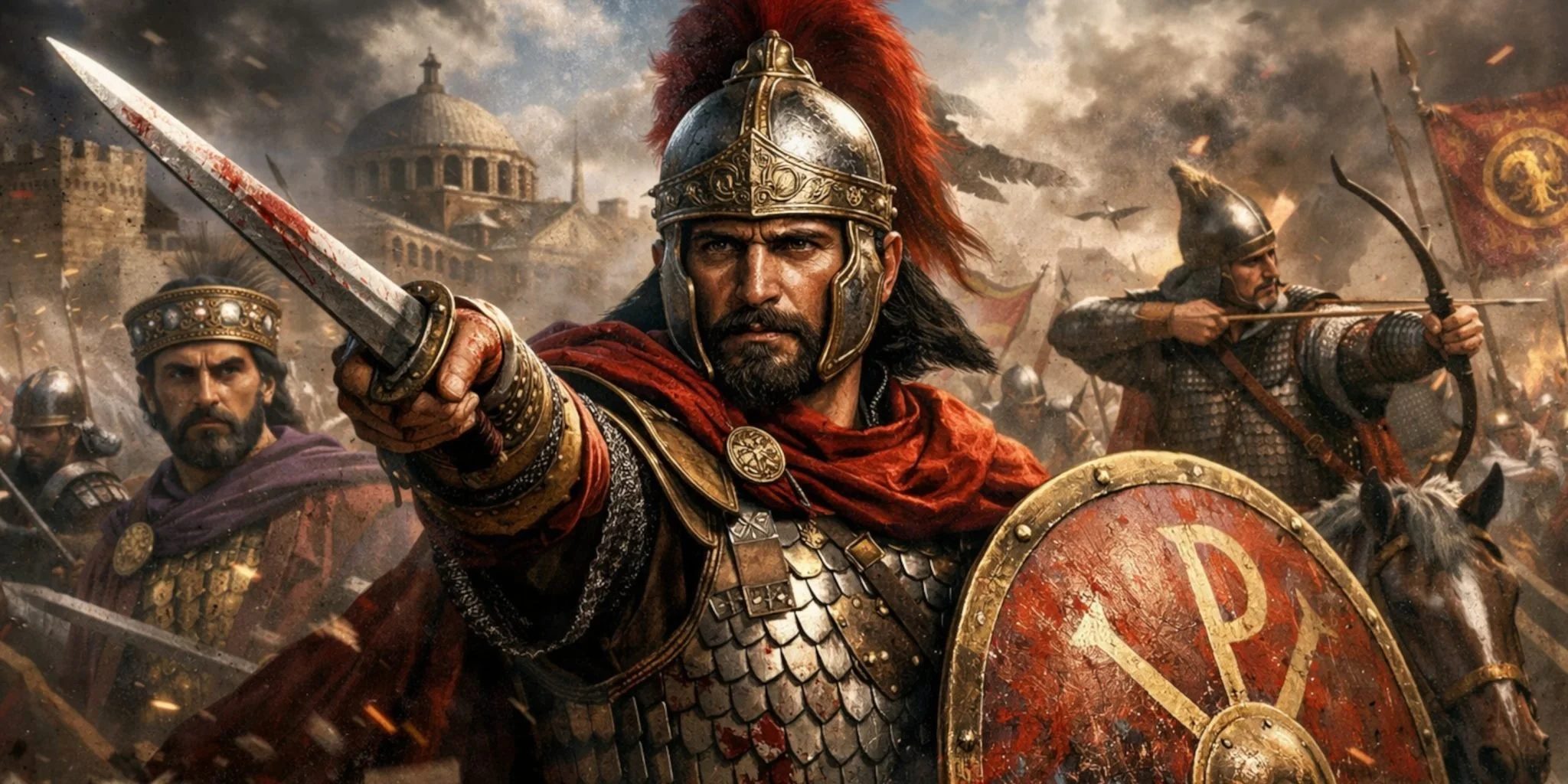
A young Belisarius putting down the Nika uprising against Emperor Justinian.
But I think it's more of a fictionalized essay than anything else. However, it's a magnificent resource for learning history, and I believe there's no better way to understand that era than by reading this book by Robert Graves.
The Byzantine Empire is a less frequented setting than Rome or Greece in the historical fiction genre. Being the heir to Roman grandeur, while also tainted by Romanesque intrigue and decadent splendor, Byzantium offers a fascinating backdrop for all types of fiction.
Through its pages, Count Belisarius immerses the reader in a world of palace intrigues, religious struggles, military campaigns, and social tensions that help to better understand the foundations of medieval Europe.
Graves portrays the most important moments in Belisarius's life; throughout the work, he emphasizes the great importance of religion and the different groups of Christians who coexisted, showing that although there were religious wars from the very beginning, only a few ideas about Christ truly gained traction among the people and even among kings seeking to conquer and distinguish themselves from other nations. It is a book that captivates the reader with a pagan Roman Empire transformed into Byzantium, whose capital is Constantinople, just as full of unexpected twists and turns, and memorable and fateful characters, as the Mother City which gave it birth.
Robert Graves thus constructs a complex, deeply human, and heroic figure, offering the reader a reflection on power, loyalty, and the fragility of destiny. With Count Belisarius, Graves created a great work, essential reading for discerning readers. For this reason, as with the rest of his novels, I highly recommend it; it is a gem of historical fiction.