
Cervantes, Chesterton, Robert E. Howard and C.L. Moore: Lepanto 1571
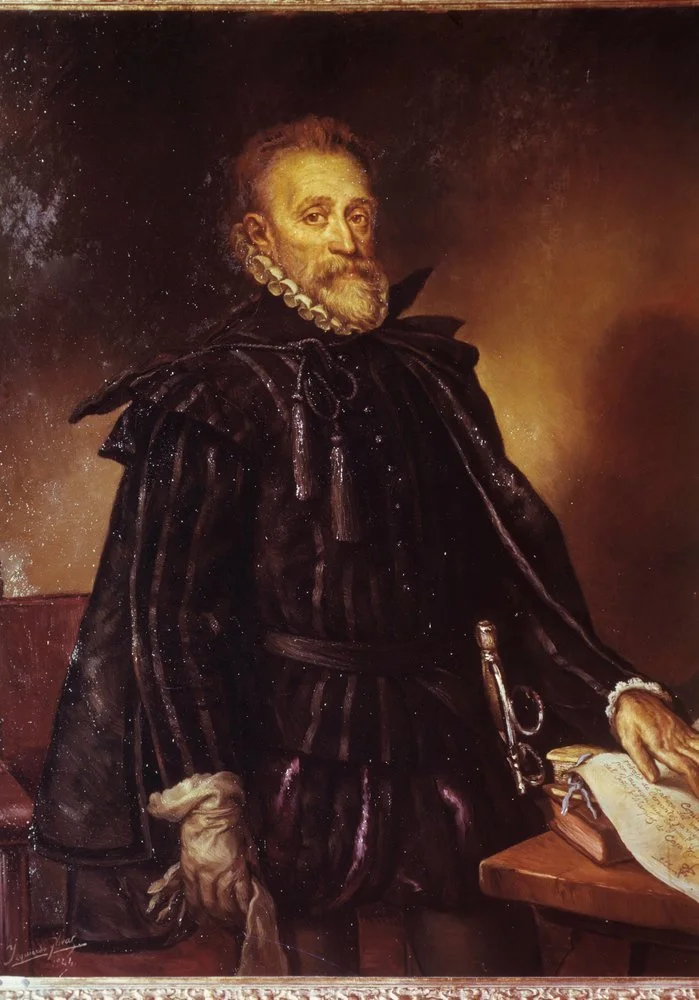
Miguel de Cervantes.
“Up to now I have served as a good soldier. I shall not do less on this occasion, even though I am weak and full of fever. It is better that I should fight in the service of God and the king and die for them, than keep under cover.” -- Miguel de Cervantes, right before the Battle of Lepanto
The Battle of Lepanto--October 7, 1571--was a seismic event, a fairly clear point of breakage between the Late Middle Ages and the Modern Age. More on that below.
Miguel de Cervantes--the author of Don Quixote--had just embarked on a military career, serving with the Spanish navy, when the Holy League was assembled. The island of Cyprus had very recently been captured and brutalized by the forces of Sultan Selim II, the Ottoman Emperor and the Shadow of Allah Upon the Earth. The Holy League was formed to stop--if not reverse--any further Ottoman expansion toward the West.
Cyprus had never, ever been under Mohammedan control, passing from the rule of the Byzantines to an usurper and then to Richard Lionheart--one of Robert E. Howard's favorite monarchs--and then to the Venetians. The Ottomans invaded and slaughtered all of the Venetians--skinning alive Marco Antonio Bragadino, the defender of Famagusta--and they did a passable job of ethnically cleansing the native Cypriots.
Enough about the 'big picture'. Cervantes, part of the Spanish contingent, was wracked by fever as the fleets of the Holy League and the Ottoman Empire confronted each other in the Gulf of Patras. His commander ordered Miguel to sit out the battle below decks. Wrenching himself out of bed, Miguel helped defend his ship--an account backed up by his superiors. His left arm and hand were maimed, but—for the rest of his life—he reckoned the victory at Lepanto worth the sacrifice.
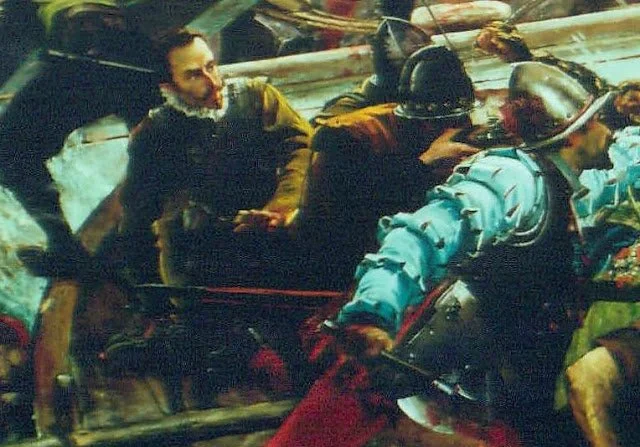
A detail from Juan Luna’s 1887 mural depicting the Battle of Lepanto. Cervantes is in the upper left.
Four years later, in 1575, Cervantes was captured by the Barbary Corsairs of Algiers. He spent about five years as a menial slave to the Mohammedans of Algiers before being ransomed. The ransom broke his family. Cervantes himself died in near-poverty.
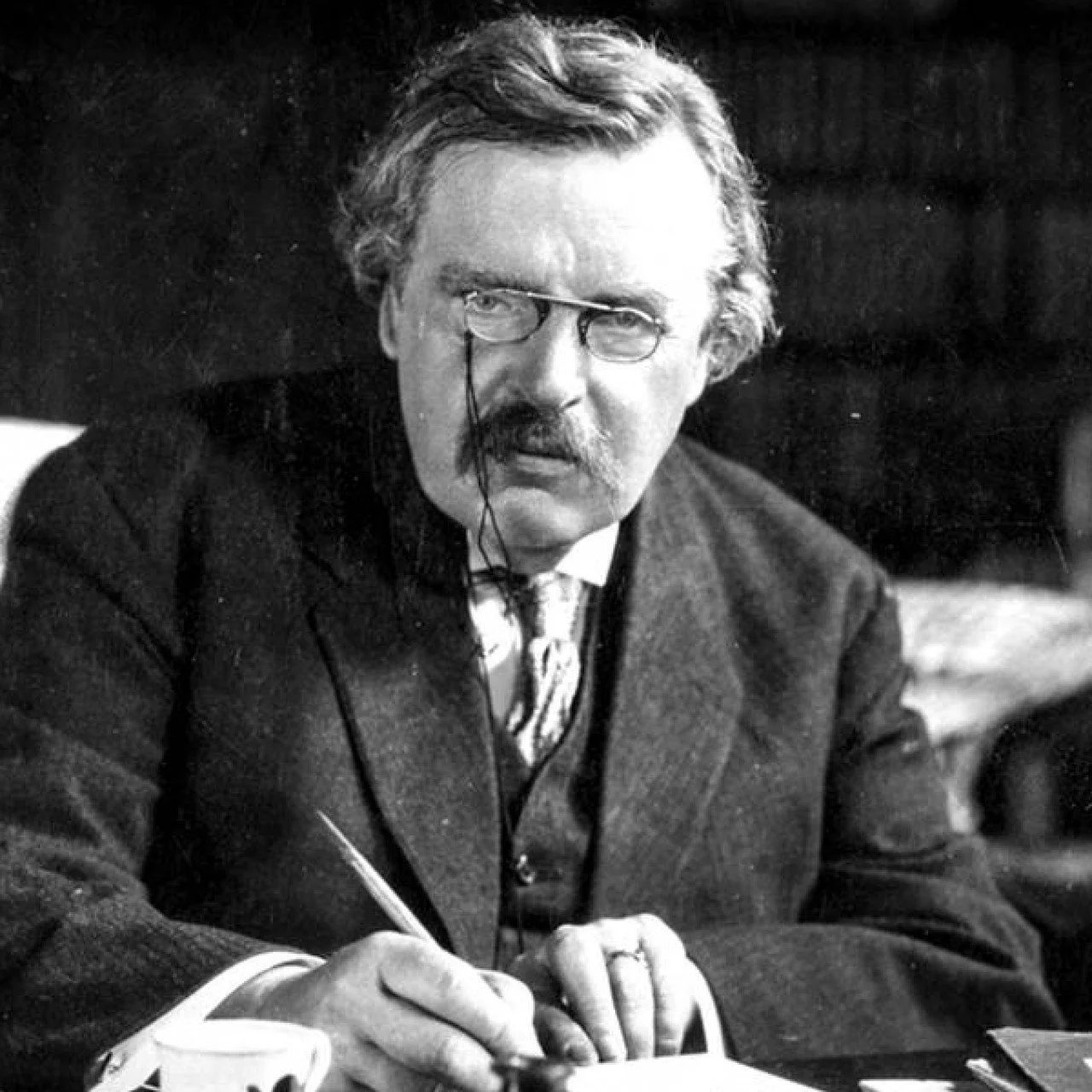
Fast-forward from 1575 to 1915. G.K. Chesterton, a titan of the Heroic Age of British Literature, published “Lepanto” in his collection, Poems. An epic poem--much like his "The Ballad of the White Horse"--it influenced many authors and poets at the time.
One of those authors was Hilaire Belloc, who praised "Lepanto" in this fashion:
"Indeed the whole of that poem 'Lepanto' is not only the summit of Chesterton's achievement in verse but the summit of high rhetorical verse in all our generation. I have said this so often that I am almost tired of saying it again, but I must continue to say it. People who cannot see the value of 'Lepanto' are half dead. Let them so remain."
On June 21, 1915, John Buchan wrote in a letter to GKC:
“The other day in the trenches, we shouted your 'Lepanto'.”
Those were the 'trenches' of World War One. Regardless of the merits of that war, this demonstrates the sheer power of Chesterton's epic poem.
On the far side of the Atlantic, other authors and poets admired Chesterton's epic poem. One of those authors/poets was Robert E. Howard.
Here is what Two-Gun Bob had to say:
"You're right. There is great poetry being written now. G.K. Chesterton, for instance. Especially that 'Lepanto.' " -- REH to Tevis Clyde Smith, August 6, 1926
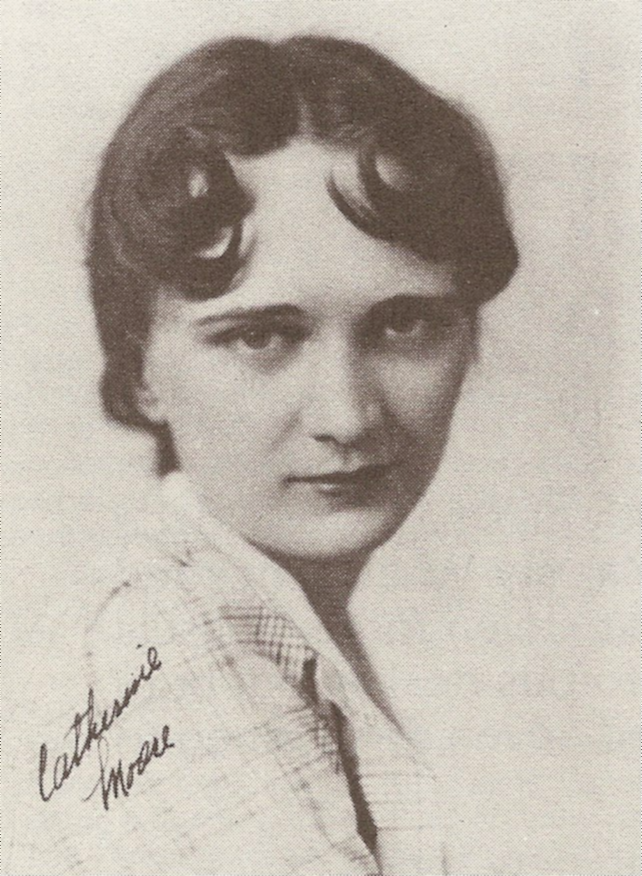
C.L. Moore in the 1930s.
Howard was a true fan of GKC. He used Chesterton's verses as epigrams for his own yarns again and again. That is the subject of a future post.
For a very short timespan, REH and C.L. Moore corresponded. Howard's letters to her don't survive. Catherine's letters did survive.
"I could quote Kipling for hours. Or Chesterton. (…) I could run a temperature over G. K.'s 'Lepanto,' too. Any and all of it." -- C.L. Moore to Robert E. Howard, 29 Jan 1935
Moore then quotes stanzas from GKC's "Lepanto":
"The Pope has flung his arms abroad in agony and loss,
And called the kings of Christendom for swords about the Cross!"
Or,
"Don John laughing with the brave beard curled,
Spurning of his stirrups like the thrones of all the world.... Don John of Austria is riding to the war!!!"
Or,
"He moves a mighty turban on the timeless hour's knees,
A turban that is woven from the sunsets and the seas,
He shakes the peacock gardens as he rises from his ease
And he strides among the treetops and is taller than the trees."
(That last doesn't seem especially exciting to read, but when you sing it or say it, you get the effect. It starts out so quietly and gains speed and crashes into a tremendous climax—for me, anyhow.)'
Obviously, Howard and Moore loved this poem. Catherine is quoting specific passages, indicating she knew this poem quite well. Let's parse out what REH said about Chesterton and 'Lepanto'.
"There is great poetry being written now. G.K. Chesterton, for instance. Especially that 'Lepanto.' "
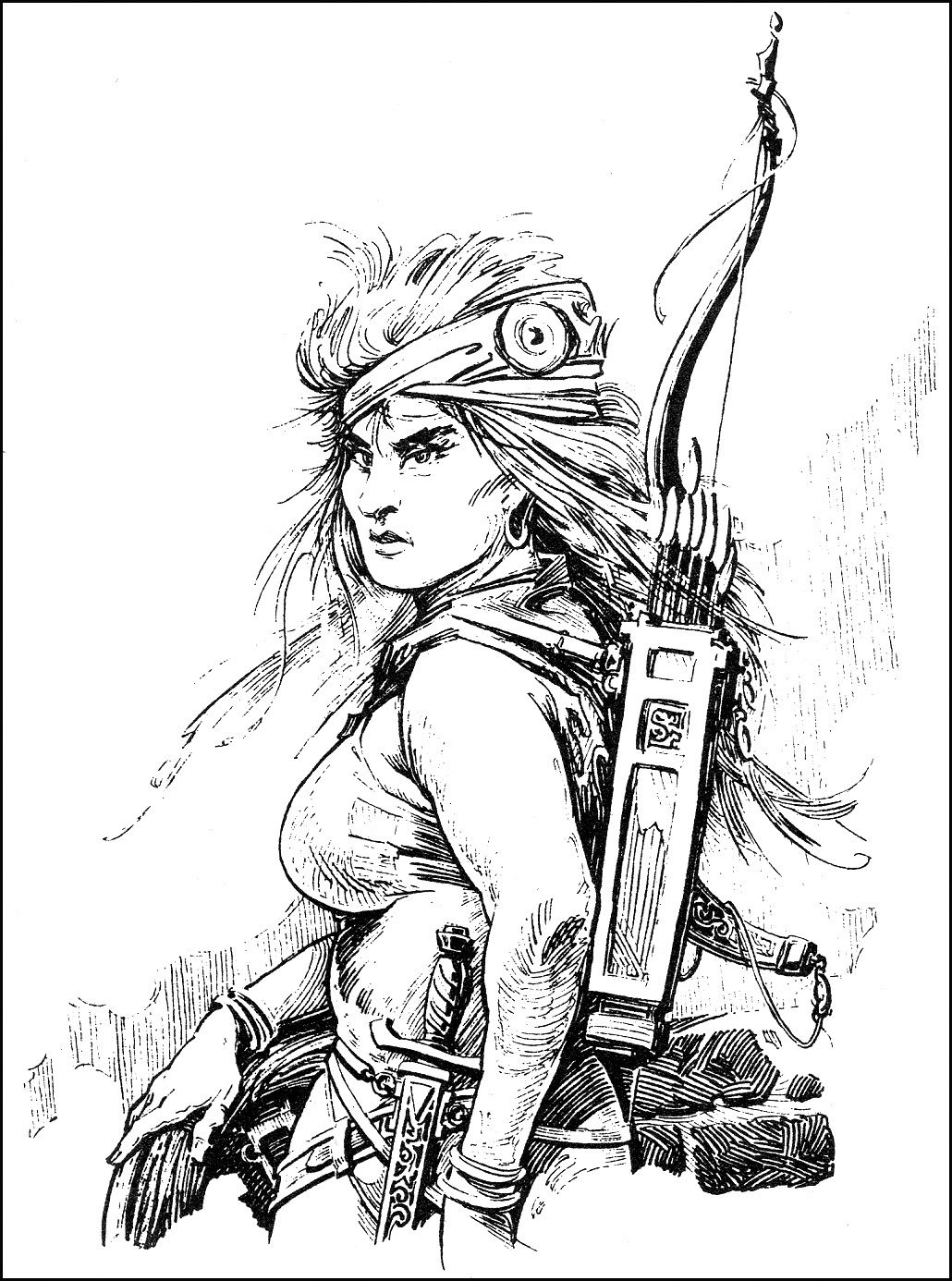
Sonya quietly smirking. Depicted by Roy G. Krenkel.
Thus and therefore, Howard considered GKC to be a "great poet". When it comes specifically to "Lepanto", then we are looking at top-drawer "great" or something truly beyond that. Either way, REH's admiration for this poem has never been given its due.
Gottfried von Kalmbach and Sonya of Rogatino probably never lived to see Selim II--the Padishah Emperor and son of Suleiman the Magnificent--utterly humiliated at Lepanto.
Guess who the mother of Selim II was? This is from the Encyclopedia Britannica website:
"Roxelana (born c. 1505, Rohatyn, Poland [now in Ukraine]—died April 1558, Constantinople, Ottoman Empire [now Istanbul, Turkey]) was a Slavic woman who was forced into concubinage and later became the wife of the Ottoman sultan Süleyman the Magnificent. Through her influence on the sultan and her mastery of palace intrigue, Roxelana wielded considerable power."
"Rohatyn" is the same thing as "Rogatino". We know from REH that Roxelana was (Red) Sonya's sister. Thus and therefore...Don Juan humiliated Sonya's nephew at Lepanto.
Gottfried and Sonya--if both were still alive--probably clinked their glasses in triumph when the news of Lepanto reached them. What they started in Rhodes and Vienna had blossomed into the glorious victory of Lepanto.