
Robert E. Howard: In Praise of His Nativity
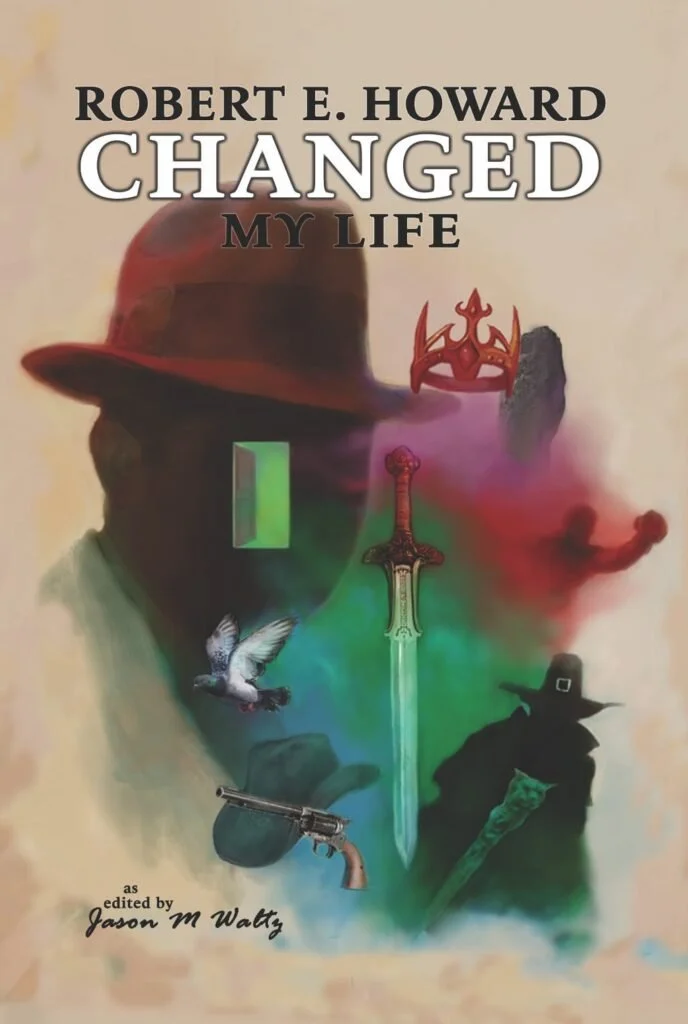
Today marks the one hundred and twentieth anniversary of Robert E. Howard’s birth. This year, 2026, also marks the ninetieth anniversary of Howard’s death. Thirty years and change. A little over ten years of that comprised his career as a published author. However, that decade changed the literary world…and changed my life in particular.
I was a bookish child in some ways. I spent a lot of time outdoors, but I loved reading from an early age. I went from Curious George to comics and Kipling's The Jungle Book to Edgar Rice Burroughs by the age of seven. I was reading at a seventh or eighth-grade level at that point. Then I bought Conan the Barbarian #38 in the spring of 1974. From there, I went on to read Conan the Conqueror (Gnome Press), Giant-Size Conan #5 and then The Book of Robert E. Howard--edited by the indispensable Glenn Lord and published in 1976.
Most of the above--and more--is recounted in my chapter of Robert E. Howard Changed My Life. Feel free to check it out. It's a worthy volume with essays by Michael Moorcock, Keith Taylor and others. Jason M. Waltz did a great job.
There are a couple of things from those very early readings that really stand out in my mind, even to this very night. One is from the first paragraph of Conan the Conqueror:
"The long tapers flickered, sending the black shadows wavering along the walls, and the velvet tapestries rippled. Yet there was no wind in the chamber. Four men stood about the ebony table on which lay the green sarcophagus that gleamed like carven jade. In the upraised right hand of each man a curious black candle burned with a weird greenish light. Outside was night and a lost wind moaning among the black trees."
Neither Poe nor Lovecraft could've written it better. I was eight years old. Chills ran up and down my spine numerous times as I read through that chapter. Almost despite myself, I was hooked. I read that entire (short) novel that night--long after I was supposed to be asleep. I would never, ever be the same. How could I be?
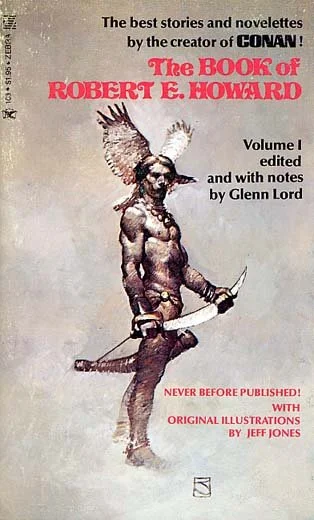
Fast forward to early 1976. I'd just bought The Book of Robert E. Howard that very day. I couldn't wait to read it. 'Pigeons from Hell' was the first tale in the collection. I read Glenn Lord's introduction to the story--that is how I roll--which detailed some of the background. It was the first time I ever encountered the term 'Gaelic'.
Picture the scene, Gentle Reader. There I was, a nine year-old on a couch covered in the finest cured Naugahyde. It was literally a dark and stormy night. My parents were out, leaving myself and younger siblings in the care of a (very sweet) babysitter.
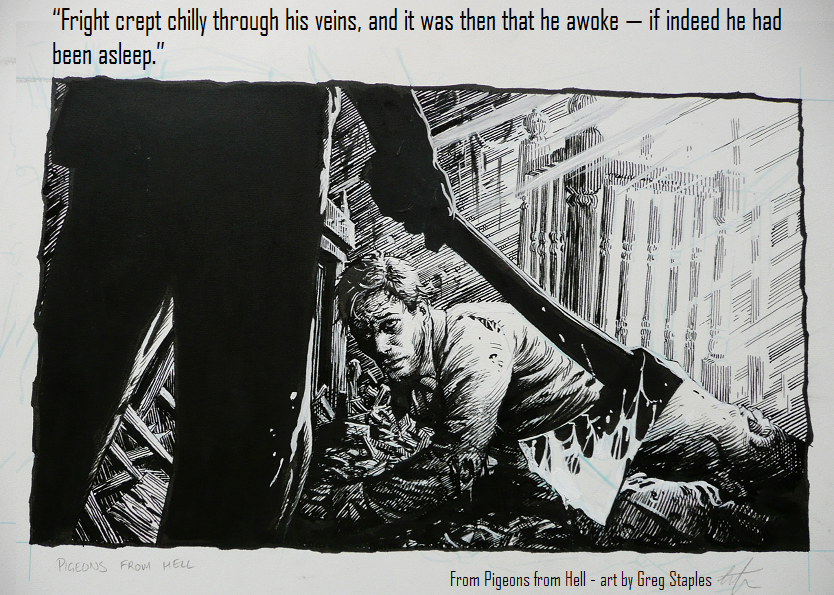
So, try to imagine my reaction when I read this. Griswell is crashing in an abandoned Louisiana plantation house for the night. He awakes to find his best friend, Branner, gone. Griswell hears an eerie whistling...
"The whistling sank to a lower note, died out. Griswell heard the stairs creaking under Branner’s measured tread. Now he had reached the hallway above, for Griswell heard the clump of his feet moving along it. Suddenly the footfalls halted, and the whole night seemed to hold its breath. Then an awful scream split the stillness, and Griswell started up, echoing the cry.
The strange paralysis that had held him was broken. He took a step toward the door, then checked himself. The footfalls were resumed. Branner was coming back. He was not running. The tread was even more deliberate and measured than before. Now the stairs began to creak again. A groping hand, moving along the balustrade, came into the bar of moonlight; then another, and a ghastly thrill went through Griswell as he saw that the other hand gripped a hatchet—a hatchet which dripped blackly. Was that Branner who was coming down that stair?
Yes! The figure had moved into the bar of moonlight now, and Griswell recognized it. Then he saw Branner’s face, and a shriek burst from Griswell’s lips. Branner’s face was bloodless, corpse-like; gouts of blood dripped darkly down it; his eyes were glassy and set, and blood oozed from the great gash which cleft the crown of his head!"
I let out some sort of yelp at that point. Kathleen (the babysitter, God bless her), was there immediately. She wanted to take the book. I assuaged her misgivings. I had to know, after all. That is the dark allure of horror yarns. The well-crafted ones demand that you find out how it all ends--that you know. The fictional characters devoured by their desire to read the Necronomicon or Nameless Cults are just one literary step beyond that.
That's the thing. Robert E. Howard was a horror writer as much as anything else. Three of his first four yarns sold to Weird Tales were horror tales, to one degree or another. Despite the disputations of a few REH scholars, Robert E. Howard was not a 'happy soul'. Was he capable of humor? Absolutely. Ask Robin Williams how that works. The 'tears of a clown' and all that.
How about we look at what Howard actually said about his life and, especially, his birth? I'm not talking about what he said in some letter, where he might gloss over dark musings and present a brave face to whomever he was corresponding with. No, I'm talking about his poetry. As he said more than once, Bob would've liked to make a living as a poet. He saw that wasn't possible in the already-decadent times in which he lived. Definitely not the poetry he wanted to write.
Here is the poem that inspired the title of this blog entry. The title is "I Praise My Nativity". A loose translation would be 'Happy Birthday, To Me! (Sardonically)'.
Oh, evil the day that I was born, like a tale that a witch has told;
I came to birth on a bitter morn, when the sky was dim and cold.
The god that girds the loins of Fate and sends the nighttime rain,
He diced my game on an iron plate with dice carved out of pain.
“This for the shadow of hope,” laughed he, as the numbers glinted up,
“This for a spell and this for Hell, and this for the bitter cup.”
A Shadow came out of the gloom of night and covered me with his cowl
That carried the curse of The Truer Sight and the blindness of the owl.
Oh, evil the day that I was born, triply I curse that day,
And I would to God I had died that morn and passed like the ocean spray.
Not exactly the 'feel good' mantra to start your day, is it? We also have this poem, where REH writes a rime of his birthplace in Texas:
The nightwinds tossed the tangled trees, the stars were cold with scorn;
Midnight lay over Dark Valley the hour I was born.
The mid-wife dozed beside the hearth, a hand the window tried-
She woke and stared and screamed and swooned at what she saw outside.
Her hair was white as a leper’s hand; she never spoke again,
But laughed and wove the wild flowers into an endless chain;
But when my childish tongue could speak, and my infant feet could stray,
I found her dying in the hills at the haunted dusk of day.
And her darkening eyes at last were sane; she passed with a fearsome word:
“You who were born in Dark Valley, beware the Valley’s lord!”
As I came down through Dark Valley, the grim hills gulped the light;
I heard the ponderous trampling of a monster in the night.
More uplifting poesy! Nobody but a 'happy warrior' could've penned those lines. Am I right?
I'm not here to beat a dead horse--or nightmare--but Howard's vision of the world was a dark one. I think it's obvious he fought against that mindset. His humorous Westerns and boxing yarns show his lighter side, but the Outer Dark always lurked beyond the firelight.
Speaking of which, let's look at "A Word from the Outer Dark"...
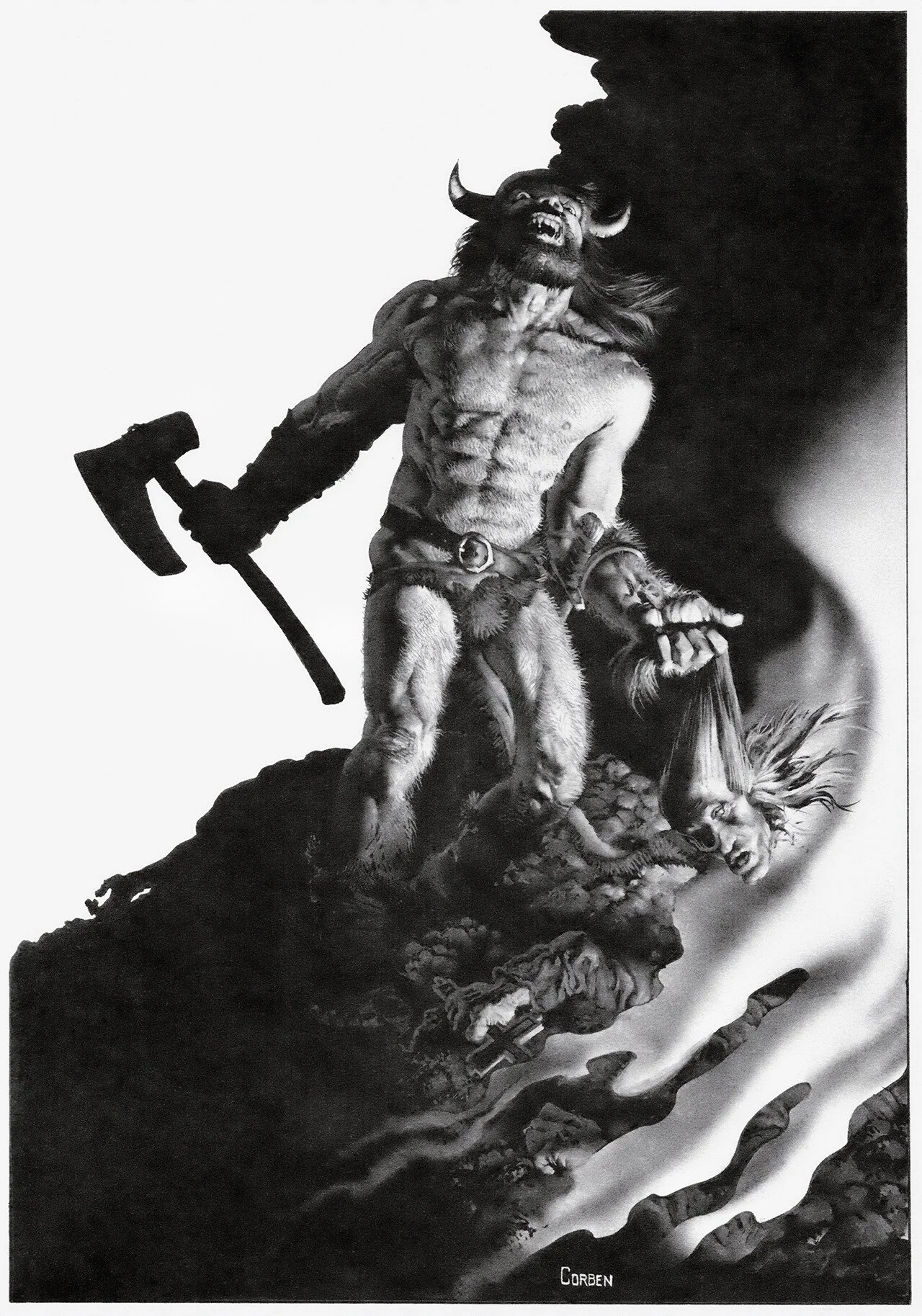
Richard Corben’s illo for “A Word from the Outer Dark”.
My ruthless hands still clutch at life-
Still like a shoreless sea
My soul beats on in rage and strife.
You may not shackle me.
My leopard eyes are still untamed,
they hold a darksome light-
A fierce and brooding gleam unnamed
that pierced the primeval night.
Rear mighty temples to your god-
I lurk where shadows sway,
Till, when your drowsy guards shall not,
To leap and rend and slay.For I would hurl your cities down
And I would break your shrines
And give the site of every town
To thistles and to vines.
Higher the walls of Nineveh
And prouder Babel's spires-
I bellowed from the desert way-
They crumbled in my fires.
For all the works of cultured man
Must fare and fade and fall
I am the Dark Barbarian
That towers over all.
Well, there ya go. As I've pointed out before, I see Robert E. Howard as being ambiguous and conflicted on most topics. As Seinfeld would say, "Not that there's anything wrong with that." Most of us lack absolute moral certitude, including Solomon Kane. Let's try not to be hypocrites in calling out REH for any such failings.
I view that poem as both a warning and a manifesto. Bob had a foot in both camps. He enjoyed the comforts of Western Civilization. He also saw the creeping decadence around him, even in Depression-era Central Texas. On the other foot, Howard could look through the eyes of the Dark Barbarian and see easy prey in our 'drowsy' and 'cultured' ways. In my opinion, his warning is as relevant today as it was then.
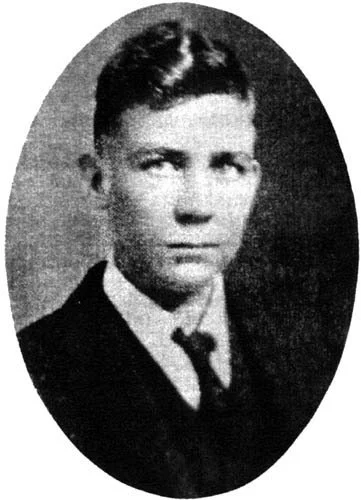
Bob as a young man.
Reading REH as a youngster, I became acquainted with his viewpoints early on. I went from an unabashed fanboy of the Greco-Roman period, the Vikings and First Nations/Native Americans to being just as much a fan of the Celts/Gaels and of the Middle Ages. Without Robert E. Howard, it's likely my interest in those latter subjects would have been scarce to none; certainly not as early as I actually did develop those interests.
Robert E. Howard affected me profoundly in other ways. Knowing his life story inspired me to stand up for myself as a boy and to defend others against bullies. At the same time, reading the Conan yarns led me--and a couple of my friends--to a life of violent excess...but that is on me.
At the end of the (birth-)day, it's hard to deny that what has compelled generations of readers for over a century to seek out Robert E. Howard is his dark vision coupled with his intense storytelling. REH felt things deeply. That lends an air of conviction to his fiction that few other authors in the Anglosphere can match. The same dark muse that "brung 'im to the dance” also led him to his grave. I say that not to judge but to state a plain fact.
As the great illustrator and REH fan, Roy G. Krenkel, once said in his classic introduction to The Sowers of the Thunder:
“One reads Howard distantly, as though through a mist of time -- fleeting glimpses, lightning sharp, are caught of marching men in grim armor, of battlements stormed by savage hordes, of whispered intrigues in tapestried candlelight. As from afar we hear the summons of the oliphant, the ring of steel on steel, the screams of the dying; too vast -- too terrible -- to grasp as reality, and, somehow, the more 'real' for all that! What emerges, sharp and clear, is the mood. (…)
He was aware of this quality of 'things passing' -- of time ravelling away -- as was no other figure in the whole field of literature. It colored all his work; his best prose is built around it, his poetry is redolent of it! Futility, and the emptiness of men's dreams, the feeling of things -- of life -- slipping through one's fingers -- unbidden, ineluctable -- and wayward!
It has been said of Burroughs, and I doubt it not, that he hated death -- and by implication, loved life. Held up to Howard he was an amateur! Nothing short of Godhood, and dominion over all time, could have quenched Howard's hunger. He knew barbarism is man's natural state, that beauty is a fleeting spark in the night of eternity, that 'even the lovliest sunset fades!' and he hated it! My own thought-patterns run just close enough to understand the point of view: Howard lived with it!”
So, despite the ironic and sardonic inspiration, I do praise Robert E. Howard's nativity. 'Drink to his shade', sword-brothers. There will never be another like him.