
Wagner, Dumas, Brackett and Louÿs: An Anniversary Round-up
I dropped the ball, DMR Books readers. It’s not the first time and won’t be the last. However, I do like to make amends when I can. In the past six days, I missed three very notable authorial anniversaries and today marks another. Respects must be paid, belatedly or otherwise.
I’ve blogged about two of those authors for over fifteen years. The other two, both French—coincidentally—are authors I’ve meant to comment upon for years but have never quite gotten around to. Also coincidentally, the two American authors were heavily influenced by Robert E. Howard. The two French authors were both influences upon REH, albeit in very different ways.

I would hope Karl Edward Wagner needs no introduction to DMR Blog readers. December 4 marked his eightieth birthday. For those needing an introduction to his career, this link should get you started.
One of Wagner's stand-out virtues was his promotion of great pulp writers. One example would be his editorship of the Berkley Conan volumes. Another would be his excellent 'Echoes of Valor' series. Third would be his "Thirteen Best Supernatural Horror Novels", in which he singled out A. Merritt's classic novel, Burn, Witch, Burn, for praise.
With Karl holding Merritt in such esteem, it is no stretch to wonder if Merritt influenced KEW's fiction. In the afterword for DMR's definitive edition of Dwellers in the Mirage, I point out the striking parallels between Merritt's groundbreaking novel and Wagner's Bloodstone.
Alexandre Dumas--who died on December 5, 1870--is an author I've been meaning to comment upon. While the mighty Sir Walter Scott may have invented the modern 'swashbuckler' novel, Dumas took it to new heights. In fact, he is the standard by which later authors are judged. Harold Lamb was called 'the American Dumas'. Rafael Sabatini was called 'the modern Dumas'. His many 'Musketeers' novels and The Count of Monte Cristo remain benchmarks within the swashbuckler genre.
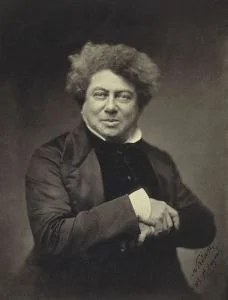
An innovation of Dumas was the 'adventure series character'. His numerous 'Musketeer' novels feature D'Artagnan along with the continuing adventures of his comrades. This idea was taken up by the likes of Haggard, Doyle and Burroughs to international acclaim and worldwide sales.
The direct influence of Dumas is far from dead. Michael Moorcock and Steven Brust have both written recent novels which they acknowledge were influenced by Dumas. Meanwhile, new English translations by Lawrence Ellsworth have been published with success these past few years.
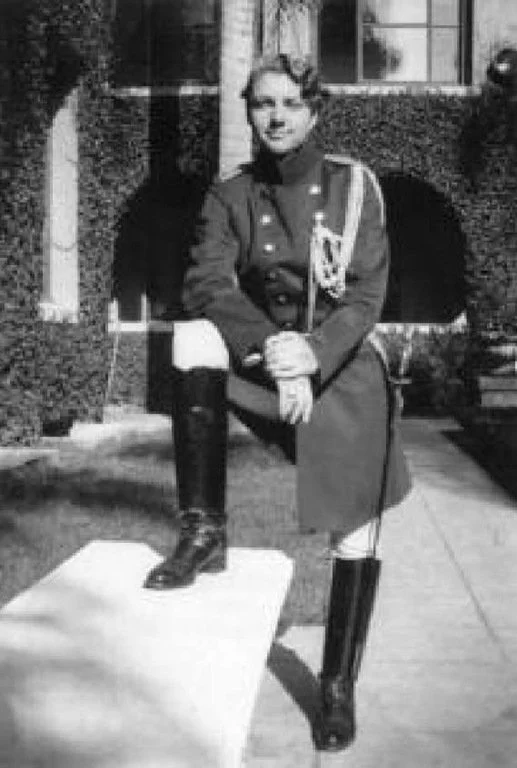
I have to admit, I hadn't read Dumas unabridged until a few years ago. It was something of a revelation. His best work is earthy, gritty and blood-thirsty. No wonder REH was a fan.
As with Wagner, I have been singing the praises of Leigh Brackett--born on December 7, 1915--for well over a decade. I've been a fan for well over four decades. Unlike KEW, she was quite prolific. I continue to discover ‘new’ tales by her, as well as great movies she scripted. If you want to know more of what I think of her, click here.
Leigh was definitely influenced by Edgar Rice Burroughs and Robert E. Howard. That said, we know she was also a huge A. Merritt fan. I discuss that here. The Sword of Rhiannon--one of her best novels--shows the obvious influence of A. Merritt's Dwellers in the Mirage.
I've neglected Leigh Brackett of late. I intend to correct that in the near future. I hope to blog about some never-revealed info regarding Eric John Stark. We'll see. In that same vein, I plan on reviewing Leigh's magnum opus, the three Skaith novels, sooner than later. Lastly, I want to examine the massive influence of C.L. Moore's Northwest Smith tales--Moore also being a Merritt fan--upon Brackett's later 'Solar System' mythos of which Eric John Stark is a part.
Speaking of 'lastly'...today is the one hundred and fifty-fifth birthday of Pierre Louÿs. He died on June 4, 1925.
Louÿs was born in Belgium to French parents and was raised in France. Louÿs, as an author and editor, was known for championing various ‘alternative’ lifestyles, despite the fact that he apparently maintained a relationship with one woman for most of his life.
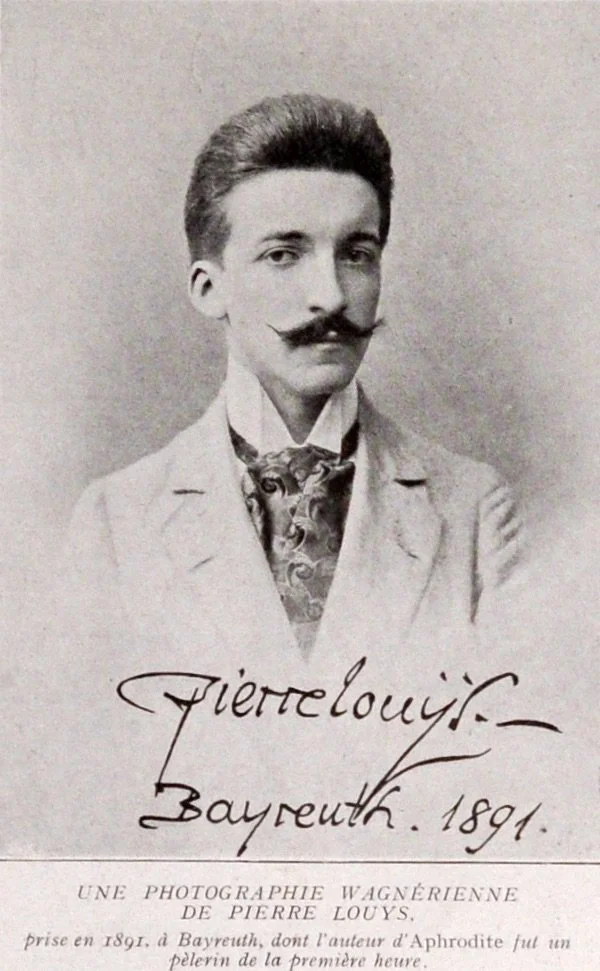
The reason that Louÿs is of interest to DMR Blog readers is that Robert E. Howard gave The Collected Works of Pierre Louÿs (1932) to Novalyne Price as a present. In that volume he inscribed to Novalyne this: "The French have one gift--the ability to gild decay and change the maggots of corruption to the humming birds of poetry." We know this from both Novalyne's One Who Walked Alone and also the film based upon it, The Whole Wide World.
Oddly enough, 'Collected Works' was published by Liveright of New York, the same publisher for most of Merritt's hardcovers in the 1930s. Then again, Berkley--the Wagner Conan publisher--was known for publishing straight-up sleaze in the 1970s.
That Liveright hardcover had to cost REH a pretty penny. Obviously, he was familiar with Louÿs' work. One of the works contained within The Collected Works of Pierre Louÿs was “The Songs of Bilitis”. It concerned the life of the Greek courtesan, Bilitis. Her exploits as a courtesan and as a private lover of Sappho are detailed.
Can we not at least speculate that the name 'Bilitis' had some influence on Howard naming one of his own heroines 'Bêlit'? 'Bilitis' is the Greek version of 'Bêlit'. Apparently--in earlier drafts of "Queen of the Black Coast"--'Bêlit' was named 'Tomyris'. What caused the sudden U-turn?
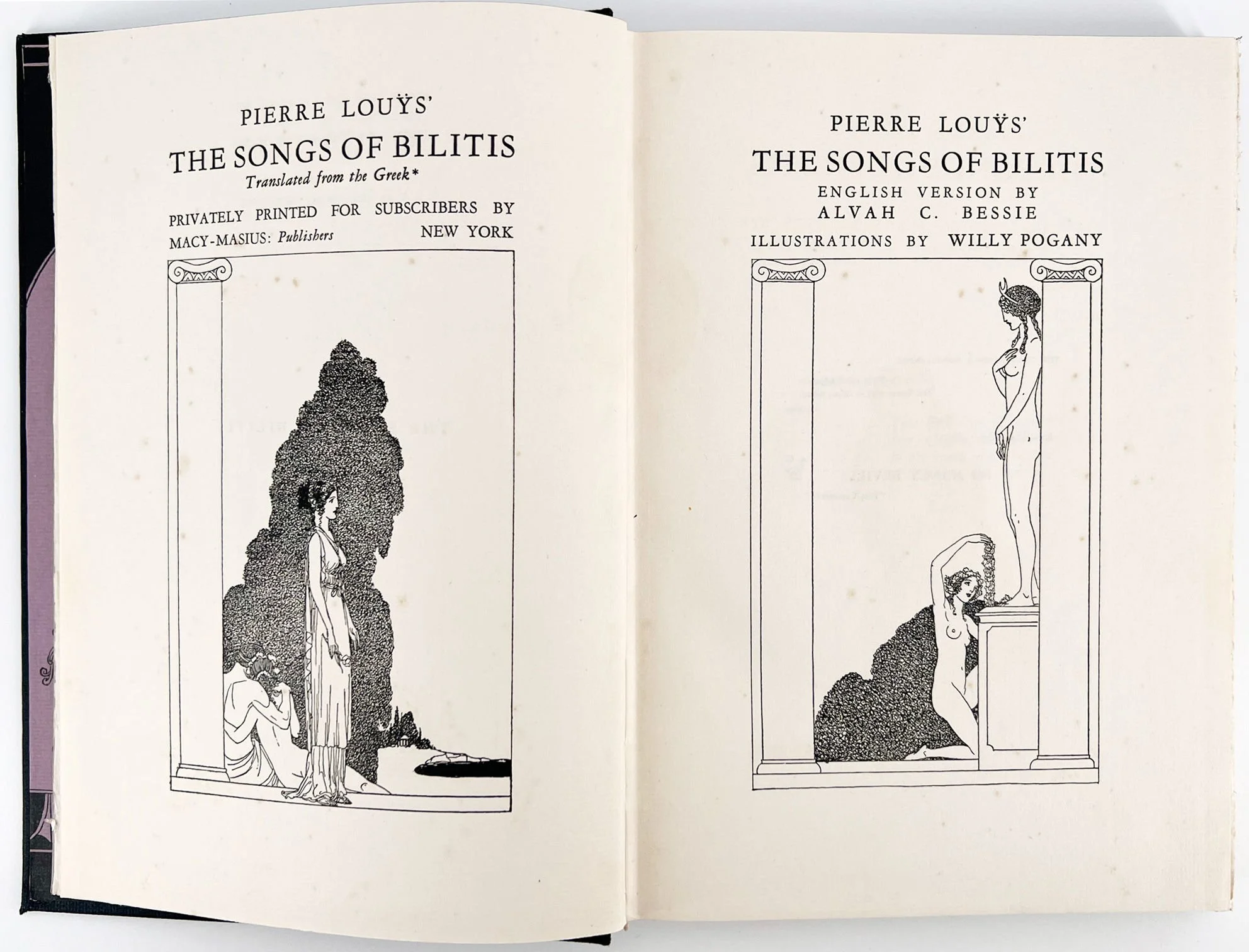
While we're considering 'what ifs'...right after the death of Louÿs, The Songs of Bilitis was published by the New York publisher, Macy-Macius. This edition is justly famous for the sensuous illustrations by the great Willy Pogany. Did REH see that edition?
Time grows short. I'd best wrap this up. Raise your mead-horns in memory of the titans, sword-brothers!